
Meta Releases Powerful 30B Muse Glimmer Open-Source Model


Meta has officially expanded its artificial intelligence portfolio by releasing Muse Glimmer, an advanced open-weight model built upon the robust Muse Spark 1.2 architecture. Announced this week, the model features 30 billion parameters and is designed to provide high-level reasoning capabilities while remaining accessible to developers and researchers globally. By making this technology available through platforms like Hugging Face, Meta aims to lower the barrier to entry for complex AI development. The model is capable of operating on standard consumer hardware, allowing users to run sophisticated multi-step reasoning tasks directly on their own personal computers or workstations using a single GPU.
- Meta developed the Muse Glimmer model using the advanced Muse Spark 1.2 architecture.
- The 30 billion parameter model demonstrates superior performance compared to competitors like Gemma4-31B and Qwen3.6-27B.
- Users can execute the model on local hardware using only a single graphics processing unit.
- The training process incorporated datasets encompassing over 100 different languages to enhance global utility.
Muse Glimmer represents a significant shift in how high-parameter models are distributed and utilized. By prioritizing local execution, Meta addresses the growing concern regarding the high hardware costs associated with enterprise-grade AI infrastructure. This model is engineered to handle intricate, multi-step problem-solving processes by dynamically utilizing various tools and agents when necessary.
The optimization of a 30-billion parameter model for single-GPU consumer hardware marks a milestone in accessible artificial intelligence.
Technical Specifications are Defined by Efficiency
The technical architecture of Muse Glimmer focuses heavily on balancing raw computational power with memory efficiency. During its development, Meta utilized a diverse dataset spanning more than 100 languages, ensuring that the model maintains linguistic versatility. 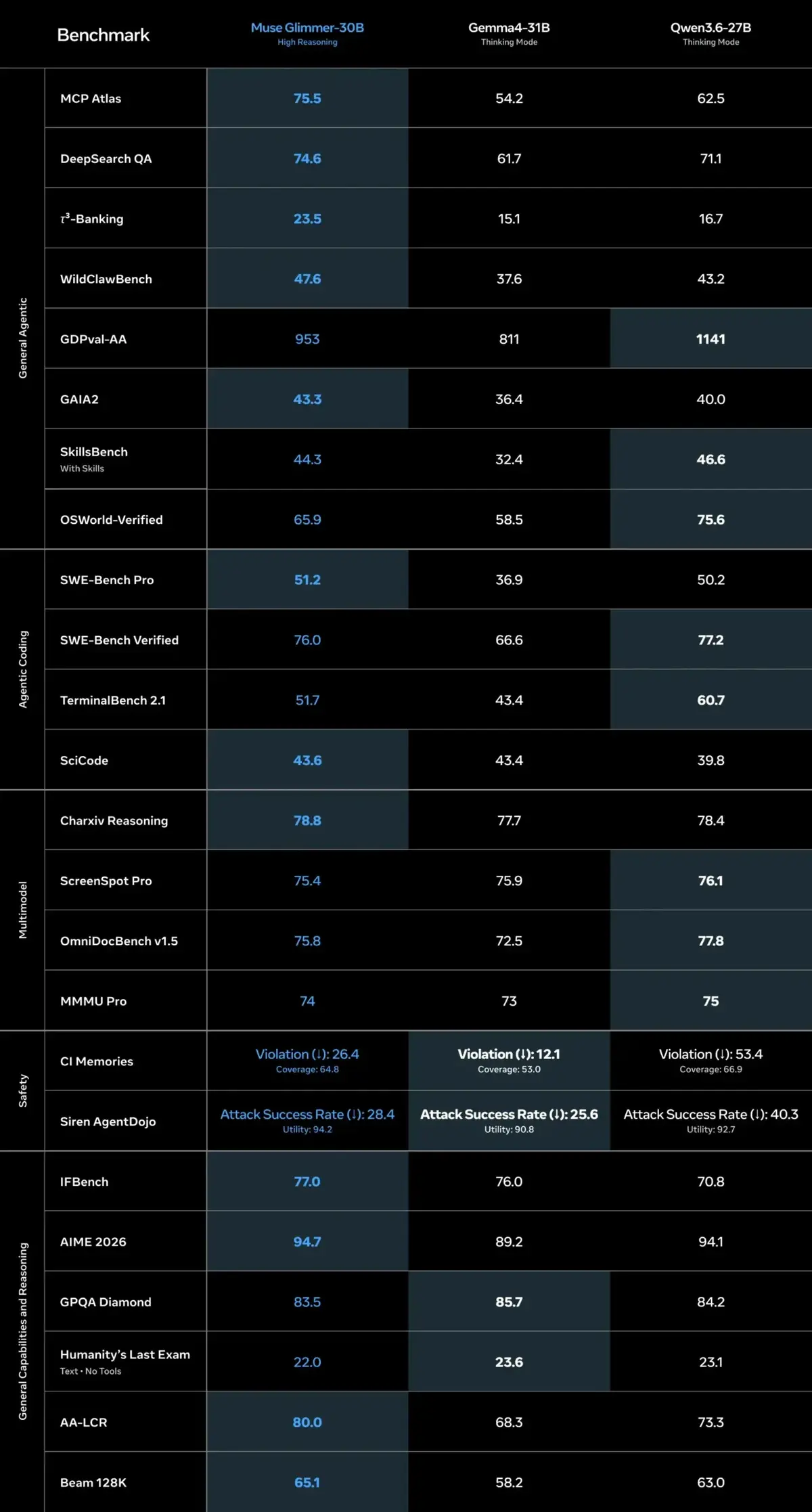 According to internal benchmarks released by the company, Muse Glimmer consistently outperforms comparable models in the current market, including the well-known Gemma4-31B and Qwen3.6-27B iterations.
The ability to perform multi-step reasoning allows the model to act as an autonomous agent in complex workflows. It is capable of delegating tasks to external tools, which substantially reduces the margin of error in logic-heavy applications. 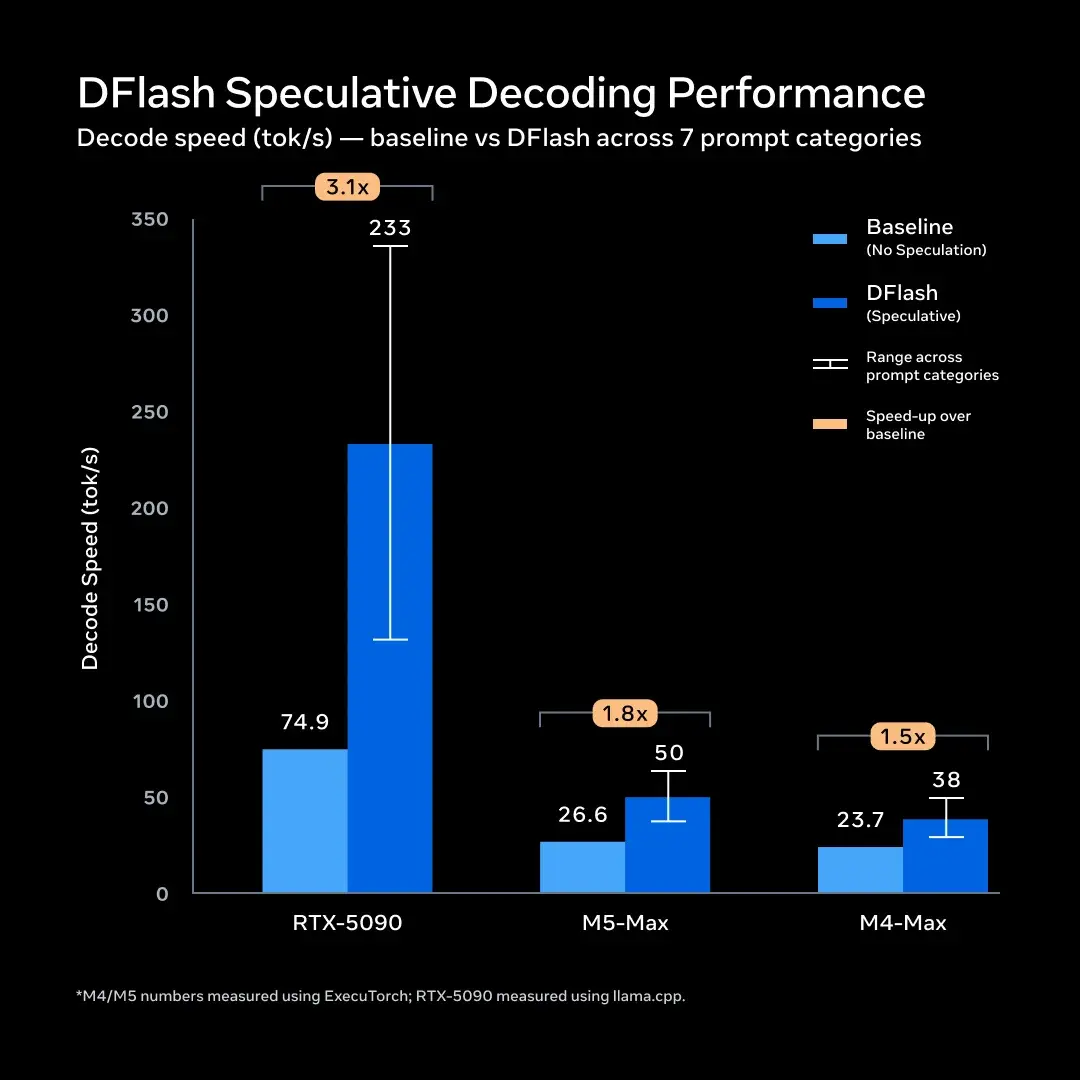 Developers can now download the weights directly from Hugging Face to integrate the model into their local environments without needing cloud-based subscription services.
Hardware Requirements Remain Low for Users
One of the most notable aspects of the Muse Glimmer release is its hardware flexibility. Historically, models of this size have required expensive, multi-GPU server setups to achieve reasonable inference speeds. Meta’s latest engineering efforts have resulted in a highly optimized structure that functions efficiently on a single consumer-grade graphics card.
This strategic move by Meta significantly democratizes access to state-of-the-art language models for independent developers.
By removing the requirement for massive compute clusters, Meta is fostering an ecosystem where small teams and hobbyists can iterate on high-performance AI solutions. The company continues to share comparative performance data to validate the model’s reliability across various benchmarks, further solidifying its position in the open-weight AI landscape. As the competition between open-source and proprietary models intensifies, Muse Glimmer stands as a testament to the progress in model compression and architectural design.
We are interested to hear your thoughts on this release; do you believe Meta’s Muse Glimmer will successfully disrupt the current landscape of proprietary AI models, and how do you plan to use it in your projects?
Your comment has been submitted,
it will be published after approval.