
TEKNOFEST Mavi Vatan 2026 Showcases Turkey’s Naval Power

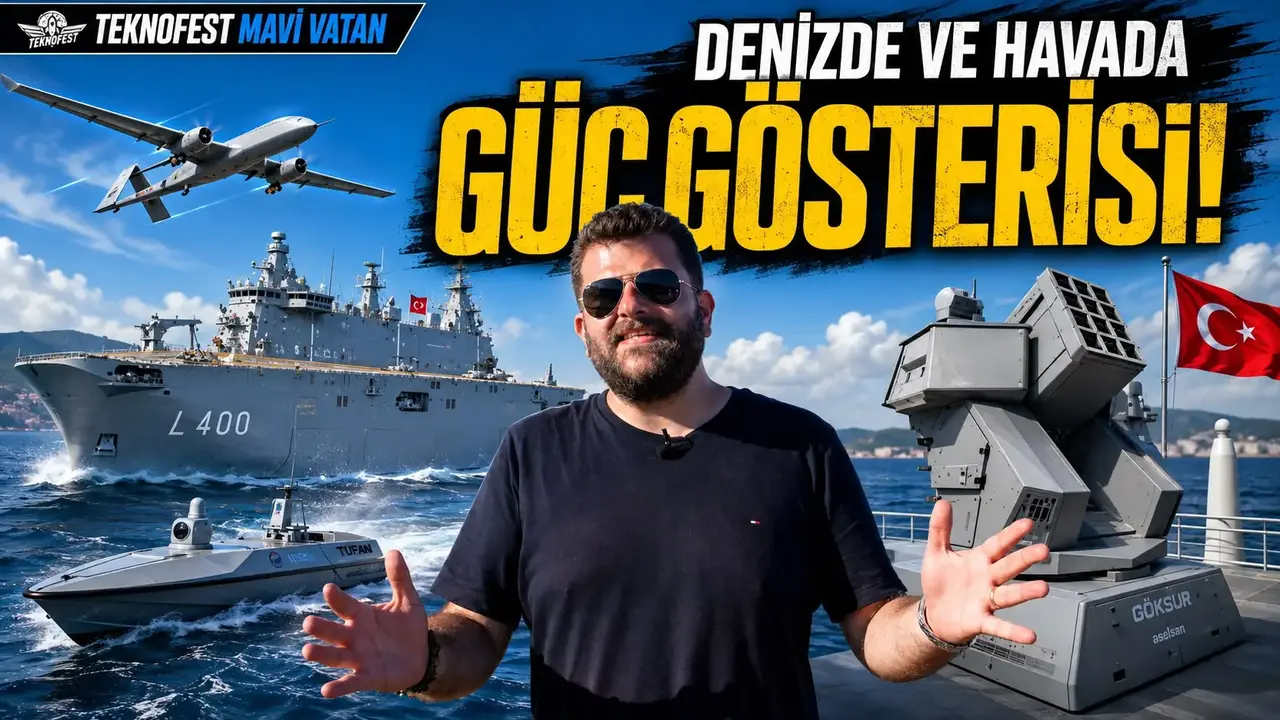
TEKNOFEST Mavi Vatan 2026 brought together Turkey’s latest maritime and defense innovations at the Gölcük Shipyard Command between August 20 and 23. The four-day event served as a major stage for the Turkish Naval Forces to display their operational capabilities, ranging from advanced air defense systems to cutting-edge unmanned maritime vehicles. By highlighting the technological evolution of the Turkish navy, the festival emphasized the nation’s growing independence in submarine projects and surface combatants. Thousands of visitors explored the strategic assets that define the Blue Homeland, witnessing firsthand the integration of indigenous technology into modern naval warfare doctrines.
- TCG Anadolu solidified its role as a flagship platform for autonomous aerial operations involving the Bayraktar TB3.
- The event introduced new indigenous naval air defense systems, including the ASELSAN GÖKSUR and ROKETSAN LEVENT.
- Various unmanned surface and underwater vehicles, such as the TUFAN and PİRANA, demonstrated their potential to serve as new strike assets in maritime combat.
- The MİLDEN National Submarine Project highlighted Turkey’s commitment to achieving self-sufficiency in complex underwater platform design and production.
TCG Anadolu Strengthens Naval Air Capabilities
The TCG Anadolu, currently the largest military vessel in the Turkish inventory, stood as the centerpiece of the exhibition. Designed as a multi-purpose amphibious assault ship, it has become a critical node for sea-based unmanned aerial operations. Its flight deck is specifically configured to support the Bayraktar TB3, a SİHA with foldable wings capable of taking off and landing on short runways. Recent successful autonomous flight tests on the vessel demonstrate that the ship effectively expands the strategic reach of Turkish naval aviation.
The integration of unmanned aerial systems onto the TCG Anadolu marks a paradigm shift in Turkish naval power projection.
Air Defense Systems Protect Naval Assets
As threats in the maritime domain evolve, ASELSAN and ROKETSAN have unveiled specialized solutions to ensure the security of naval platforms. The ASELSAN GÖKSUR Close Air Defense Missile System is engineered to intercept incoming guided threats, including aircraft and drones. Similarly, the ROKETSAN LEVENT system provides a short-range defense layer with a 11-kilometer reach, utilizing high-maneuverability interceptor missiles. Furthermore, the ASELSAN GÜRZ multi-purpose defense system integrates radar and electronic warfare units to provide a multi-layered shield against low-altitude threats.
Submarine Technologies Lead Strategic Development
The MİLDEN project remains a primary pillar of Turkey’s long-term naval strategy. By consolidating domestic design and engineering efforts, the project aims to elevate the nation’s capabilities in submarine construction. In conjunction with this, the ASELSAN DÜFAS sonar system was showcased to underscore the importance of underwater awareness. This technology enhances the ability of the Turkish Navy to detect, track, and neutralize hostile submarines in contested waters.
Unmanned Vehicles Redefine Maritime Warfare
The festival highlighted a new generation of kamikaze naval vehicles designed for diverse combat roles. The ASELSAN KILIÇ operates in the underwater domain, while the TUFAN represents the latest in unmanned surface vessel technology. Additionally, the MKE PİRANA was displayed as a versatile tool for port infiltration and high-speed assault operations. Complementing these, the Modular Armored Control Boat, developed by Trabzon Shipyard and GEKATEK, provides a robust solution for coastal patrol and critical zone security.
Turkey is rapidly transforming its naval inventory into a highly digitized and autonomous fleet.
Which of the new naval technologies exhibited at TEKNOFEST Mavi Vatan do you believe will have the greatest impact on the future of maritime security? Share your thoughts in the comments section below.
Your comment has been submitted,
it will be published after approval.