
Apple Unveils M6: The World’s First 2nm Processor


Apple officially introduced its groundbreaking Apple M6 processor during a special event, marking a significant milestone as the industry’s first chip built on a 2-nanometer (2nm) manufacturing process. This technological advancement elevates performance and energy efficiency to unprecedented levels. Designed to power the latest Mac mini models, the Apple M6 features a dual 16-core Neural Engine, which is specifically engineered to accelerate complex artificial intelligence tasks. By integrating this advanced architecture, Apple Silicon reinforces its market dominance and sets a new technical benchmark for personal computing hardware, delivering a substantial leap in computational speed and power management.
- The 2nm manufacturing process increases transistor density to improve overall performance and energy efficiency.
- The 12-core CPU architecture delivers 2.4 times higher multi-core performance compared to the original M1 chip.
- A dual 16-core Neural Engine doubles the processing speed for localized artificial intelligence models.
- The 12-core GPU incorporates hardware-accelerated ray tracing and a 50 percent increase in geometry processing.
The M6 Architecture Delivers Higher Performance
The transition to a 2nm node allows Apple to pack significantly more transistors into a smaller physical space. This miniaturization facilitates better thermal management and reduces overall power consumption. The CPU consists of a 12-core configuration, including two high-performance cores, four performance cores, and six efficiency cores. This layout ensures that the chip remains the fastest single-core processor available, while also providing a 20 percent increase in multi-core workloads compared to the previous M5 generation.
The Graphics Unit Supports Advanced Artificial Intelligence
The integrated 12-core GPU represents a massive overhaul for graphical tasks and machine learning. Every GPU core now features dedicated neural accelerators designed to optimize the performance of artificial intelligence applications. Apple reports that this architecture yields a 30 percent boost in peak graphics calculation power over the M5 chip. 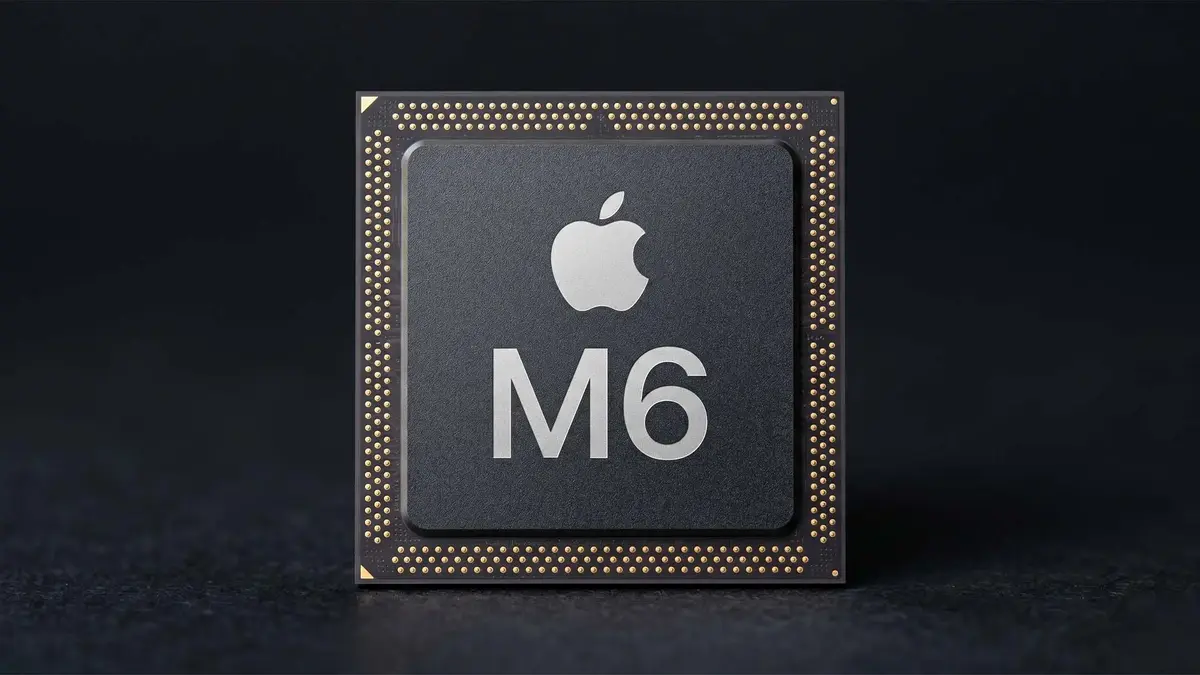 These enhancements allow large language models (LLMs) to run locally on the device with significantly reduced latency, improving the responsiveness of AI-driven creative tools and complex software suites.
Memory Bandwidth Experiences Significant Growth
To support high-end professional workflows, the Apple M6 offers a massive increase in memory bandwidth. Supporting up to 32GB of unified memory, the system achieves 170GB/s, effectively eliminating data bottlenecks that plague intensive creative tasks. This throughput represents a 10 percent increase over the M5 and is 2.5 times faster than the original M1 silicon. When combined with hardware-accelerated ray tracing and improved geometry throughput, these specifications provide developers and content creators with the computational headroom required for modern rendering and high-fidelity production environments. As the industry moves toward more intensive hardware demands, the M6 positions itself as a critical tool for those requiring consistent, high-performance output.
How do you feel about the performance improvements brought by the new 2nm Apple M6 processor, and do you believe this jump in power will fundamentally change your daily professional workflow? Share your thoughts and expectations in the comments section below.
Your comment has been submitted,
it will be published after approval.