
Meta Launches Muse Image Model with Advanced Reasoning Capabilities


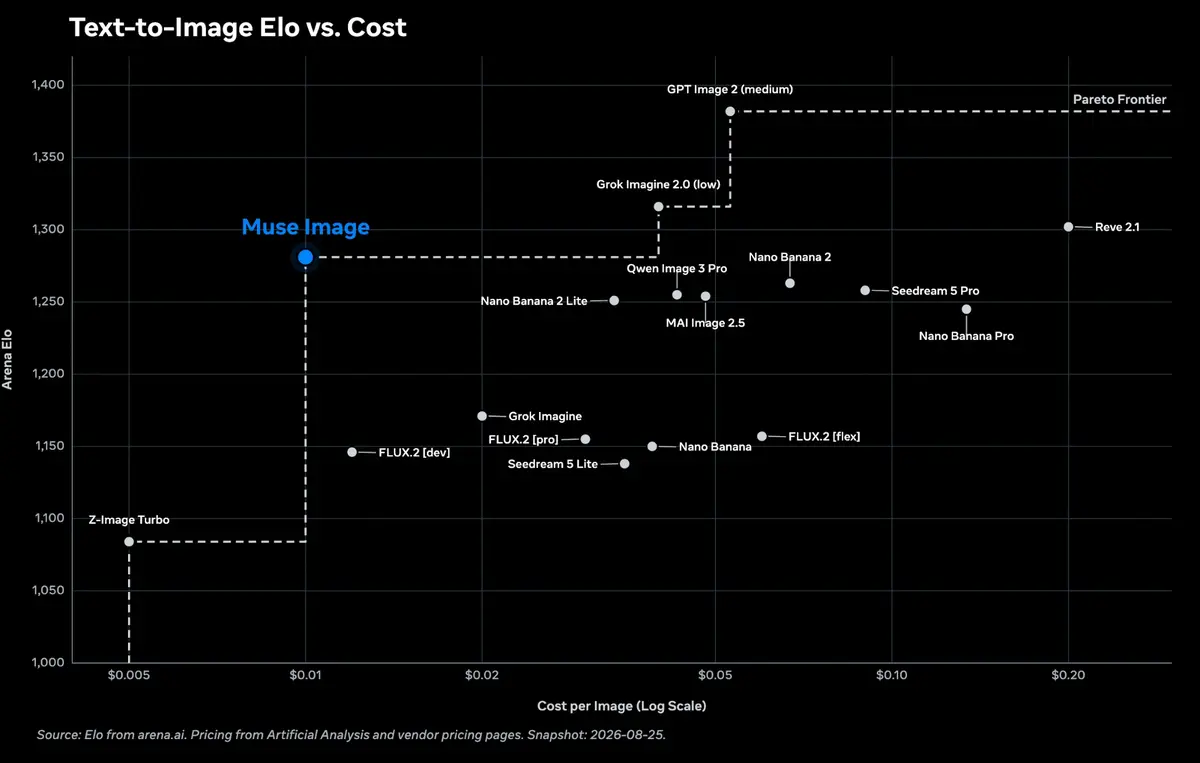
Meta has officially launched its highly anticipated Muse Image model, a cutting-edge generative tool capable of advanced reasoning, to developers via the Meta Model API. By introducing a model that plans scenes before execution, the tech giant aims to set a new standard in the industry, offering its services at an aggressive price point of 0.01 dollars per image. This release, aimed at professional developers and businesses, provides a sophisticated alternative for high-quality visual production, ensuring that complex spatial relationships are handled with precision rather than simple pixel mapping.
- Meta has released the Muse Image model to the global developer community through the Meta Model API.
- The platform utilizes a chain-of-thought reasoning process to plan visual compositions before rendering.
- Pricing for the new generative service is set at 0.01 dollars per individual image.
- The API architecture maintains full compatibility with existing OpenAI Images standards for easy integration.
The Reasoning Model Plans Scenes Before It Creates Them
Traditional text-to-image models often struggle with complex prompts, frequently losing track of spatial relationships between objects. Muse Image differentiates itself by acting as a reasoning model; it analyzes all input elements and creates a structural plan for the scene layout before initiating the generation process. This internal chain-of-thought mechanism allows the model to evaluate its drafts and perform necessary self-corrections. If the system detects errors in detail or spatial logic, it applies local adjustments or completely re-renders the scene to ensure the final output remains consistent with the user’s intent.
Key Features Enhance Professional Design Workflows
The model offers several advanced capabilities designed to streamline production. Among these is precise editing and composition, which allows users to alter specific objects without affecting the surrounding environment. Furthermore, the system supports anchored composition, enabling developers to maintain character, setting, and style consistency across sequential frames, which is essential for projects like comic strips or product catalogs. The model also features intelligent text and tag editing, allowing it to overlay, remove, or modify text labels and price tags seamlessly. Additionally, users can generate high-quality assets at resolutions reaching up to 1600 pixels.
Infrastructure Compatibility Simplifies Developer Integration
Meta has prioritized ease of adoption by ensuring that Muse Image endpoints are fully compatible with OpenAI Images API standards. This strategic decision allows developers to transition to the new model by simply updating their base URL and authentication credentials, minimizing the technical overhead required for migration. By lowering the barrier to entry, Meta expects to see widespread adoption across sectors such as e-commerce, automated catalog generation, and game asset design.  As production-grade costs continue to drop, the model positions itself as a competitive force in the rapidly evolving generative AI market.
How do you anticipate the integration of reasoning-based AI models like Muse Image will change your professional creative workflow? Share your thoughts and expectations in the comments section below.
Your comment has been submitted,
it will be published after approval.