
WhatsApp Launches New Scam Alert Feature for Enhanced Security


WhatsApp has officially initiated the beta testing phase for a new Scam Alert feature designed to protect users from fraudulent messages sent by unknown numbers. Rolled out to a select group of Android beta testers under version 2.26.34.1, this update utilizes advanced on-device machine learning models to detect potential scam attempts in real-time. By processing content locally on the user’s smartphone, WhatsApp ensures that the platform’s signature end-to-end encryption protocols remain fully intact. This proactive move marks a significant evolution in WhatsApp security measures, aiming to provide a safer messaging environment without compromising the privacy of its global user base.
- WhatsApp employs an on-device machine learning model to detect fraudulent message content locally.
- The feature maintains end-to-end encryption standards by ensuring no data is transmitted to external servers.
- Users must manually enable the Scam Alert system as it remains disabled by default.
- The algorithm identifies and flags suspicious messages from unknown contacts instantaneously.
How the Detection Mechanism Functions
The core of the Scam Alert technology lies in its local processing capability. When a message is received, the application compares the text against established patterns associated with malicious activity and scams. Because the entire analysis occurs within the hardware of the mobile device, Meta does not gain access to the contents of the messages, including text, images, or audio files. 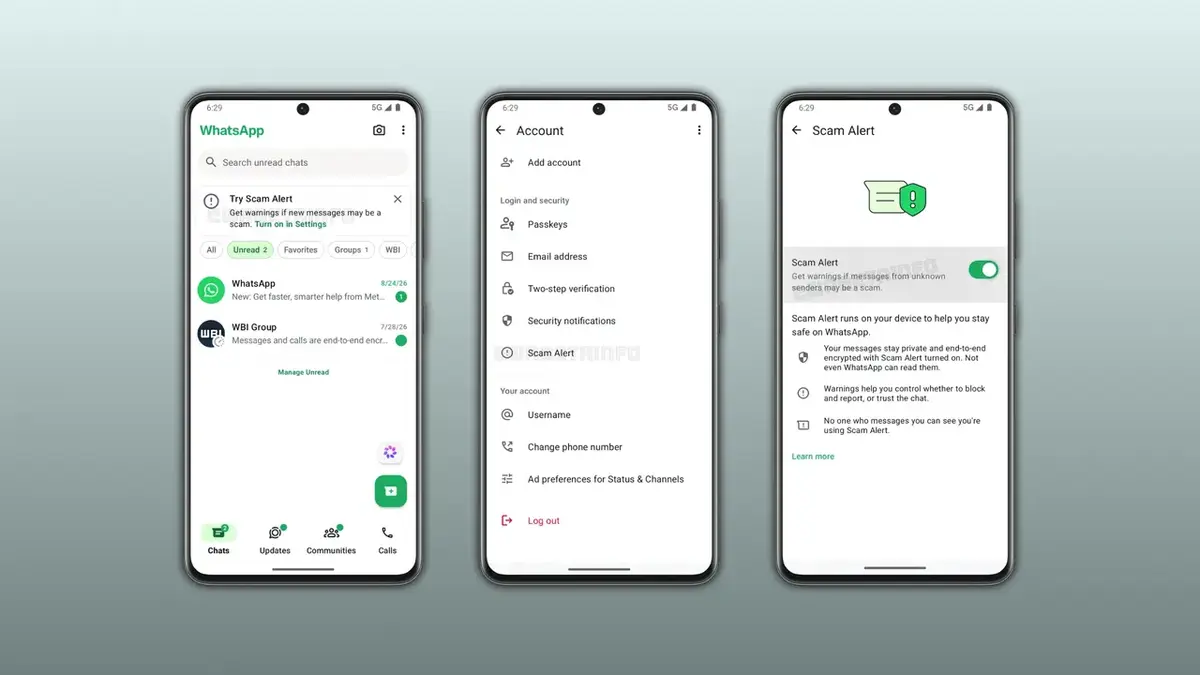 This architecture ensures that even in the event of an investigation, the company remains unable to decrypt or view user communications, upholding the fundamental principles of data privacy.
How User Control Is Maintained
WhatsApp has prioritized user autonomy by keeping the Scam Alert feature optional. Individuals have the authority to activate or deactivate this tool through the application’s settings menu at any time. Should the system incorrectly label a legitimate communication as a threat, users are empowered to mark the conversation as safe, effectively overriding the detection. Furthermore, users have the opportunity to contribute to the accuracy of the system by voluntarily sharing metadata from the last five messages with WhatsApp for future model improvements.
How Privacy Remains the Priority
Transparency serves as a cornerstone for the development of this new security layer. Meta has confirmed that all beta users operate on a unified model version, with the system’s integrity verified through public records before any distribution takes place. To prevent tracking, the company implements a relay system when devices request model updates, effectively masking IP addresses. Additionally, the expansion of the Bug Bounty program allows independent security researchers to audit the system, ensuring that external scrutiny bolsters the platform’s defensive capabilities.
How the Rollout Progresses
While currently limited to specific Android beta testers, the company intends to expand this functionality through subsequent updates on the Google Play Store. Although an official timeline for the iOS release has not been established, the cross-platform integration is anticipated to follow soon. Users who have access to the feature can review their activity logs to see which messages triggered the alert system, providing full visibility into the security processes occurring on their devices. This systematic approach to threat detection represents a significant leap forward in protecting billions of users from evolving digital threats.
What are your thoughts on WhatsApp’s new AI-driven Scam Alert feature? Do you believe these automated security measures are sufficient to combat the rising tide of digital fraud, or should more be done to protect users? Share your opinions in the comments section below.
Your comment has been submitted,
it will be published after approval.