
Anthropic Integrates Web Browser Feature into Claude Desktop

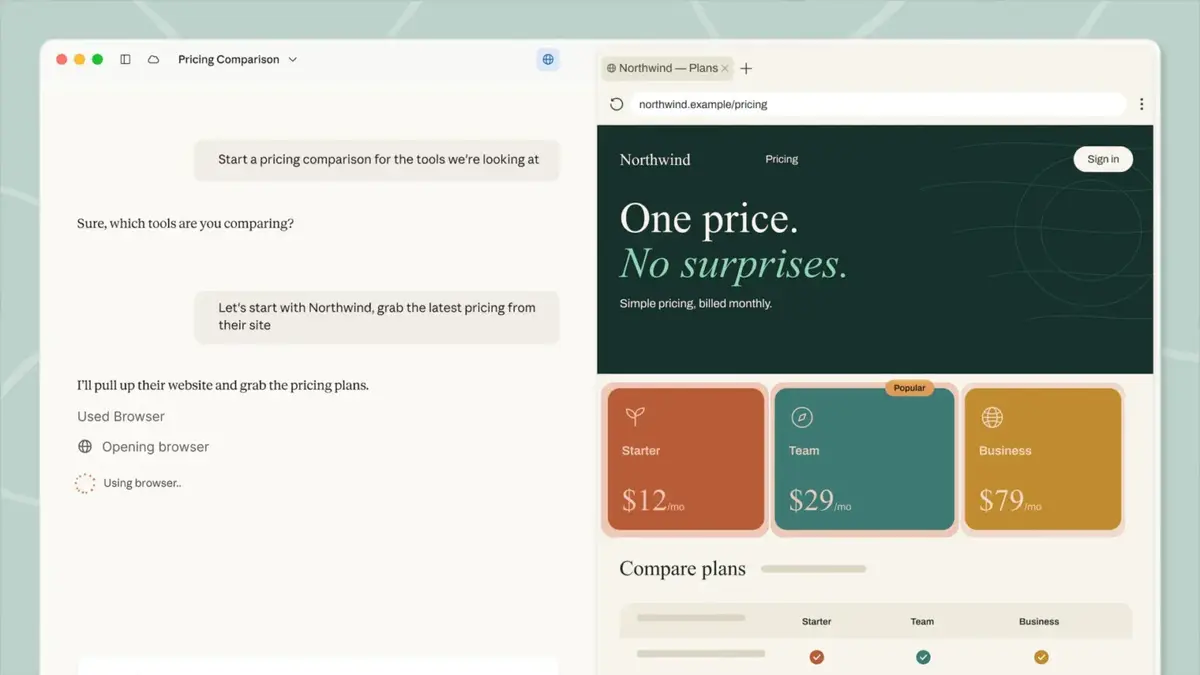
Anthropic has officially introduced a significant update to its Claude desktop application, incorporating a native web browser designed to reshape user interaction with artificial intelligence. This strategic move, announced this week, enables the Claude chatbot to autonomously execute web searches when a query requires real-time information, subsequently displaying the findings within a dedicated side panel. By integrating this functionality, the company aims to eliminate the friction caused by switching between separate browser windows and AI interfaces. The update is currently rolling out to Enterprise users, with broader availability for Pro, Team, and Max subscribers expected shortly, signaling a major evolution in how digital assistants manage information retrieval tasks.
- Anthropic has integrated a native web browser directly into the Claude desktop application to streamline search-based workflows.
- The browser restricts access to sensitive personal accounts such as banking or email to maintain user security standards.
- This feature initially launches for Enterprise customers before expanding to all subscription tiers within the coming week.
- The integration represents a direct competitive challenge to Google’s dominance in the web browser and search engine markets.
New Browser Feature Enhances User Productivity
The core functionality of this integrated browser, often referred to as Claude Cowork, focuses on efficiency and context. Rather than requiring users to manually navigate to search engines, Claude identifies when external data is necessary and fetches the relevant information automatically. This design choice transforms the platform from a static question-and-answer interface into a proactive digital assistant capable of executing complex tasks. Despite this automation, the company maintains that users can still opt to continue using Chrome if they prefer their traditional browsing environment.
Security Protocols Protect User Data
Addressing potential security concerns remains a top priority for Anthropic as it expands the capabilities of its AI agents. The developers have strictly limited the browser to accessing only public web information. It cannot interface with personal accounts, such as private emails or financial services, ensuring that sensitive data remains isolated from the AI’s search capabilities. This privacy-centric approach serves as a defensive measure against unauthorized data access, maintaining a clear boundary between the user’s private digital life and the AI’s research environment.
Industry Competition Intensifies for Market Share
The strategic deployment of this feature is widely viewed as a direct challenge to Google’s established hegemony in internet traffic, which currently relies heavily on Chrome. By keeping users within the Claude ecosystem, Anthropic aims to capture the time and attention usually spent on traditional search engines. This mirrors the trajectory of OpenAI, which previously integrated browsing capabilities directly into ChatGPT. As major AI firms move toward centralizing digital experiences, the landscape of web navigation is undergoing a fundamental shift toward agent-based interfaces.
Potential Vulnerabilities Require Ongoing Mitigation
Despite these advancements, the integration of AI with live web browsing is not without technical hazards. Anthropic acknowledges that the system remains susceptible to prompt injection attacks, where malicious actors attempt to manipulate AI behavior through hidden commands on webpages. While the company has implemented security measures similar to those found in its existing Chrome extensions, experts warn that safeguarding AI agents against such sophisticated exploits remains a significant hurdle. The industry continues to debate whether full-scale internet access can be achieved without compromising the integrity of these intelligent systems.
As AI assistants evolve into comprehensive tools that manage our web browsing activities, we are curious to hear your thoughts on this shift. Do you believe having a built-in browser makes your workflow more efficient, or are you concerned about the potential security implications of giving AI direct access to the web? Share your perspectives in the comments section below.
Your comment has been submitted,
it will be published after approval.