
NVIDIA Launches PAIR and RTX Spark PCs for Local AI

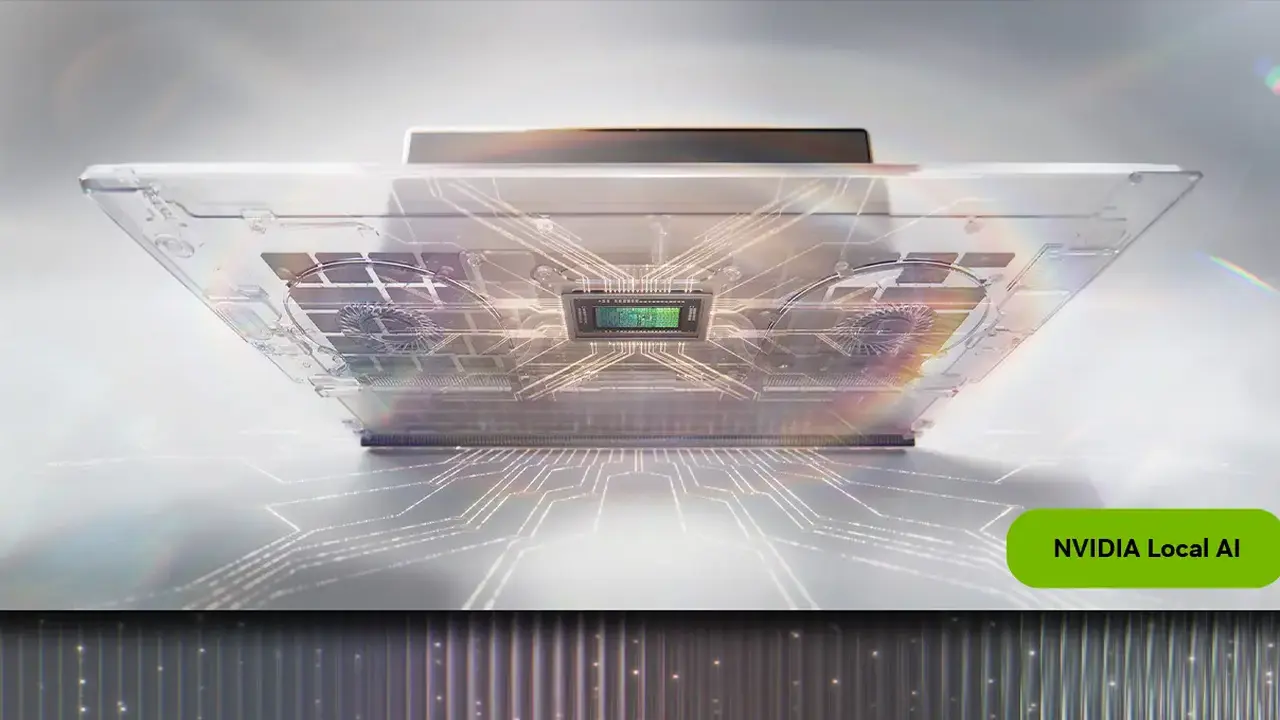
At the IFA 2026 conference, NVIDIA officially unveiled a groundbreaking ecosystem designed to liberate artificial intelligence from cloud dependency, introducing the innovative NVIDIA PAIR and the high-performance RTX Spark PC platform. By enabling local AI processing, the company aims to make powerful agentic systems accessible to everyday users. The rollout includes the open-source PAIR router for distributed computing across local networks and a new category of Windows hardware capable of reaching 1 Petaflop of processing power. These advancements signify a major shift toward securing data privacy while drastically reducing reliance on centralized cloud servers for complex computational tasks.
- NVIDIA PAIR allows users to distribute artificial intelligence workloads across multiple devices within a local network to optimize processing efficiency.
- The newly announced RTX Spark Windows computers feature Blackwell architecture and up to 128 GB of unified memory to support large-scale language models.
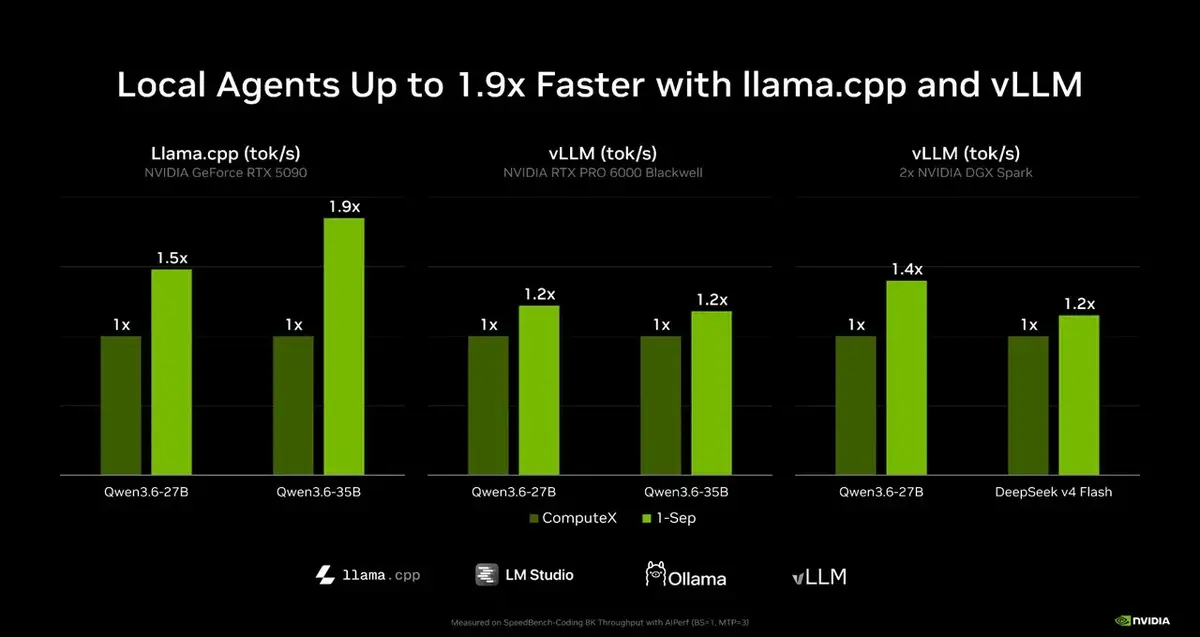
- Optimized software updates for llama.cpp on RTX 5090 hardware demonstrate a 90 percent increase in inference performance.
NVIDIA PAIR Distributes Processing Tasks Across Local Networks
The primary hurdle in running sophisticated AI agents locally has historically been the limitation of a single graphics card handling multi-step tasks. To address this, NVIDIA introduced the NVIDIA PAIR (Personal AI Router). This open-source tool automatically discovers network-connected devices using mDNS and intelligently delegates sub-tasks to available hardware.
Security remains a cornerstone of this architecture. PAIR employs mutual TLS (mTLS) and local certificates to ensure that all data traffic remains encrypted within the user’s private network. Compatibility is extensive, supporting Windows, macOS, and Linux, while hardware support ranges from GeForce RTX 20 series GPUs to modern Apple Silicon M4 chips.
RTX Spark Computers Offer Massive Computing Power
NVIDIA is redefining hardware standards with the introduction of the RTX Spark category, arriving on the market this October. These machines transition from traditional workstations into proactive, AI-driven assistants capable of handling demanding workflows without cloud connectivity.
The platform is built upon a foundation of extreme performance, utilizing Blackwell-architecture GPUs to deliver 1 Petaflop of AI processing capability. Integrated with 20-core Grace CPUs and up to 128 GB of high-bandwidth unified memory, these systems are specifically engineered to run massive parameter models locally. Partnerships with manufacturers like Acer and Lenovo ensure that these technologies will be available in both compact desktop and laptop form factors starting this fall.
Inference Speeds Increase Significantly with New Optimizations
Beyond hardware, NVIDIA has achieved remarkable software gains through collaboration with the open-source community. By implementing advanced speculative decoding and new XQA attention kernels, the company has boosted llama.cpp inference performance by 90 percent on the GeForce RTX 5090. Similarly, vLLM infrastructures are seeing notable speed improvements, reaching up to 1.4 times faster processing on DGX Spark clusters.
These optimizations extend to popular tools, with one-click installation support for the Hermes Agent and refined compatibility for systems like Perplexity’s Portable Computer. By bridging the gap between high-end hardware and accessible software, NVIDIA is systematically removing the barriers to entry for local AI deployment.
How do you feel about shifting your AI workflows from the cloud to your own local hardware, and which features of the RTX Spark platform are you most excited to test in your home office?
Your comment has been submitted,
it will be published after approval.