
Google Introduces Voice-Powered AI for Workspace Apps and WeatherNext 3

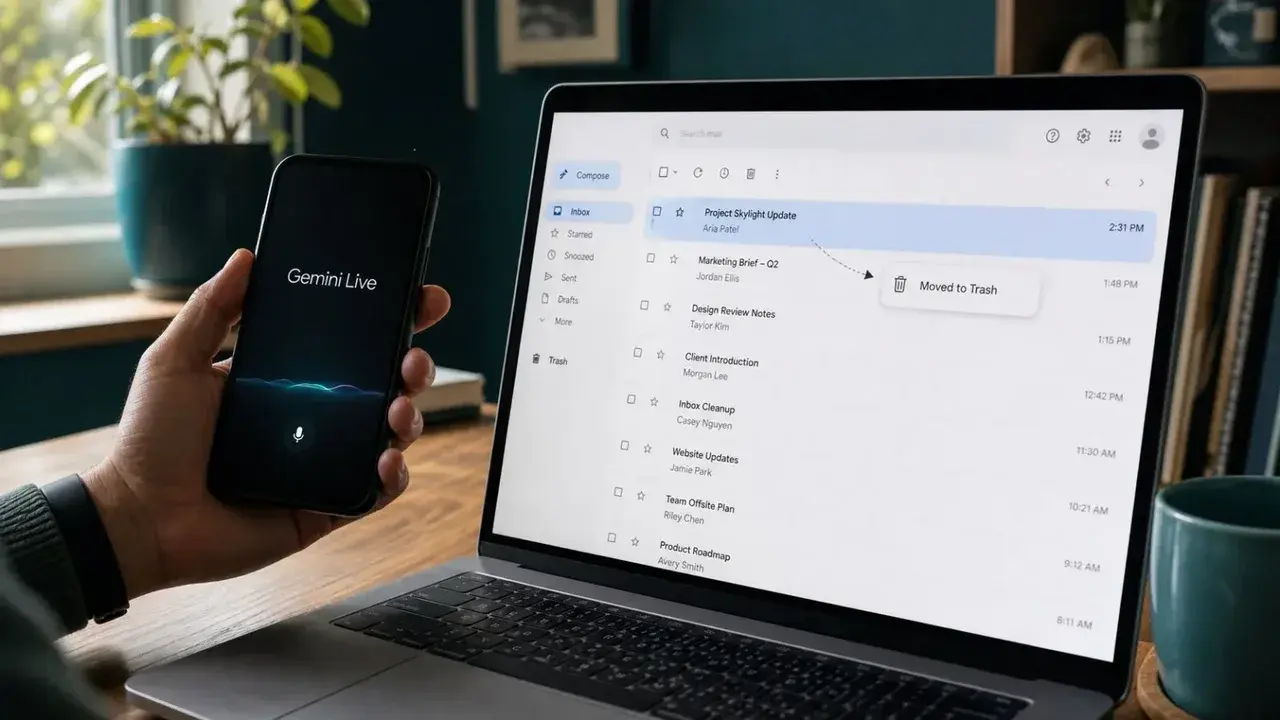
Google has officially expanded its generative AI capabilities by launching Gmail Live, Docs Live, and Keep Live, a new suite of features designed to allow users to control workspace applications through voice commands. Powered by the Gemini Live infrastructure, these tools are currently available to Google AI Plus, AI Pro, and AI Ultra subscribers. In addition to these productivity enhancements, the tech giant announced the rollout of WeatherNext 3, a highly advanced global forecasting model. These updates reflect Google’s ongoing commitment to integrating sophisticated voice-powered AI into daily professional workflows to improve efficiency, while simultaneously setting a new standard for real-time weather prediction accuracy across its global service ecosystem.
- The new Gmail, Docs, and Keep voice features currently support only the English language for premium subscribers.
- WeatherNext 3 utilizes real-time satellite data to eliminate the six-hour processing delay found in traditional physical simulation models.
- Google plans to integrate the WeatherNext 3 model into Google Search, Maps, and the Gemini application to improve daily planning accuracy.
These productivity-focused updates transform how users interact with their digital workspace. Gmail Live allows individuals to perform complex queries, such as searching through email threads for specific event details or summarizing correspondence, simply by speaking to the device. The system is designed to handle follow-up questions, enabling a fluid, conversational interaction that feels more like a personal assistant than a standard search tool.
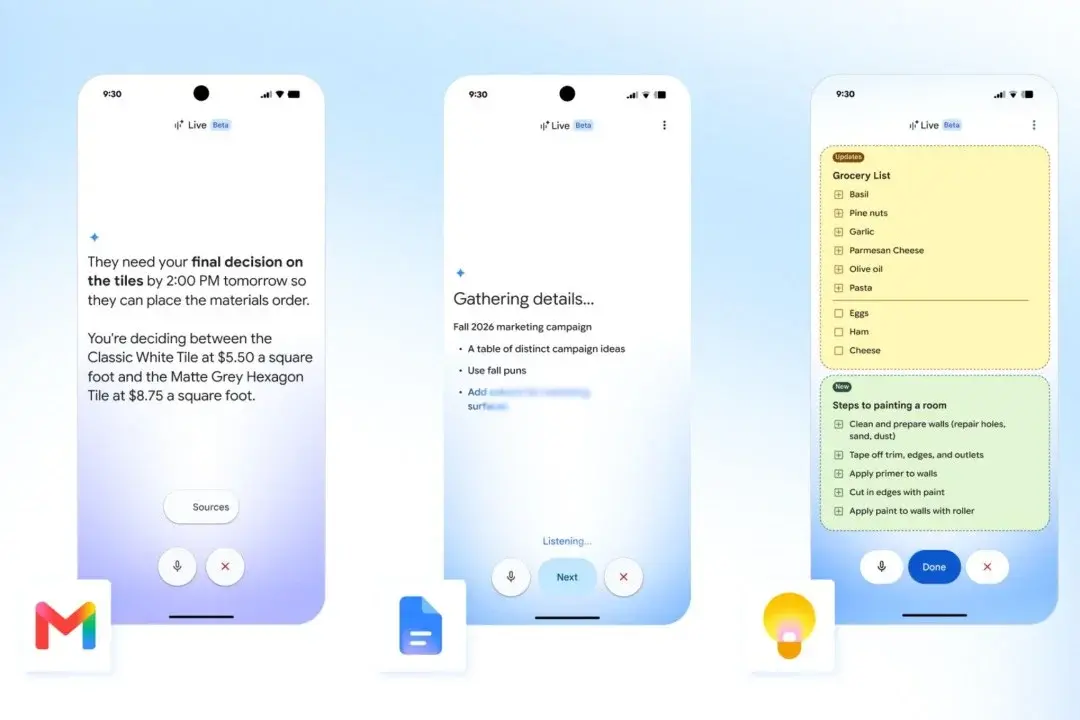
Docs Live serves as a powerful creative partner, capable of converting spoken ideas into structured documents, professional proposals, or concise summaries. By pulling contextual data from Google Drive, Chat, and previous emails, it personalizes content generation. Keep Live completes the suite by streamlining note-taking, turning audio dictation into organized lists and thoughts immediately. These advancements are aimed at professionals managing high-volume tasks who need to bypass keyboard input to maintain their momentum.
WeatherNext 3 Improves Forecasting Accuracy
Beyond office productivity, Google is tackling the limitations of traditional meteorological science with the introduction of WeatherNext 3. Historically, numerical weather prediction models relied on massive supercomputers to run complex physical simulations. Because these systems often required significant processing time, they frequently suffered from a six-hour delay in data availability, which led to inaccuracies in surface temperature and precipitation forecasts.
WeatherNext 3 addresses these technical bottlenecks by processing live, global geostationary satellite data. By learning directly from real-time observations, the system generates a dynamic and constantly updated representation of the atmosphere. This shift away from traditional physics-based simulation models allows for localized, high-precision weather insights that are far more relevant to the average user. As these capabilities reach Google Search and Maps, the accuracy of daily planning will likely see a significant improvement for millions of users worldwide.
The integration of these advanced AI models underscores the broader transition toward intuitive, voice-activated technology. Whether managing complex email chains or anticipating sudden weather shifts, these updates ensure that essential information is more accessible than ever before. As these tools continue to evolve, they promise to reduce the friction between human intent and machine execution, ultimately saving users time and effort in both their professional and personal lives.
We would love to hear your thoughts on these latest updates; how do you envision voice-powered AI and improved weather forecasting changing your daily routine?
Your comment has been submitted,
it will be published after approval.