
Arm Mali G2-Ultra NX Brings DLSS-Style Gaming to Mobiles

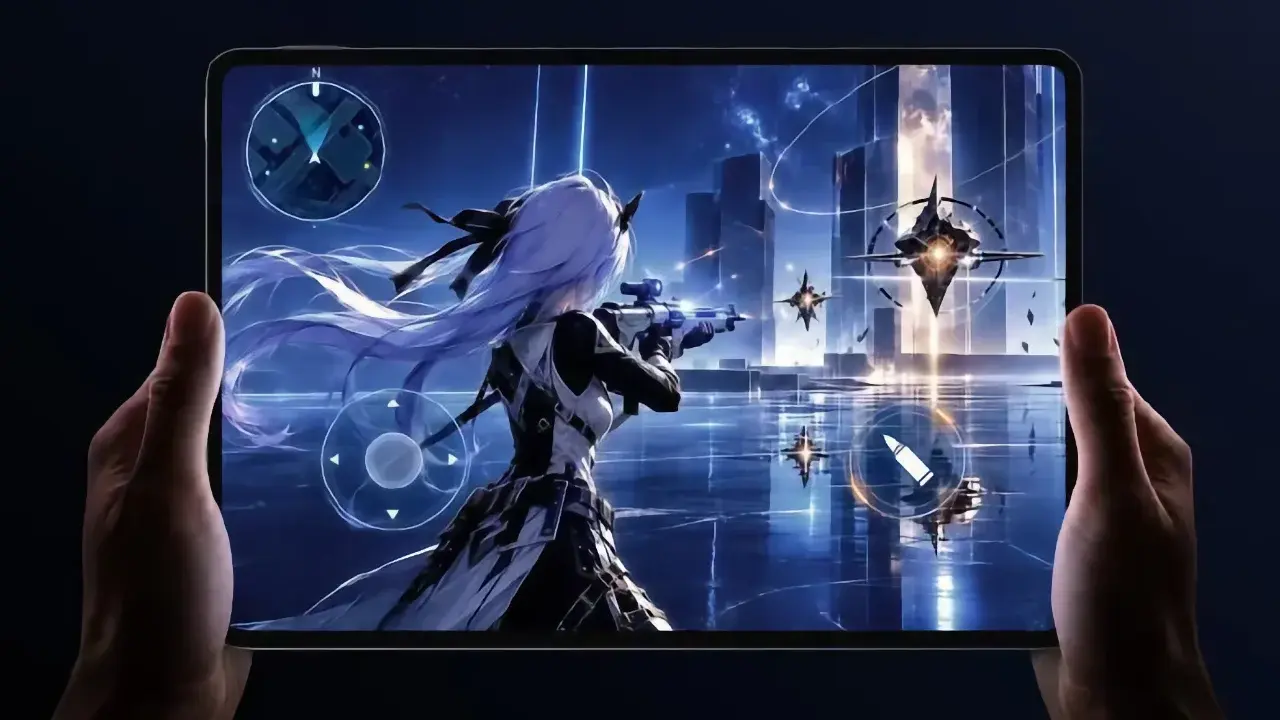
Arm has officially unveiled the Mali G2-Ultra NX, a groundbreaking graphics unit that brings console-quality performance to mobile devices by integrating dedicated hardware-based AI acceleration. Announced following a five-year development cycle, this new GPU debuts inside the Xring O3 chipset within the Xiaomi 18 Fold, which is currently available in China. By adopting a technology similar to Nvidia’s DLSS, the Mali G2-Ultra NX enables smartphones to run high-fidelity games at superior frame rates and resolutions while maintaining low power consumption. This launch marks a significant shift in mobile gaming architecture, aiming to solve the long-standing industry challenges of overheating and excessive battery drain.
- The Mali G2-Ultra NX provides an 85 percent increase in raw graphics processing power compared to previous Xiaomi-integrated solutions.
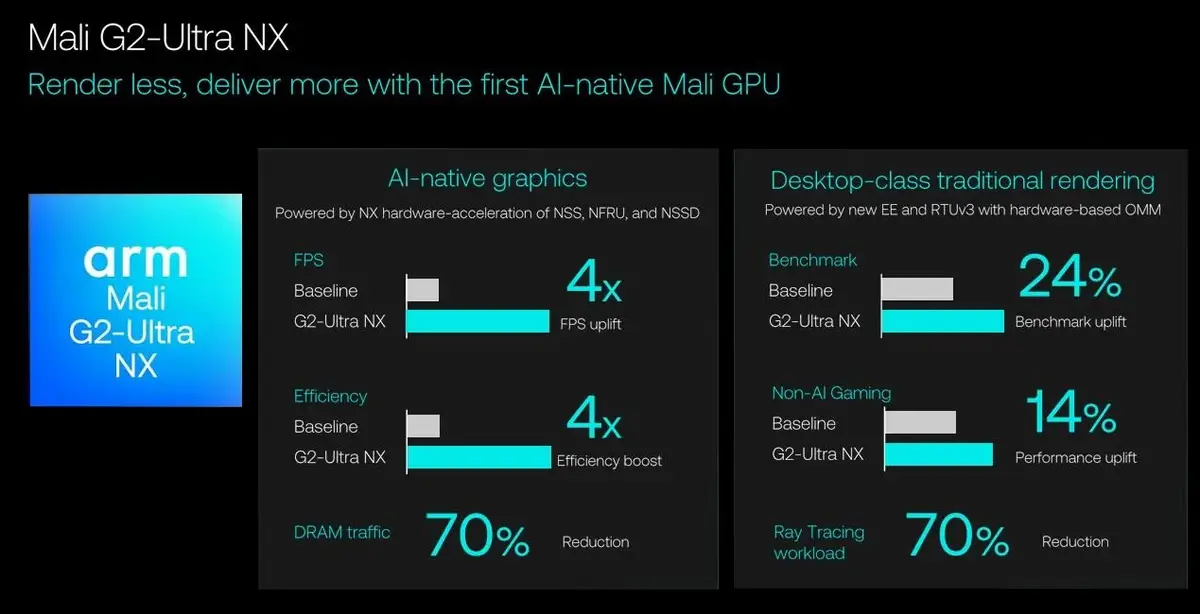
- The GPU features dedicated hardware units for Neural Super Sampling, frame rate upscaling, and ray tracing denoising.
- Arm reports that the new architecture can boost frame rates by up to 4 times while consuming only 1.5 watts of power.
- The technology is scheduled for a global rollout across smartphones, tablets, and Chromebooks starting next year.
Neural Graphics Technology Redefines Mobile Rendering
The innovation behind the Mali G2-Ultra NX lies in its “Neural Graphics” suite. Unlike traditional rendering methods, this GPU uses dedicated, Tensor-like AI cores to handle complex graphical tasks efficiently. The system utilizes Neural Super Sampling to upscale images from lower resolutions, effectively removing jagged edges without placing an excessive burden on the GPU’s shader cores. By offloading these calculations to the AI hardware, the processor maintains a much higher degree of visual fidelity without sacrificing performance.
Frame Rates Increase and Energy Consumption Decreases
The performance metrics provided by Arm suggest a major leap for mobile gaming enthusiasts. When all three core technologies—Neural Super Sampling, AI-assisted frame generation, and ray tracing enhancement—are active, users can experience up to a 4x increase in frame rates. Despite the heavy workload, the total power draw for the entire system remains around 2.5 watts, with the GPU accounting for only 1.5 watts of that total. This efficiency allows devices like the Xiaomi Pad 9 Pro Max to achieve 120 FPS at 3.2K resolution without the thermal throttling commonly seen in high-end mobile gaming.
Global Availability Roadmap Begins Expanding
Arm plans to implement these features through a phased rollout. While Neural Super Sampling is already available for developers, frame interpolation technologies are expected by early 2027, followed by advanced noise reduction protocols. High-profile titles such as Where Winds Meet and Arena Breakout: Infinite have already been confirmed to support these AI-driven enhancements. Furthermore, Arm has confirmed that this hardware will not be exclusive to the Chinese market or high-end flagship devices. The Mali G2-Ultra NX architecture will serve as a foundational standard for a wide range of global smartphones, tablets, and even future Google Chromebook models, ensuring that high-performance mobile gaming becomes accessible to a broader audience.
Do you think AI-driven upscaling is the definitive solution to the thermal limits of mobile gaming, or would you prefer more focus on battery optimization? Share your thoughts on the future of handheld gaming in the comments section below.
Your comment has been submitted,
it will be published after approval.