
Apple M6 Chip Delivers Exceptional Artificial Intelligence Performance

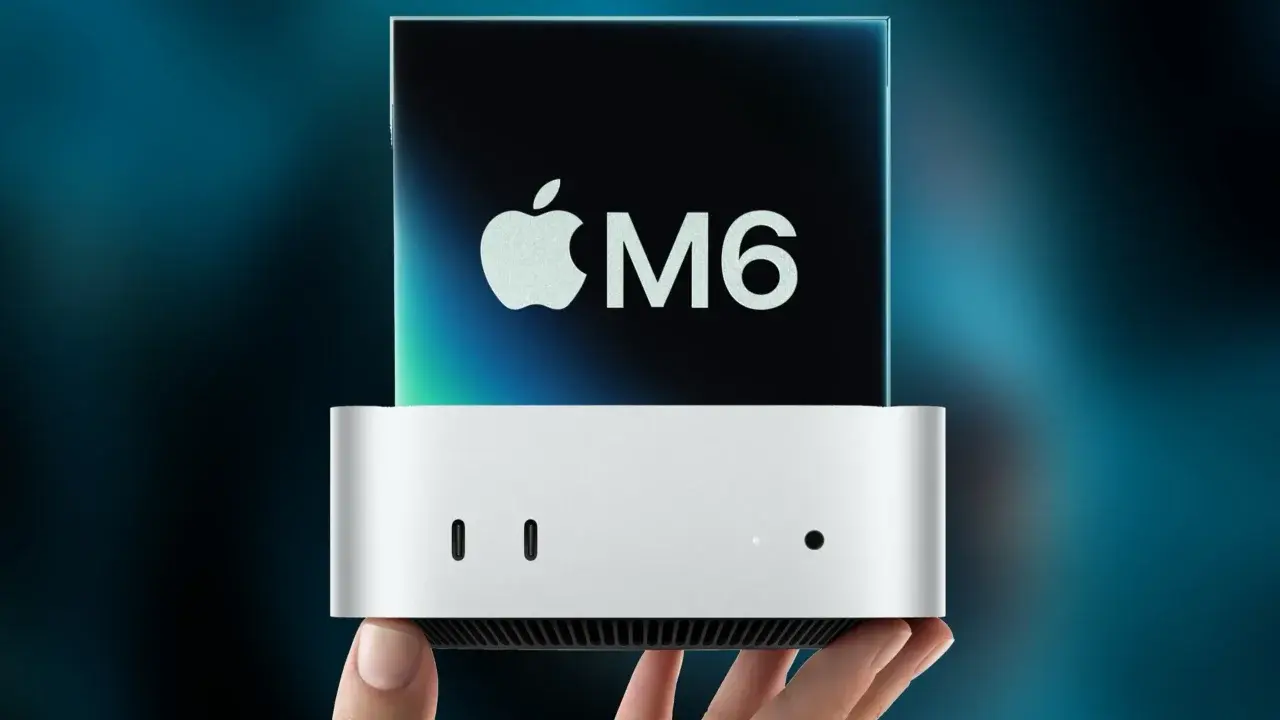
Apple has officially redefined the capabilities of its silicon lineup with the introduction of the M6 chip, which demonstrates significant advancements in artificial intelligence performance compared to its predecessor, the M4. Recent benchmarking tests conducted on the new Mac mini models reveal that the M6 chip provides superior speed and efficiency in prompt processing, token generation, and image creation workflows. By transitioning to a 2nm architecture, Apple has enabled users to execute complex AI models locally while achieving lower power consumption. This generational leap underscores Apple’s commitment to advancing its integrated neural engine technology for professional computing tasks.
- The M6 chip achieves a 253 percent increase in prompt processing speed compared to the M4 processor.
- New hardware configurations supporting 32GB of unified memory allow for the local execution of sophisticated models like Qwen3.8-27B.
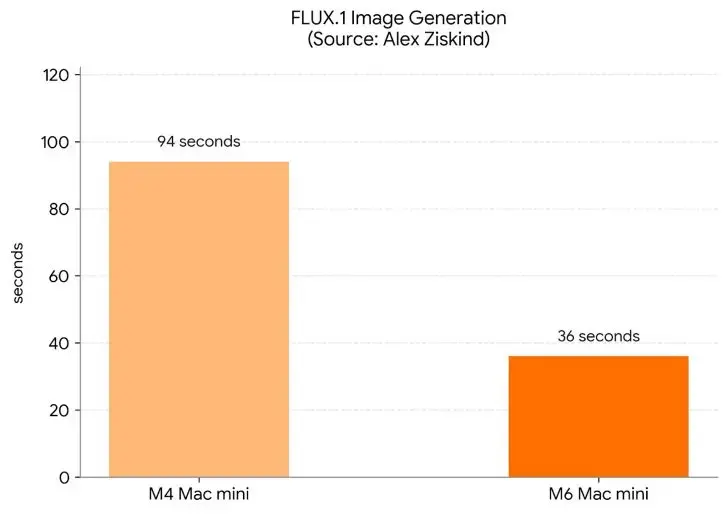
- Image generation tasks are completed 61.7 percent faster on the M6 compared to the previous generation.
- The M6 processor maintains higher computational throughput while simultaneously reducing total power consumption.
The M6 Architecture Enhances Artificial Intelligence Workloads
Extensive testing performed by industry analyst Alex Ziskind demonstrates the substantial performance gains offered by the M6 architecture for users relying on local AI models. When evaluating the Qwen3.5-9B model, the M6 chip reached a throughput of 742 tokens per second, representing a massive 253.3 percent improvement over the 210 tokens per second limit observed in the M4 processor. 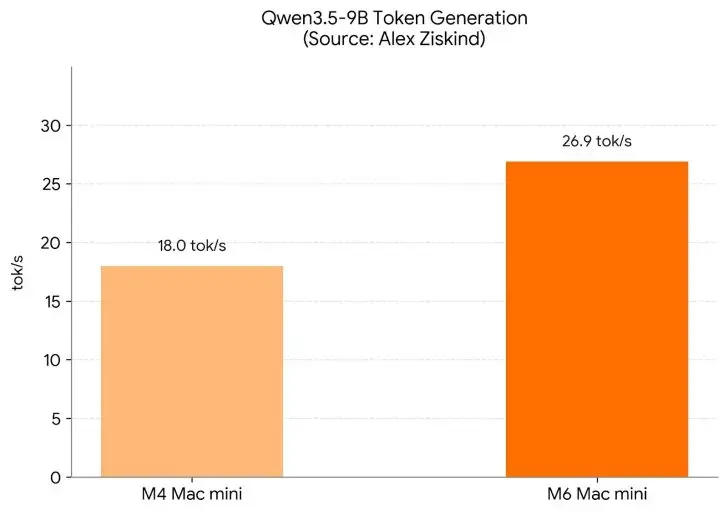 This performance spike is largely attributed to the upgraded neural accelerators embedded within each of the 12 GPU cores. By optimizing these components, Apple has effectively lowered the latency for complex computational tasks.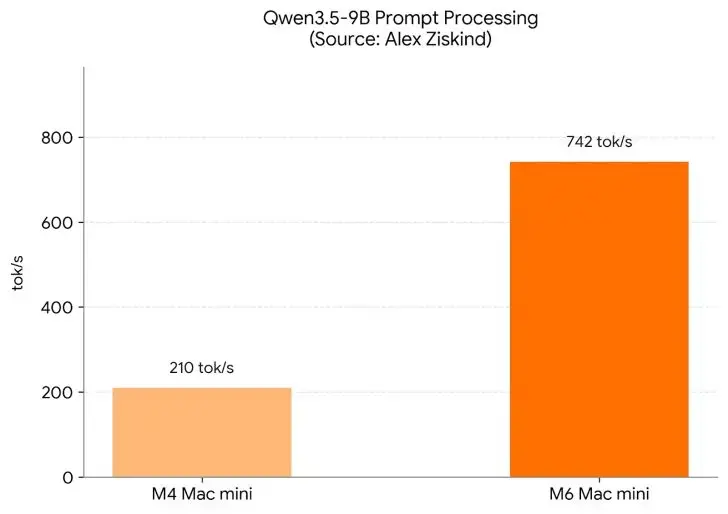
Increased Memory Capacity Supports Complex Model Execution
The M6 Mac mini expands the boundaries of local processing by offering support for 32GB of unified memory. This hardware upgrade facilitates the operation of memory-intensive models, such as Qwen3.8-27B, which were previously impractical to run on the M4 architecture. 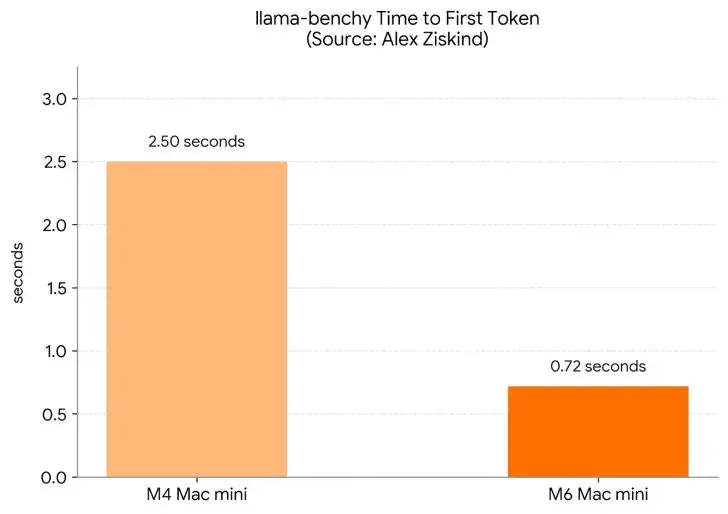 The efficiency of this memory management is evidenced by initial token production times, where the M6 completes the task in 0.72 seconds, significantly outperforming the 2.5 seconds required by the M4.
  This reduction in initial latency enhances the overall responsiveness of generative AI applications for professional users.
Image Generation Times are Decreased Significantly
The improvements in image processing capabilities are equally impressive, as demonstrated by tests using the FLUX.1 model. The M6 chip generates a single image in 36 seconds, whereas the M4 processor requires over 90 seconds to finish the same task. 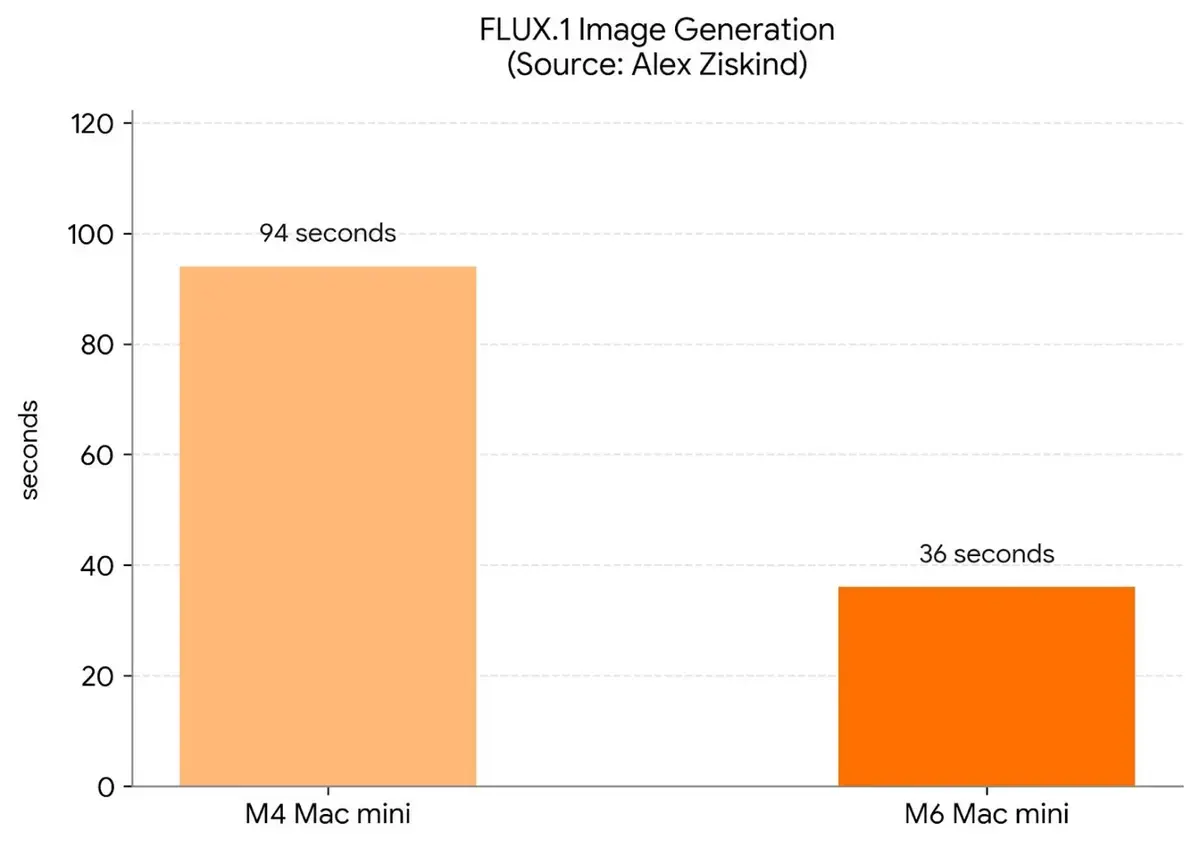 Beyond mere speed, the M6 improves energy efficiency by lowering power consumption from the M4’s 44-watt requirement to 38 watts during peak operations. While this technological leap is noteworthy, consumers should note that these performance benefits come with a 300-dollar price increase. The trade-off between cost and raw power will remain a primary consideration for creative professionals and developers looking to upgrade their current systems.
Given the substantial performance improvements in artificial intelligence tasks, do you believe the M6 chip justifies its 300-dollar price premium for your professional workflow? Please share your experiences with local AI models and your thoughts on the new M6 capabilities in the comments section below.
Your comment has been submitted,
it will be published after approval.