
China Rockets Into History With Four Launches in 45 Hours

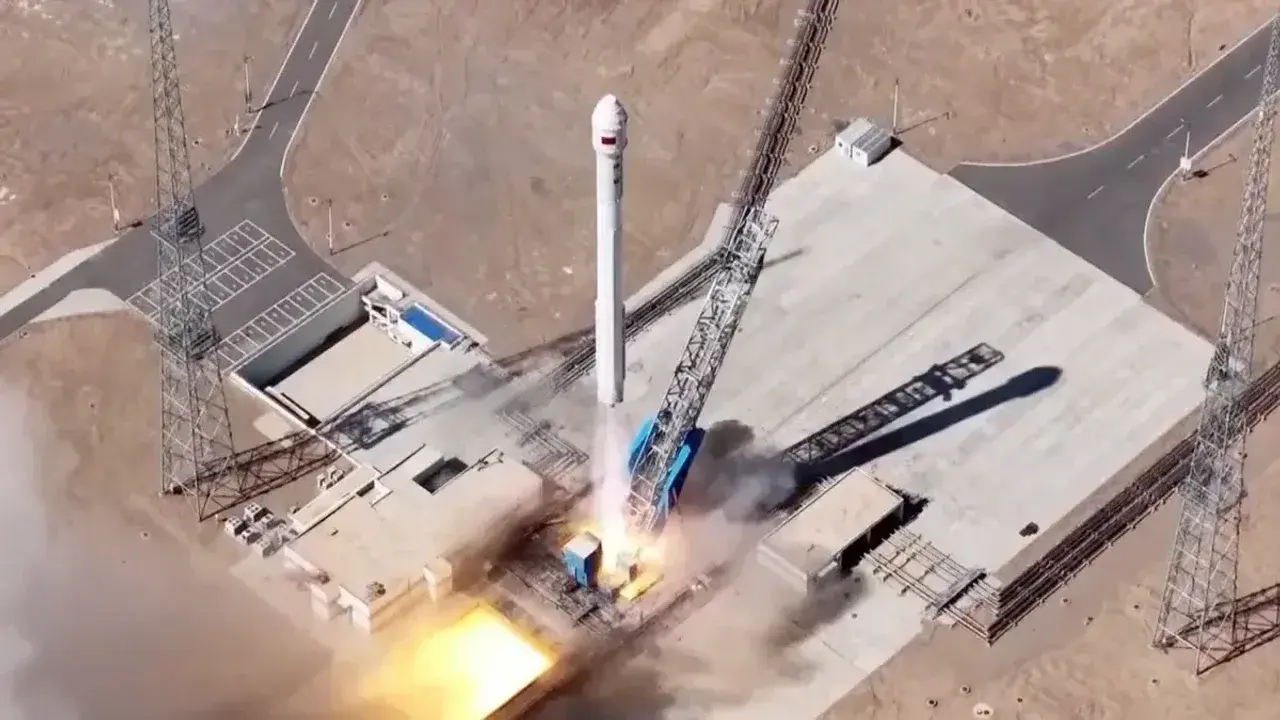
China demonstrated a significant leap in its space exploration capabilities by successfully launching four rockets within a 45-hour window between September 15 and September 17. The rapid series of missions, conducted across three different domestic launch sites, underscored the nation’s accelerating pace in the global space race. Orchestrated by a combination of state-owned enterprises and emerging private aerospace firms, these operations successfully deployed critical infrastructure into orbit. This intense burst of activity highlights China’s strategic commitment to expanding its satellite-internet constellations and enhancing its orbital launch cadence through both public and commercial partnerships.
- China executed four distinct rocket launches from three separate facilities within a tight 45-hour timeframe.
- The missions successfully deployed multiple satellites for the Qianfan and SatNet broadband constellations.
- Private aerospace companies played a major role in the operations alongside state-backed programs.
- The current launch sequence focuses on increasing orbital capacity rather than testing reusable rocket technology.
Private and State Entities Coordinate Rapid Launches
The ambitious launch sequence commenced on Tuesday, September 15, when the private firm LandSpace fired its Zhuque-2E rocket from the Jiuquan Satellite Launch Center. This mission successfully delivered 10 satellites for the Qianfan broadband constellation into low Earth orbit. The Zhuque-2E utilizes a sophisticated liquid methane and liquid oxygen propulsion system, reflecting a design philosophy similar to advanced international launch vehicles. The Qianfan project remains a centerpiece of China’s strategy to build a massive global internet network, which is projected to eventually comprise 15,000 active satellites.
Shortly thereafter, on Wednesday, September 16, Orienspace deployed its Gravity-1 rocket from a mobile platform off the coast of Shanghai. As the world’s most powerful solid-fuel launch vehicle, the Gravity-1 added nine more units to the growing Qianfan constellation. The successful execution of this sea-based launch highlights the increasing operational maturity of China’s private sector. These entities are no longer experimental participants but have become essential pillars in the country’s mission to secure orbital dominance and commercial viability in space.
SatNet and Observation Satellites Populate Orbit
The state-owned China Aerospace Science and Technology Corporation (CASC) continued the momentum on Thursday, September 17, from the Wenchang Spacecraft Launch Site on Hainan Island. A Long March 12 rocket was utilized to carry nine spacecraft for the SatNet project. This massive constellation, planned to reach approximately 13,000 satellites, serves as a cornerstone of China’s efforts to establish independent, high-speed global satellite communications. The mission confirms that state resources remain heavily focused on large-scale infrastructure projects that support both national security and civilian connectivity.
The final launch in this historic 45-hour window occurred just hours later at the Jiuquan facility. Operated by a subsidiary of the China Aerospace Science and Industry Corporation, the Kuaizhou-11 rocket placed two radar-based Earth observation satellites into orbit for the company Spacety. This mission demonstrated the practical efficiency and reliability of China’s smaller, agile launch vehicles. By maintaining such a high tempo of operations, China is effectively proving its ability to deploy, replenish, and manage complex orbital assets at a scale that challenges existing industry benchmarks for frequency and reliability.
As China continues to ramp up its orbital deployment frequency, we are interested to hear your perspective on the future of private-public partnerships in space; please share your thoughts in the comments section below.
Your comment has been submitted,
it will be published after approval.