
EV Charging Consumption Soars 62% in August 2026, Breaking Records

Electric vehicle (EV) charging stations in Turkey experienced their busiest period of the year in August 2026, setting a new record for energy consumption. Over 3.5 million charging transactions were recorded during the month, totaling an impressive 97,469 MWh of electricity consumed. This figure represents a substantial 62% increase from January’s 60,124 MWh, highlighting the rapid adoption and integration of electric vehicles into daily life, particularly amplified by summer holiday travel.
- Electric vehicle charging consumption in Turkey reached a record 97,469 MWh in August 2026, marking a 62% increase from January.
- The number of electric vehicles in Turkey grew by 53% in one year, while charging sockets increased by 43%, leading to a higher vehicle-to-socket ratio.
- Users overwhelmingly prefer DC fast charging, which accounts for 85.5% of total energy consumption despite representing less than half of all available sockets.
- Consumption peaks around 4 PM daily and is 17% higher on weekends, with major cities and holiday routes experiencing the highest demand.
August Sees Record EV Charging Consumption
The latest data from August 2026 reveals unprecedented activity at electric vehicle charging stations across Turkey. The sector witnessed more than 3.5 million individual charging sessions, collectively consuming 97,469 MWh of electricity. This remarkable surge in consumption, a 62% increase since the beginning of the year, underscores the growing popularity of EVs and the significant impact of peak travel seasons. The statistics confirm that EV charging has firmly established itself as an essential part of daily routines for many drivers.
EV Fleet Outpaces Charging Infrastructure Expansion
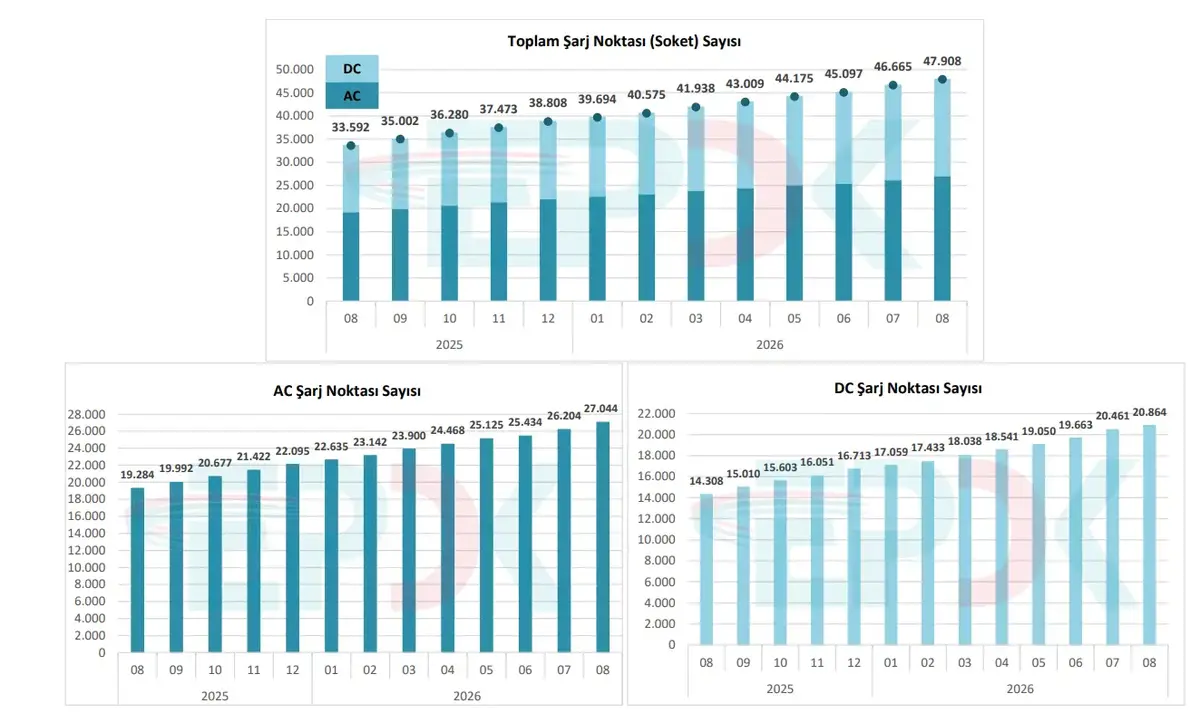
Behind the escalating demand lies a rapidly expanding electric vehicle fleet in Turkey. The number of EVs on the road has surged by 53% in just one year, reaching a total of 476,934 units. While the charging infrastructure has also grown, with the number of sockets increasing by 43% to 47,908 during the same period, it has not kept pace with vehicle growth. Consequently, the average number of vehicles per charging socket has risen from 9 to 10, indicating a potential strain on the existing network.
Ultra-Fast Charging Gains Traction as Users Prioritize Speed
Investors are increasingly focusing on deploying more powerful charging units to help bridge the infrastructure gap. The number of ultra-fast sockets, rated at 150 kW and above, has seen a significant 63% increase over the past year. This strategic investment aligns with user preferences, as drivers overwhelmingly favor fast charging options. Despite DC sockets constituting less than half of the total charging points, they accounted for a substantial 85.5% of the total energy consumed. A typical DC charge averages only 34 minutes, starkly contrasting with approximately three hours for an AC charge, highlighting the premium users place on speed.
Peak Hours and Days Reveal Evolving Charging Habits
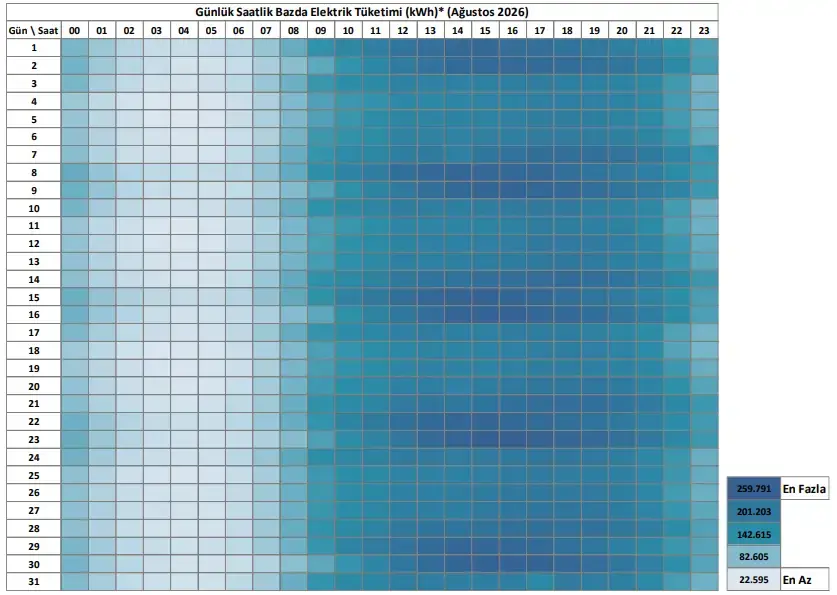
An analysis of EV charging behavior indicates specific patterns of usage. The busiest hour for charging is consistently 4 PM, with more than half of the daily consumption occurring between noon and 8 PM. Conversely, charging stations largely remain empty during nighttime hours. Weekend consumption consistently surpasses weekday levels by 17%, further emphasizing the impact of leisure travel and personal schedules. The single busiest day recorded in August was Saturday, the 15th, reflecting typical weekend peak activity.
Major Cities and Holiday Routes Lead Consumption
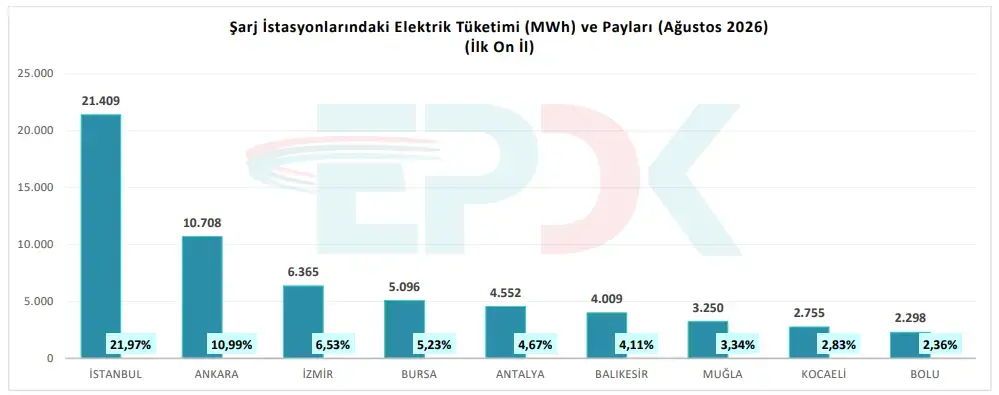
Geographically, Istanbul stands as the undisputed leader in EV charging consumption, accounting for 22% of the total, followed by Ankara and Izmir. The inclusion of Balıkesir and Muğla in the top 10 underscores the significant influence of summer holiday traffic, as these cities are popular tourist destinations. Bolu’s presence on the list highlights the importance of key intercity routes, particularly the busy Istanbul-Ankara corridor, as a major charging artery for long-distance travel.
Market Leaders Emerge Amidst Green Energy Push
In the competitive EV charging market, two key players, Trugo and Zes, collectively command 40% of the energy sales. Furthermore, a commendable 62% of the electricity consumed for EV charging during August was sourced from certified green stations, indicating a growing commitment to renewable energy within the sector. This trend aligns with broader sustainability goals and consumer demand for environmentally friendly solutions.
Future Challenges Demand Smarter Charging Solutions
While the August figures are encouraging, they also bring to light critical challenges that need addressing. The ongoing disparity between the rapid growth of the EV fleet and the slower expansion of charging infrastructure, coupled with concentrated consumption patterns during specific hours, days, and routes, poses a significant hurdle. This concentration often leads to extended queues at fast-charging stations, especially during holiday periods, while many stations sit idle at night. Implementing strategies such as time-based pricing could incentivize off-peak charging, optimizing resource utilization. The future success of the EV charging experience will not solely depend on the sheer number of stations, but rather on their strategic placement, adequate power, and intelligent management to ensure availability when and where it is most needed.
What are your thoughts on these new EV charging consumption records? Do you find it easy to locate available charging stations, especially during peak travel times? Share your experiences and insights in the comments below!
Your comment has been submitted,
it will be published after approval.