
Huawei Mate 90 Pro Max Fails to Meet Performance Expectations

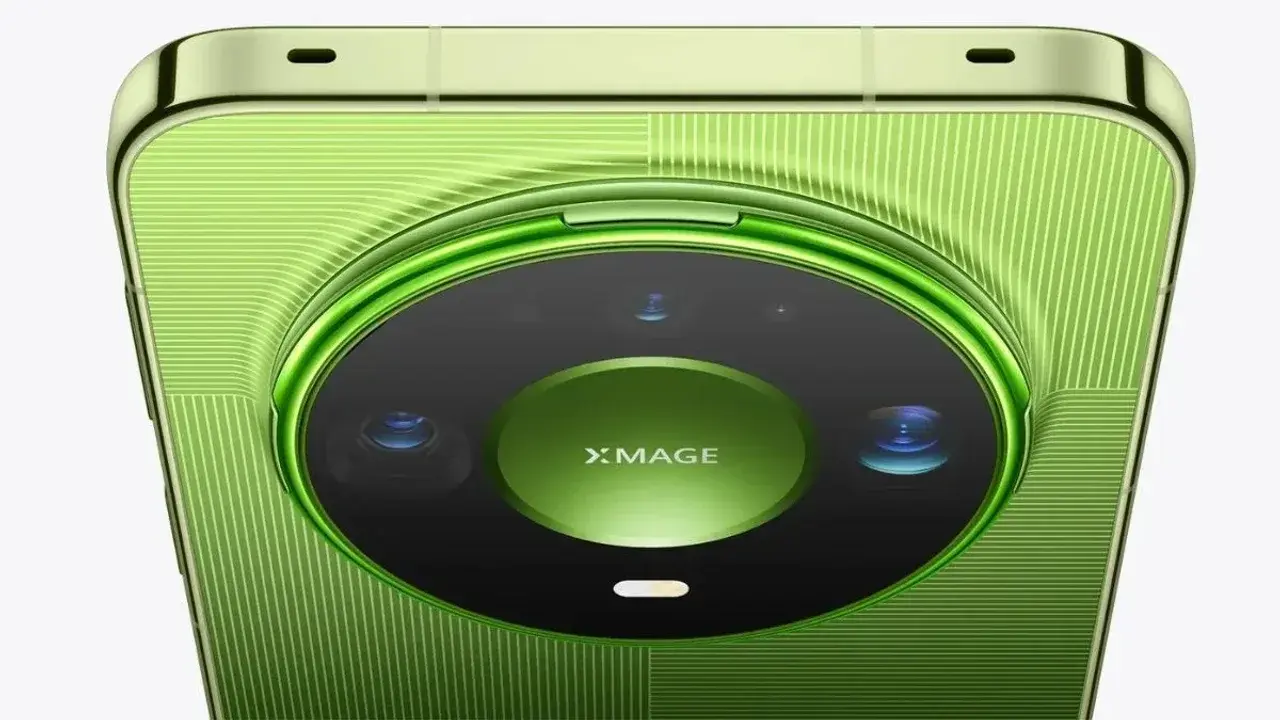
Huawei’s latest high-end smartphone, the Mate 90 Pro Max, has recently surfaced on the Geekbench 7 benchmarking platform, revealing the performance capabilities of the new Kirin 9050 Pro chipset. As a central component of Huawei’s strategy to achieve technological autonomy amid ongoing international trade restrictions, this flagship device represents the company’s latest attempt to compete in the premium market. However, initial benchmark data indicates that the Mate 90 Pro Max struggles to keep pace with contemporary rivals, falling significantly short of the industry standards currently set by the latest generation of flagship mobile processors.
- The Kirin 9050 Pro chipset delivers benchmark scores that trail significantly behind current flagship processors like the Snapdragon 8 Elite Extreme Gen 6.
- Technical analysis suggests the processor is manufactured using a 7 nm process by SMIC.
- The Mate 90 Pro Max features a nine-core CPU design paired with a six-core Maleoon 955 graphics unit.
During the Geekbench 7 evaluation, the device recorded an average single-core score of 1,317 and a multi-core score of 5,381. While the peak performance reached 1,528 and 6,169 respectively, these figures place the Kirin 9050 Pro roughly between the 2021-era Snapdragon 8 Gen 1 and the Snapdragon 8 Gen 2. 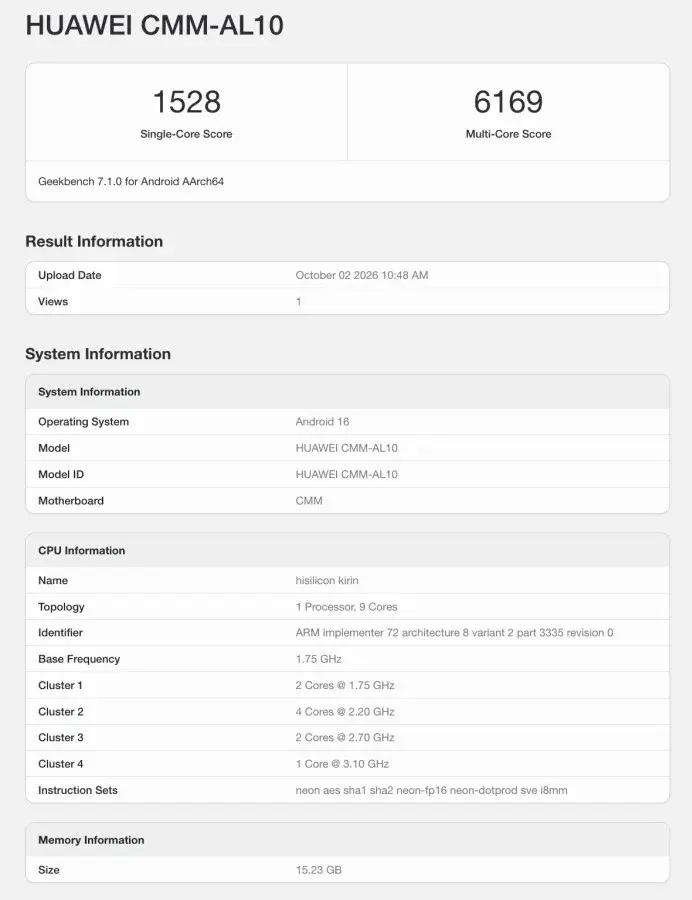 When compared to industry leaders, such as Qualcomm’s latest offerings which achieve multi-core scores exceeding 12,000, the performance gap becomes evident. This disparity highlights the significant challenges Huawei continues to face in its pursuit of hardware parity with global competitors.
Benchmark Results Reveal Performance Limitations
The internal architecture of the Kirin 9050 Pro consists of a nine-core CPU configuration. The setup includes a single Prime Ultra core clocked at 3.1 GHz, supported by six performance cores operating at frequencies of 2.7 GHz and 2.2 GHz. Furthermore, the efficiency is managed by two additional cores running at 1.75 GHz. 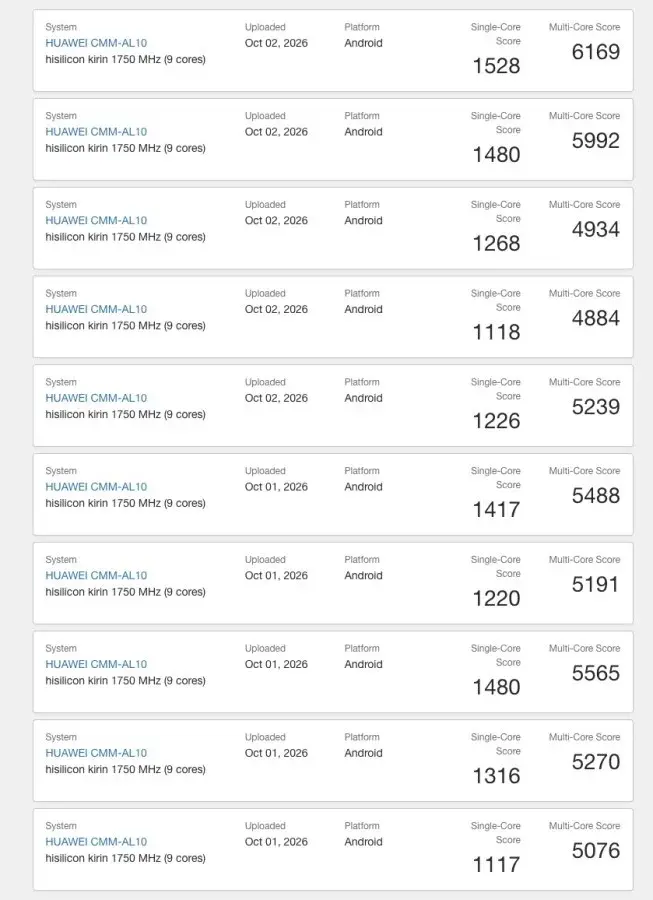 For graphics processing, the device utilizes a six-core Maleoon 955 GPU clocked at 1.05 GHz. Despite these specifications, the real-world processing power remains insufficient to challenge modern high-end handsets.
Production Processes Remain Under Scrutiny
While Huawei has maintained a degree of secrecy regarding the development of its new silicon, industry analysts at Bernstein Research suggest that the Kirin 9050 Pro is built on a 7 nm node by the Semiconductor Manufacturing International Corporation (SMIC). It is speculated that the manufacturing process likely utilizes SMIC’s N+2 or N+3 technologies, though these details remain unverified by official corporate channels. The deployment of this chipset is currently limited to the most expensive variants of the Mate 90 series, specifically the Pro Max and RS models available in the Chinese market.
Given the current performance gap between Huawei’s proprietary hardware and international flagship standards, we invite you to share your perspective on whether you believe the company can successfully close this technological divide in future iterations. Let us know your thoughts in the comments section below.
Your comment has been submitted,
it will be published after approval.