
Europe Launches New Payment Infrastructure to Challenge Visa and Mastercard


A new pan-European initiative known as the European Network for Payments (ENP) has been established to unify payment institutions across the continent, marking a decisive move toward reducing reliance on US-based giants Visa and Mastercard. Headquartered in Madrid, this collaborative project aims to create a robust and independent financial infrastructure that connects national payment systems across 13 countries. By integrating existing local platforms, the ENP initiative now represents a collective reach of approximately 130 million users, significantly enhancing Europe’s sovereign control over its digital financial transactions as geopolitical and economic pressures continue to rise.
- The European Network for Payments connects 13 national payment systems to decrease dependence on non-European financial infrastructure.
- Member organizations include major European players like Bizum, Bancomat, and Vipps MobilePay, covering nearly 70% of the European and Norwegian population.
- The project focuses on creating a unified operational framework to facilitate seamless cross-border and retail payments without building a system from scratch.
European Payment Ecosystems are Being Unified
The foundation of this network rests upon a coalition of established local payment leaders, including Spain’s Bizum, Italy’s Bancomat, and the pan-European digital wallet Wero. Additional founding members such as Portugal’s SIBS-MB WAY and the Scandinavian powerhouse Vipps MobilePay contribute to a massive footprint that encompasses the vast majority of the European and Norwegian citizenry. 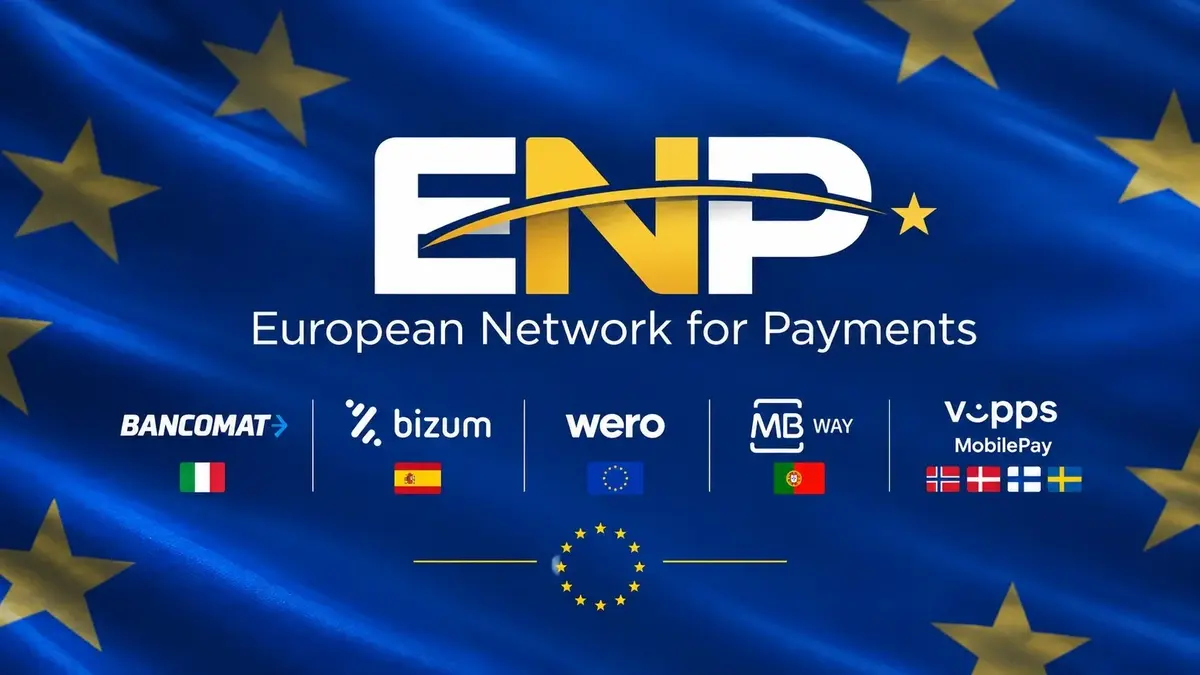
Rather than developing a proprietary network from the ground up, the ENP strategy relies on the strategic integration of currently operating infrastructures. This approach ensures immediate interoperability and leverages the existing trust consumers have in their local payment providers. The Madrid-based team is currently finalizing the technical and operational protocols required to ensure secure, high-speed data flow that strictly adheres to European regulatory standards.
Operational Roadmap is Being Implemented
The strategic deployment of the ENP infrastructure will occur in measured phases. Initial implementation will prioritize cross-border transaction capabilities and the standardization of point-of-sale systems within physical retail environments. As the network matures, the organization plans to expand its services to include advanced e-commerce functionality and comprehensive digital transaction processing, effectively competing with the dominance of established global card networks.
The initiative also addresses the long-standing fragmentation of the European payment landscape. By consolidating disparate national systems, the ENP aims to foster a more efficient, cost-effective, and secure environment for both consumers and merchants. The project will initially be funded through ENP’s own operational budget, with the expectation that the network will achieve financial sustainability as it scales its transaction volume and expands to include further regional partners.
Future Digital Euro Integration is Being Evaluated
Looking toward the future, the ENP is positioned to act as a critical backbone for broader European financial innovation. The potential integration with the European Central Bank’s (ECB) ongoing digital euro project remains a cornerstone of the long-term vision. It is anticipated that the digital euro wallet will eventually utilize the ENP’s unified infrastructure, further cementing the autonomy of European payments.
As this network expands, the number of participating nations is expected to rise, creating a truly interconnected financial bloc. This shift represents a significant milestone in the digital transformation of the European economy, promising a more resilient and sovereign financial future for all member states.
We are curious to hear your perspective on this major shift in the financial landscape; do you believe a unified European payment network will effectively challenge the current dominance of global giants? Please share your thoughts in the comments section below.
Your comment has been submitted,
it will be published after approval.