
NVIDIA Launches RTX Spark to Redefine Windows PC Performance

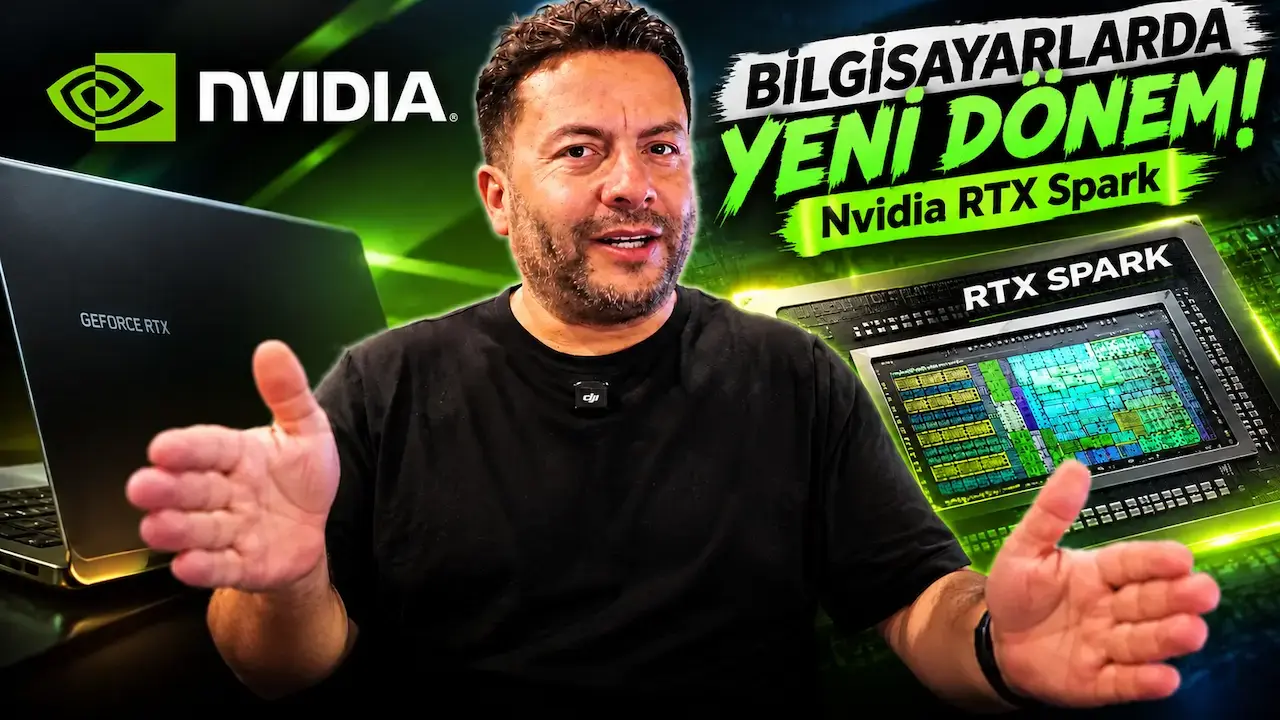
NVIDIA CEO Jensen Huang and Microsoft CEO Satya Nadella officially unveiled the RTX Spark platform at a major event in San Francisco, marking a pivotal shift in the PC landscape. Designed as NVIDIA’s first integrated system-on-a-chip (SoC) for consumer PCs, the RTX Spark combines Arm-based Grace CPUs with Blackwell-architecture GPUs to compete directly with Apple Silicon, Qualcomm, and x86 giants like Intel and AMD. Pre-orders for RTX Spark laptops began immediately, with a retail release scheduled for October 16. The Surface Laptop Ultra leads the rollout with a starting price of $2,599, signaling a new era of AI-integrated mobile computing.
- NVIDIA introduces the RTX Spark, a 3nm SoC featuring up to 20 Grace CPU cores and 6,144 Blackwell GPU cores.
- Microsoft integrates Microsoft Execution Containers (MXC) into Windows 11 to provide hardware-level security for local AI agents.
- The new platform targets high-end performance with up to 128 GB of unified LPDDR5X memory for complex AI models.
- Industry-leading OEMs including ASUS, Dell, HP, and Lenovo prepare to launch devices powered by this new chip architecture.
NVIDIA RTX Spark Combines Advanced Computing Architecture
The RTX Spark represents a departure from NVIDIA’s traditional strategy of pairing GPUs with third-party processors. By utilizing an Arm-based Grace CPU developed in collaboration with MediaTek, NVIDIA has created a cohesive system capable of delivering 1 petaflop of AI performance at FP4 precision. The chip leverages NVLink-C2C technology to provide a high-bandwidth connection between the CPU and GPU, ensuring that demanding generative AI models can run locally without relying on cloud services.
This hardware design is particularly beneficial for developers who need to run large-scale models, such as the 125-billion parameter Qwen 3.8, directly on their devices. The GPU component offers performance parity with desktop-class graphics cards while maintaining power efficiency suitable for laptop form factors, typically operating between 45 and 80 Watts. 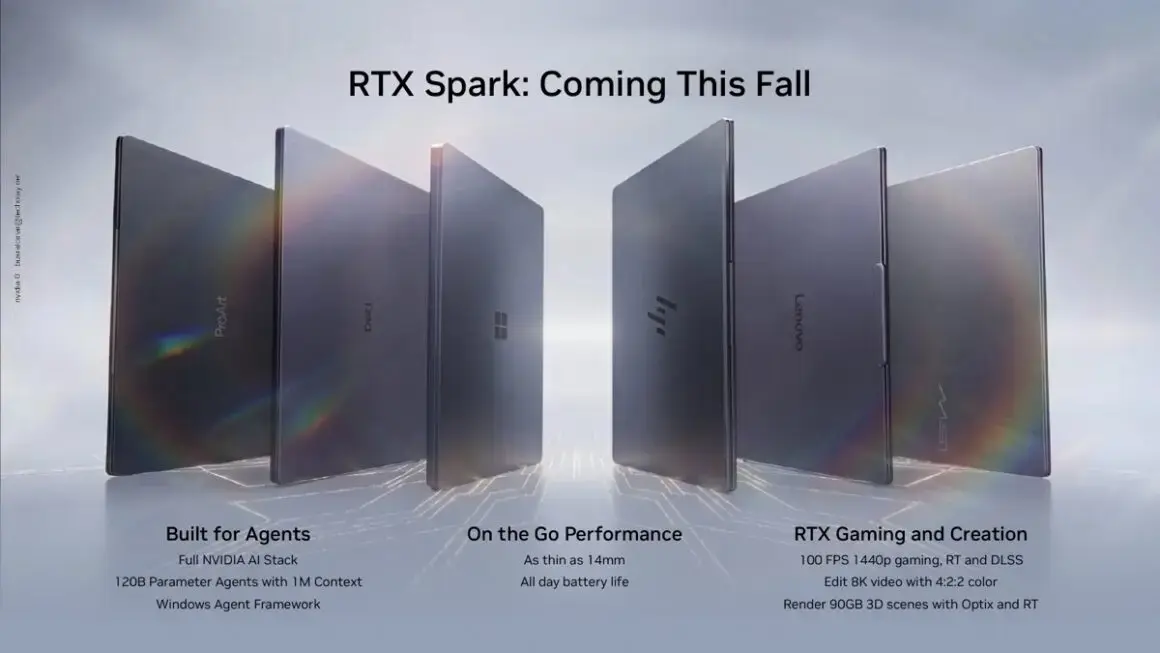
Microsoft Enhances Windows Security for AI Agents
Beyond the hardware, Microsoft has fundamentally altered the Windows 11 operating system to support local AI operations. The introduction of Microsoft Execution Containers (MXC) creates a secure, sandboxed environment where AI agents can process sensitive data without violating system privacy. This architecture ensures that all tasks performed by these agents are authenticated and managed under strict enterprise security protocols.
HydraFusion technology further optimizes the experience by balancing workloads between local processing and cloud resources. This allows applications like GitHub Copilot and VS Code to execute routine tasks locally, thereby reducing latency and token costs. Furthermore, the Prism emulator has been significantly updated to provide robust support for legacy x86 applications on the Arm-based architecture, addressing a long-standing challenge for non-x86 platforms.
NVIDIA Targets Enterprise Markets with DGX Station
The company also introduced the DGX Station for Windows, a desktop-side supercomputer designed for corporate environments. This machine utilizes the GB300 Grace Blackwell Ultra Desktop Superchip to deliver up to 20 petaflops of AI power. By bringing this level of performance to a local workstation, NVIDIA aims to eliminate the historical divide where developers were forced to switch between Linux for heavy AI tasks and Windows for productivity software.
Competition Intensifies in the High-End Laptop Market
The market response to the RTX Spark will be determined by its ability to outperform established rivals. While Apple’s M5 Pro and Max chips currently lead in power efficiency and single-core CPU performance, NVIDIA argues that its CUDA ecosystem and superior GPU capabilities provide a distinct advantage for creative and gaming workflows. AMD’s upcoming Strix Halo and Intel’s Panther Lake platforms will also challenge the RTX Spark, particularly in price-sensitive segments where x86 compatibility remains a priority.
With the introduction of the RTX Spark platform, the competition for the ultimate AI-powered PC is heating up. Do you believe this hardware shift will successfully convince professional users to move away from traditional x86 systems, or will the premium pricing keep these machines in the hands of a niche audience? Share your thoughts on the future of personal computing in the comments below.
Your comment has been submitted,
it will be published after approval.