
ASML Reports Record Revenue as Chip Demand Outpaces Production Capacity

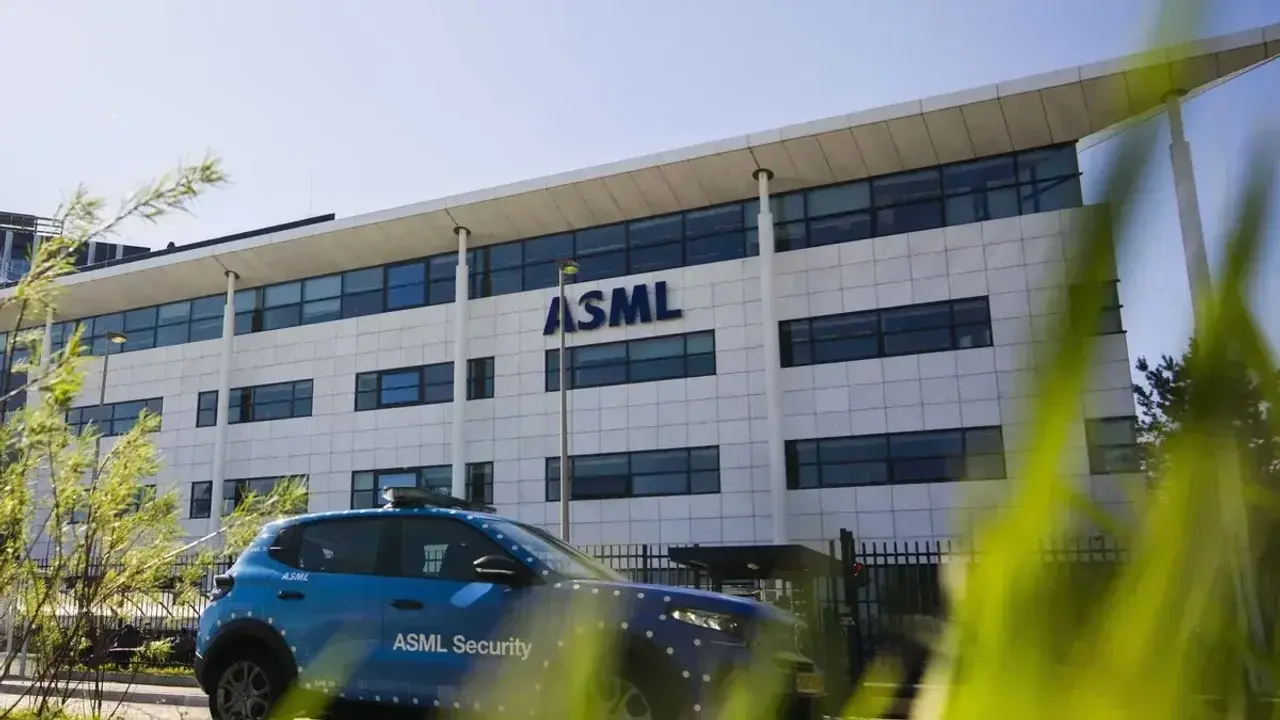
ASML reported its highest quarterly performance in history during the third quarter of 2026, generating a staggering $13.06 billion in revenue. This surge, driven primarily by an unprecedented global demand for AI-related infrastructure, highlights a significant bottleneck in the semiconductor supply chain. As chip manufacturers scramble to scale up, ASML’s advanced lithography equipment has become the central pillar of this industry-wide expansion. Despite a 55 percent year-over-year revenue increase and the successful sale of 121 lithography systems, the company warns that its current production capacity struggles to keep pace with the relentless appetite of the semiconductor market.
- ASML achieved a record-breaking $13.06 billion in quarterly revenue fueled by massive investments in artificial intelligence infrastructure.
- The company successfully sold 121 lithography systems during the quarter, including 17 high-end EUV units that contributed $4.59 billion to total earnings.
- Executive leadership anticipates that current production expansion plans will remain insufficient to satisfy the long-term demands of global clients.
- A new value-based pricing strategy will take effect starting in 2027 to manage the tightening supply of advanced manufacturing equipment.
Record Financial Performance Fuels Industry Growth
The financial results reflect a period of intense activity for the semiconductor equipment giant. With a gross profit margin of 57.5 percent, ASML has solidified its position as an indispensable partner for major chipmakers. EUV lithography machines remain the most significant revenue driver, as these systems are essential for producing the sophisticated processors required for modern high-performance computing. 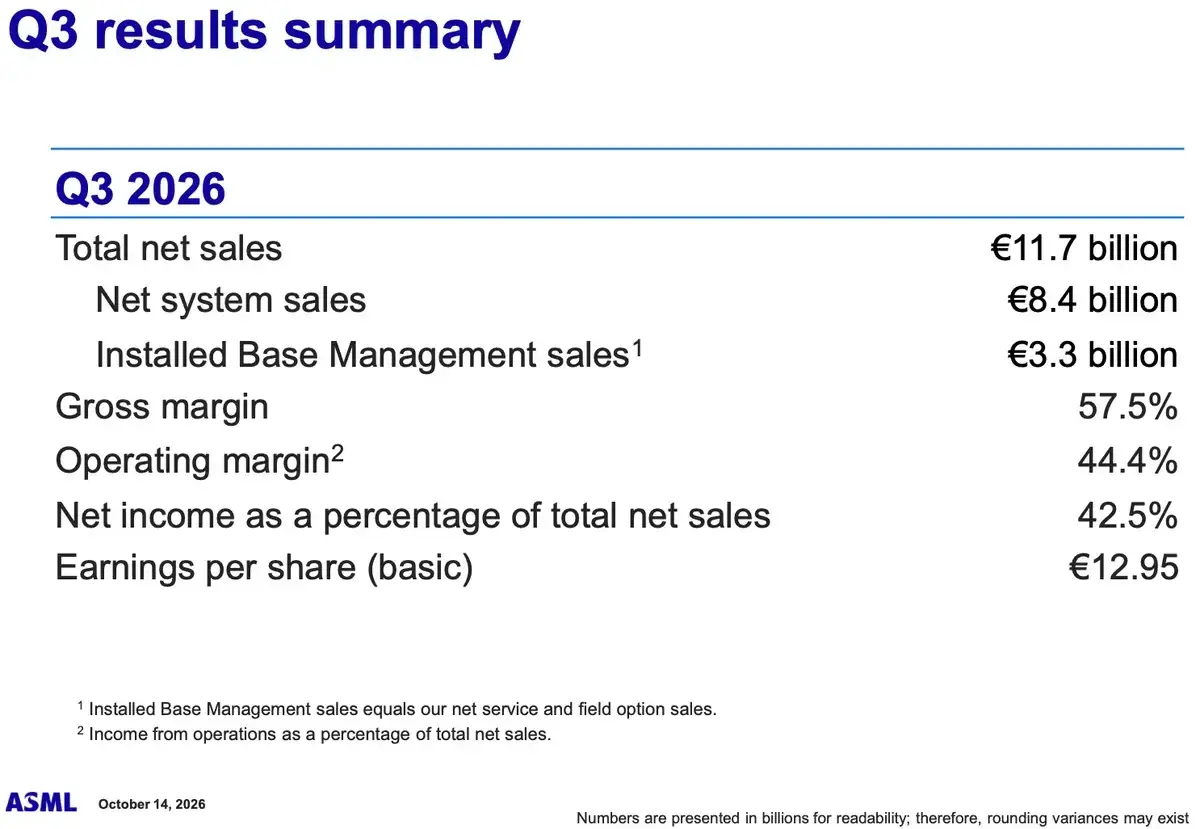
Geographically, the reliance on ASML’s technology is widespread. Taiwan leads the market with a 32 percent share, followed closely by South Korea at 31 percent, while China and the United States hold 23 percent and 13 percent, respectively. Despite external pressures and export limitations, China remains a crucial contributor to ASML’s financial health, maintaining roughly one-fifth of the company’s total revenue stream.
Future Technologies Shape Strategic Planning
Looking ahead, ASML is banking on its next-generation High-NA EUV systems to define the future of chip manufacturing. Industry leaders are already aligning their roadmaps with this technology; Intel intends to utilize High-NA systems for its 14A process by 2028, and Samsung is integrating the technology into its DRAM production efforts. 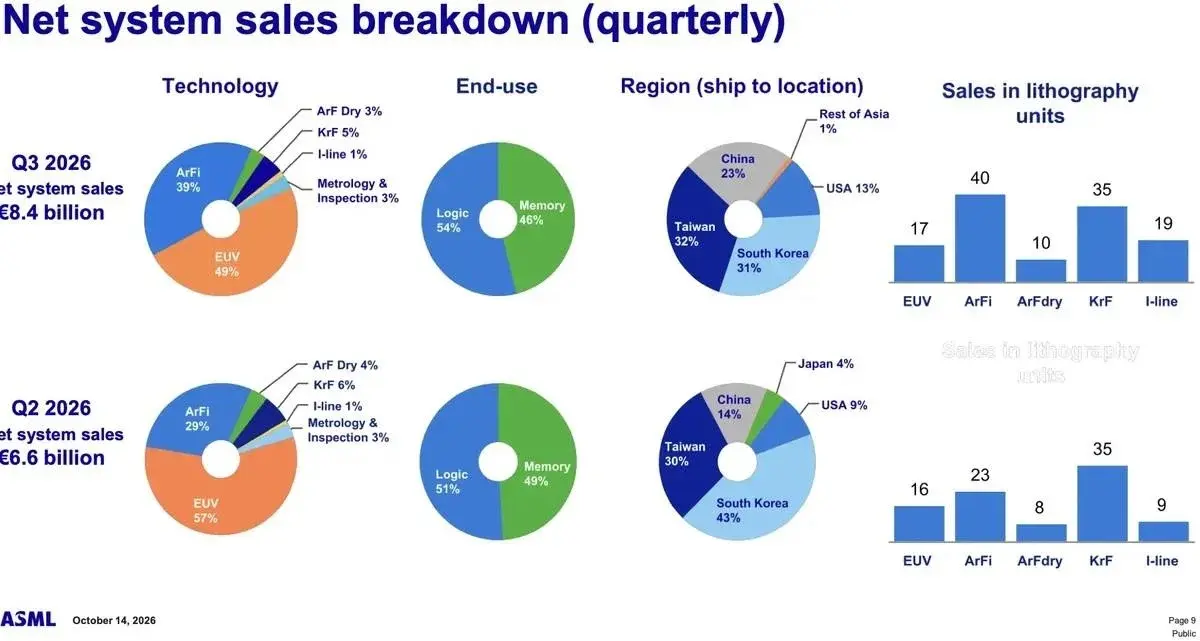
While TSMC is projected to adopt this technology in the 2030-2031 window, current field data for High-NA systems is promising, with availability rates approaching 90 percent. To further bolster output, ASML is introducing efficiency-focused hardware like the Twinscan NXE:3800F, which can process 260 plates per hour. The company’s decision to implement a value-based pricing strategy reflects the scarcity and high demand for these technological marvels.
As orders extend into 2029 and 2030, ASML maintains a cautious yet ambitious outlook for 2026, targeting revenue between $49.3 billion and $50.4 billion. This sustained growth trajectory emphasizes how deep the integration of AI has become within the global industrial framework, leaving the semiconductor industry in a state of perpetual expansion.
Given that the rapid development of AI technology is straining the global supply of chips, we are interested in hearing your perspective. How do you believe the ongoing supply-demand imbalance in the semiconductor sector will influence the pricing and availability of consumer electronics in the coming years?
Your comment has been submitted,
it will be published after approval.