
We Experienced the Tesla Robotaxi Service in San Francisco

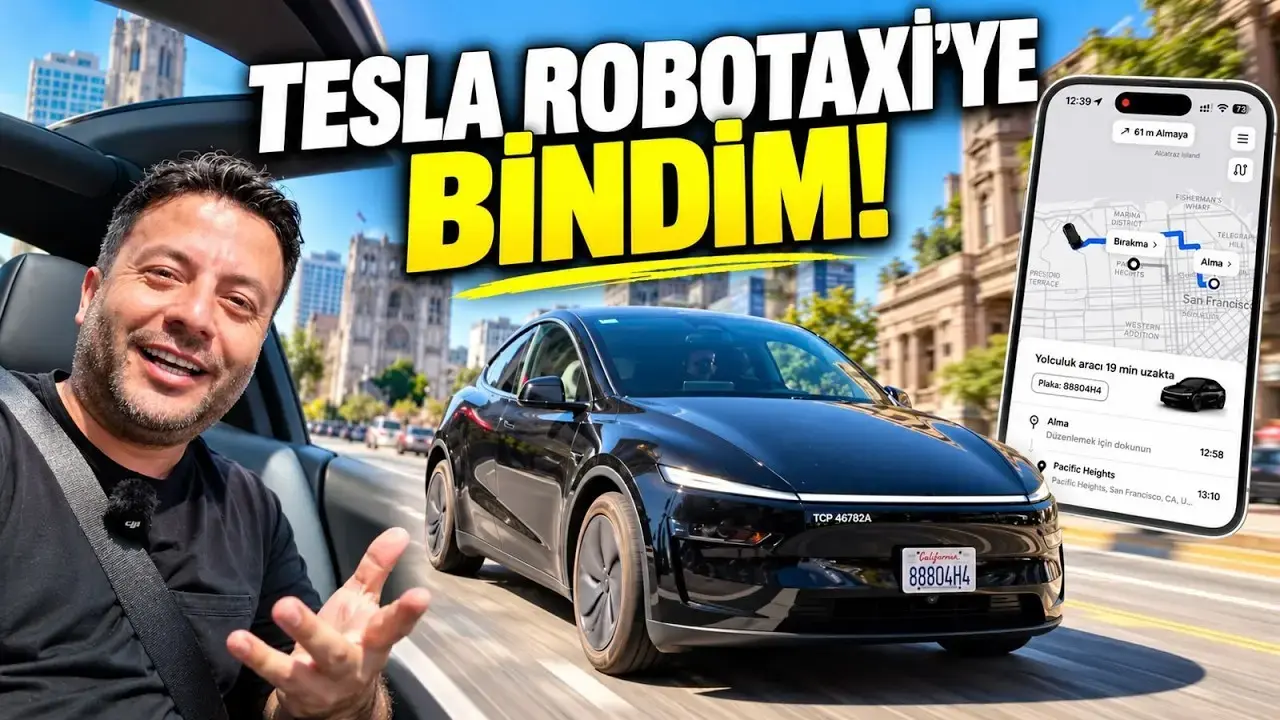
During a recent visit to San Francisco, our team had the opportunity to experience the Tesla Robotaxi service firsthand, witnessing the evolving landscape of urban autonomous transportation. As sci-fi visions of driverless transit become reality, we successfully requested a vehicle using the Turkish interface and documented the entire journey for our audience. While the industry is rapidly changing, this test ride offered significant insights into how Tesla is navigating the competitive market of autonomous mobility. From booking the ride via the official application to the final arrival at our destination, the experience highlighted the current state of self-driving technology and its practical application.
- The Tesla Robotaxi application features a Turkish interface and integrates seamlessly with existing Tesla account payment methods.
- Tesla currently operates with safety drivers in San Francisco due to specific state-level charter-party carrier regulations.
- The experimental ride cost 13 dollars, offering a competitive pricing model compared to existing ride-sharing alternatives.
- Tesla relies exclusively on camera-based vision systems while competitors like Waymo and Zoox utilize more complex sensor suites.
The Tesla Robotaxi Application Simplifies Booking Processes
The Tesla Robotaxi system operates through a dedicated application that syncs directly with a user’s existing Tesla account. This integration eliminates the need to input payment details repeatedly, as the service uses the credit card already on file. The interface provides real-time tracking, showing exactly where the vehicle is located and its expected arrival time. If a passenger fails to meet the vehicle within a three-minute window, the car proceeds to its next destination. For iPhone users, the integration with the Dynamic Island feature allows for constant monitoring of the ride status even when the phone is locked, adding a layer of convenience to the user experience.
Human Safety Drivers Remain Present for Regulatory Compliance
Although there was initial anticipation to experience the steering-wheel-free Cybercab, our ride was conducted in a Tesla Model Y. Currently, the futuristic Cybercab is restricted to a limited operational area in Austin, Texas, and is not yet available for public passengers in San Francisco. The presence of a safety driver in the Model Y is a requirement dictated by California’s current regulatory framework. Because Tesla holds a charter-party carrier permit rather than a dedicated driverless vehicle permit in this region, a human must remain in the driver’s seat. Although the driver did not intervene, their presence is a mandatory condition for the vehicle to legally transport passengers.
The In-Vehicle Experience Offers Enhanced Personalization
Once inside, the vehicle prompted us to fasten our seatbelts and initiated the ride only after we confirmed the request on the screen. The visual interface mirrored the Full Self-Driving software found in private Tesla vehicles but utilized a unique orange color scheme. A standout feature was the seamless synchronization with our YouTube Music account, allowing us to listen to our own curated playlists throughout the trip. Unlike other autonomous services that limit music selection, this integration provided a highly personalized environment. The car navigated heavy traffic smoothly, yielding to pedestrians and obeying all traffic signals with precision.
Autonomous Competitors Crowd the San Francisco Streets
San Francisco serves as the global epicenter for the autonomous vehicle race. During our time in the city, we observed numerous vehicles from Alphabet’s Waymo, which currently operates fully driverless services using Jaguar I-PACE and Zeekr models. While Waymo’s approach relies heavily on expensive sensor hardware, Tesla continues to push its vision-only philosophy. We also encountered the steering-wheel-free vehicles developed by Amazon’s Zoox. This competitive environment suggests that the future of urban mobility will be defined by diverse technological approaches, each vying for dominance in the transit market.
We are curious to hear your perspective on the rise of autonomous transit. Do you believe that robotaxis will eventually replace traditional taxi services, and when do you expect to see this technology implemented in your own city? Please share your thoughts and predictions in the comments section below.
Your comment has been submitted,
it will be published after approval.