
Google Quantum Computing Breakthrough Reduces Error Rates by 40 Times

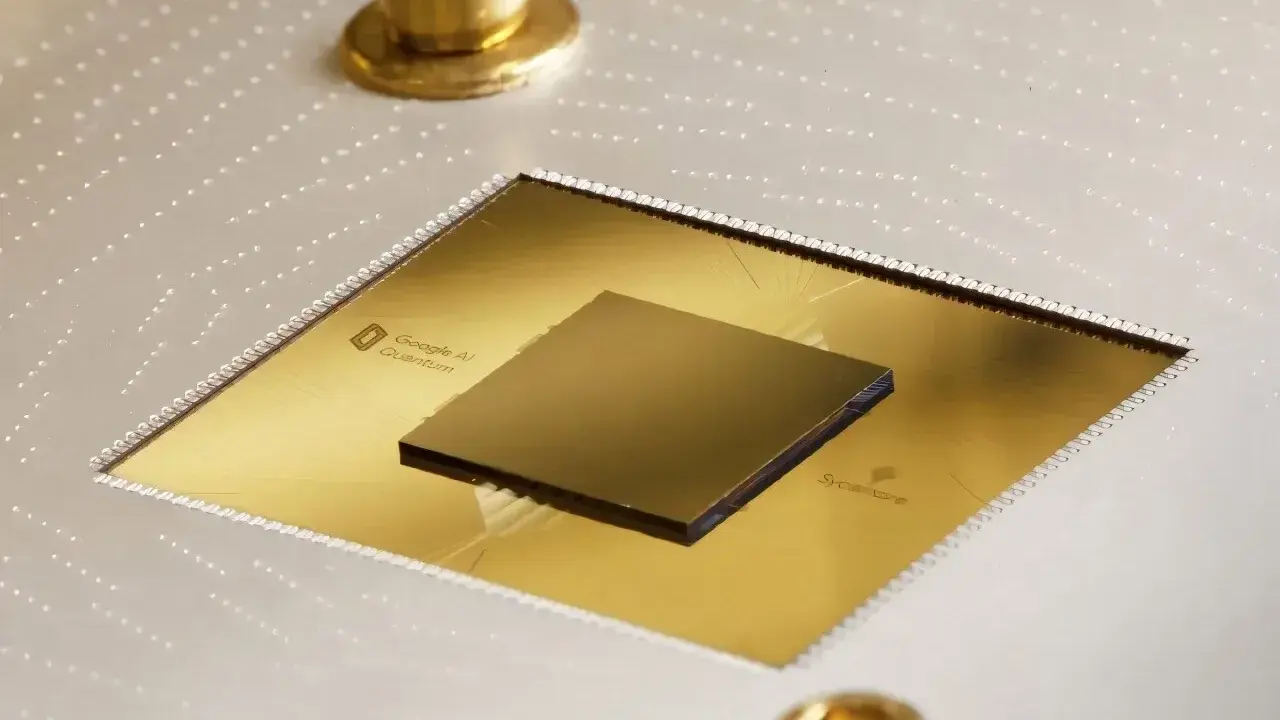
Google has achieved a significant milestone in the field of quantum computing by successfully implementing a new technique that reduces error rates by a factor of 40 on its proprietary Willow processor. Quantum computers are notoriously prone to errors due to the extreme sensitivity of qubits to environmental fluctuations. To mitigate these disruptions, a team of researchers at Google introduced a novel method known as magic state cultivation. This advancement marks a critical step toward overcoming the hardware-related bottlenecks that have historically hindered the scalability and reliability of quantum systems, bringing the industry closer to fault-tolerant computing.
- Google researchers developed the magic state cultivation technique to enhance the accuracy of quantum operations.
- The new method successfully reduced error rates by 40 times compared to traditional benchmarks during tests on the Willow processor.
- The team utilized a technique called kickback tomography to isolate and measure quantum states more reliably.
- The research demonstrated the successful transfer of quantum states between different error correction codes for the first time.
Magic State Cultivation Improves Operational Accuracy
Quantum computers rely on protected quantum states, often referred to as magic states, to perform complex algorithms. Conventional distillation processes, which isolate these states, are incredibly resource-intensive and can consume up to 95 percent of a future computer’s computational capacity. By contrast, the magic state cultivation approach developed by Google researchers Craig Gidney, Noah Shutty, and Cody Jones streamlines this process.
Instead of processing a massive number of faulty states to extract a few reliable ones, this method prepares quantum states in a more controlled, localized environment. By applying a series of precise measurements, the system can discard failures early in the process. This shift allows for the generation of high-fidelity states on smaller hardware footprints, effectively lowering the overall resource burden on the quantum machine.
Technical Challenges are Addressed by the Willow Processor
Under the leadership of Emma Rosenfeld, the research team encountered significant hurdles during initial testing, particularly regarding environmental noise from laboratory equipment and temperature instability. To combat these issues, the engineers refined the processor’s control mechanisms and integrated a sophisticated measurement technique known as kickback tomography. This method allowed the team to assess the reliability of quantum states with much higher precision.
In experimental runs, the team achieved an impressive 99.99 percent accuracy for logical T states. Furthermore, the researchers successfully utilized a grafting technique to transition quantum states between distinct error correction protocols—specifically moving from a distance-3 color code to a distance-5 surface code. While the transition introduced minor residual errors, the proof-of-concept confirms that hardware-level state cultivation is a viable path forward for modular quantum architectures.
The successful application of these techniques on the Willow processor serves as a testament to the progress in quantum hardware engineering. As the field matures, the ability to maintain these high-fidelity states will be essential for solving problems that remain beyond the reach of classical supercomputers. These findings provide a clear roadmap for scaling quantum hardware while minimizing the overhead associated with error correction.
The rapid evolution of quantum hardware continues to spark intense debate among experts and enthusiasts alike. What is your perspective on the timeline for quantum computers to move from laboratory environments into practical, everyday applications?
Your comment has been submitted,
it will be published after approval.