
DLSS Technology Now Operates on AMD Graphics Cards

Software developer Daniel Blanco has reached a significant milestone in the tech industry with the release of the DLSS-NR on AMD project’s Alpha 0.8.0 version. This groundbreaking update enables Nvidia’s proprietary DLSS technologies to function with full compatibility on AMD graphics cards. By bridging the gap between competing hardware ecosystems, this initiative allows users of the Radeon RX 7000 and RX 9000 series to access advanced image reconstruction and performance-boosting features previously locked to Nvidia hardware. This achievement highlights the growing capability of the open-source community to bypass restrictive hardware limitations through innovative software engineering.
- The Alpha 0.8.0 release of the DLSS-NR project integrates Nvidia’s core DLSS technologies into AMD hardware environments.
- This update introduces DLSS 4.5 Super Resolution, Ray Reconstruction, and frame generation capabilities to supported Radeon cards.
- The software provides a viable performance alternative for users owning Radeon RX 7000 and 9000 series graphics cards.
- Development efforts focus on overcoming proprietary software barriers to enhance gaming visuals on non-Nvidia platforms.
Advanced Graphics Features are Integrated into AMD Ecosystems
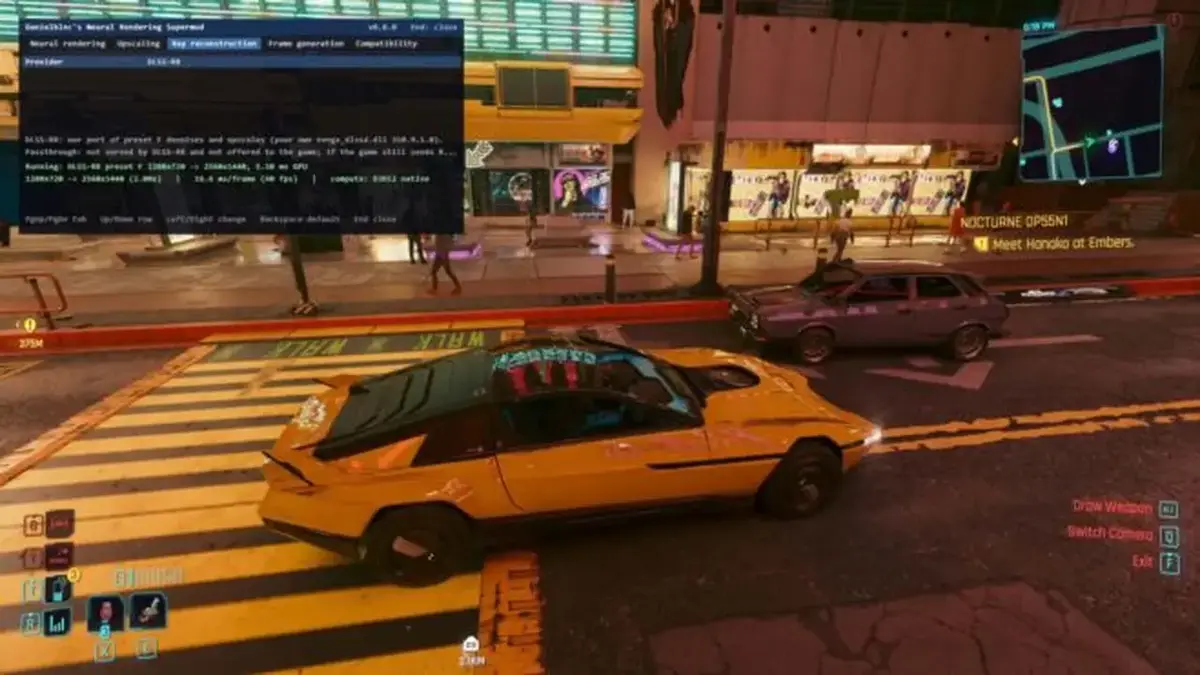
The modification created by Daniel Blanco serves as more than just a simple patch; it acts as a comprehensive infrastructure that brings the latest rendering technologies from Nvidia into the AMD ecosystem. With the introduction of the Alpha 0.8.0 release, users gain access to the M and L models of DLSS 4.5 Super Resolution. Furthermore, the inclusion of the F model for Ray Reconstruction and advanced frame generation algorithms allows for up to four times the performance increase in compatible titles. These enhancements not only elevate visual fidelity but also optimize frame rates, providing gamers with a significantly smoother experience across various hardware configurations.
Technical Expertise is Required for System Setup
Unlike AMD’s native FidelityFX Super Resolution (FSR) technology, which offers a one-click activation experience, the DLSS-NR on AMD project demands a certain level of technical proficiency during the installation phase. Because the software is currently in an alpha state, it lacks the seamless integration found in official manufacturer drivers. However, the substantial improvements in visual quality and performance provide a strong incentive for enthusiasts to navigate these initial setup complexities. Early feedback from the community suggests that the project is highly stable and serves as a robust alternative for those seeking to maximize their hardware potential.
Future Updates are Anticipated by Enthusiasts
This project first garnered significant attention in September when it successfully enabled DLSS 5 technology on Radeon graphics cards. The development team maintains a rapid iteration cycle, demonstrating a persistent commitment to running closed-source Nvidia software on AMD hardware architectures. As developers plan to release subsequent updates focused on further optimization and bug resolution, the industry is witnessing a clear trend toward overcoming hardware-specific software locks. Observers continue to monitor whether such community-driven modifications can eventually rival the stability and ease of use found in official driver releases.
Do you believe that enabling Nvidia’s DLSS technology on AMD hardware fundamentally shifts the competitive landscape of the gaming industry, or do you prefer to stick with official, manufacturer-supported solutions? We would love to hear your thoughts on whether you plan to test these modifications on your own gaming rig.
Your comment has been submitted,
it will be published after approval.