
Google Gemini 4 Argon Advances Fusion Research Mathematical Models


Google’s Gemini 4 Argon artificial intelligence model has reached a significant milestone in fusion research by successfully tackling complex mathematical equations related to magnetic fields in experimental reactors. In a collaborative effort involving researchers from the University of Maryland and other institutions, the AI model helped expand the mathematical framework used to describe magnetic confinement. By identifying new configurations that break previous symmetry constraints, the AI has provided scientists with a more robust set of theoretical tools to analyze plasma behavior. While this development does not represent a commercial breakthrough in energy production, it marks a vital step in improving the fundamental accuracy of fusion-related computational models.
- Google’s Gemini 4 Argon model successfully generated new mathematical configurations for magnetic confinement in fusion reactors.
- Researchers utilized these AI-driven findings to expand upon foundational plasma equilibrium theories established by Harold Grad.
- The integration of artificial intelligence significantly accelerated the process of identifying viable mathematical solutions for complex plasma behavior.
- This advancement offers a more comprehensive set of analytical tools for scientists rather than providing an immediate engineering solution for commercial energy.
Mathematical Challenges are Being Addressed by AI
Magnetic confinement fusion relies on the ability to hold electrically charged plasma within powerful magnetic fields to initiate the fusion of atomic nuclei. Achieving this state requires precise mathematical models that predict how plasma behaves under various conditions. For decades, researchers have relied on specific assumptions to simplify these calculations, most notably the 1967 hypothesis proposed by physicist Harold Grad regarding equilibrium in three-dimensional magnetic fields. 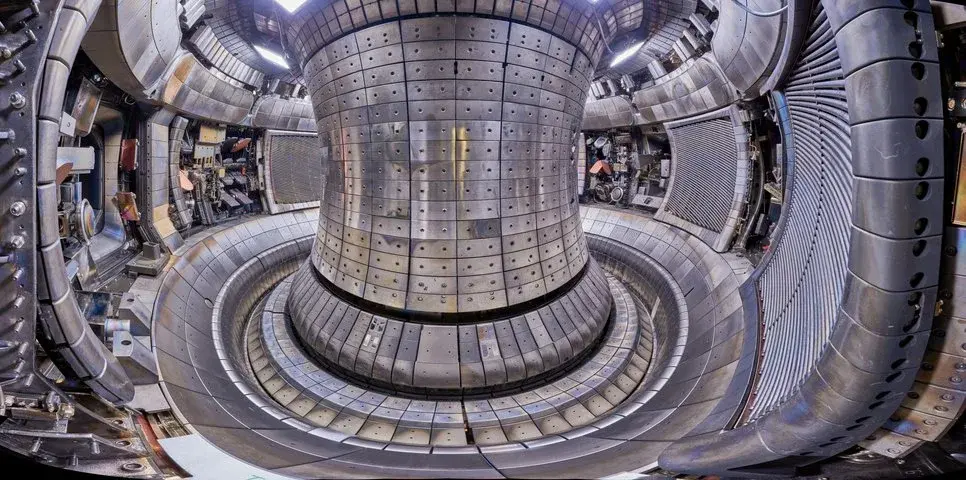
In September 2026, progress in this field gained momentum when researcher Matt Landreman, utilizing OpenAI’s GPT-6 Astra Pro, published specific solutions that challenged long-standing assumptions. However, these earlier breakthroughs were limited by geometric symmetry constraints. The recent collaboration involving Opal Issan, Jonathan Citrin, Matt Landreman, and Brendan Tracey successfully bypassed these limitations by incorporating parameters that break traditional symmetry, thereby offering a more versatile model for future studies.
Research Processes are Being Accelerated Through Technology
The research team employed Google’s Antigravity environment to task the Gemini 4 Argon model with analyzing existing results and exploring new mathematical frontiers. By removing the strict requirement for geometric symmetry, the AI agents were able to generate novel configurations that had previously eluded human researchers. This process resulted in the discovery of promising mathematical candidates within only a few hours, a task that would traditionally require extensive manual labor.
Despite the rapid generation of data, the researchers maintained rigorous oversight throughout the project. The AI’s output served as a starting point, requiring the team to perform exhaustive computational verification to ensure that every proposed solution was mathematically consistent. This human-in-the-loop approach ensured that the findings were accurate and that the authors could maintain full scientific accountability for the published results.
This accomplishment underscores the potential for artificial intelligence to act as a powerful accelerator in theoretical physics. By managing the heavy lifting involved in complex, interconnected mathematical conditions, AI allows scientists to focus on the interpretation and validation of higher-level concepts. As the field moves forward, the availability of these expanded, precise mathematical solutions will provide a stronger foundation for engineers and physicists working to overcome the immense technical hurdles associated with nuclear fusion.
Given the rapid evolution of artificial intelligence in scientific discovery, in which other complex fields of physics do you believe this technology will spark the most significant breakthroughs next?
Your comment has been submitted,
it will be published after approval.