
AI Employees Face Longer Hours Despite Promises of Efficiency


Contrary to long-standing industry predictions that artificial intelligence would revolutionize the workplace by reducing labor hours, employees at leading tech giants like OpenAI, Anthropic, Meta, and Google are experiencing the opposite effect. Reports indicate that instead of enjoying a four-day workweek, staff members at these AI-focused companies are frequently logging up to 90 hours per week. While AI was expected to streamline productivity, the reality for those developing these tools has become a grueling cycle of constant crises, intensive sprint periods, and high-pressure performance evaluations, effectively pushing the boundaries of professional burnout in the modern AI age.
- Employees at top-tier AI firms are reporting weekly work hours reaching as high as 90 hours during intense development periods.
- The expected transition to a four-day workweek has failed to materialize as companies prioritize aggressive competition and rapid product cycles.
- Research from institutions like MIT shows that time saved by AI tools is immediately absorbed by increased management and quality control responsibilities.
Promises of Shorter Workweeks Remain Unfulfilled
Several years ago, tech leaders and industry experts championed the idea that artificial intelligence would usher in a new era of leisure by 2025. OpenAI, for instance, had publicly encouraged other organizations to adopt a four-day workweek without reducing salaries. However, former employees have revealed a stark disconnect between these public recommendations and the internal reality of the company. 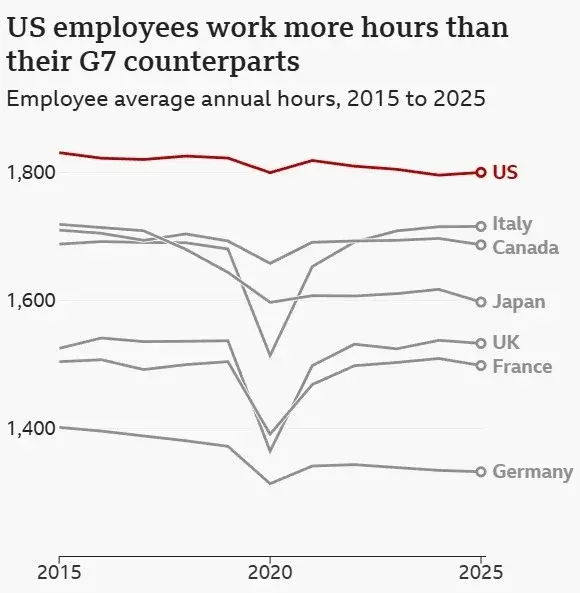 Behind closed doors, the culture is defined by endless meetings and weekend shifts, far from the balanced lifestyle once promised by executive leadership.
The aggressive pursuit of AI supremacy has effectively neutralized the potential for a reduced work-life balance.
Sprint Cycles Drive Workloads Toward 90 Hours
In the tech sector, the term “sprint” refers to the high-intensity periods required to launch new products or features. Due to the cutthroat nature of the current AI arms race, these sprint periods have become the standard rather than the exception. Some developers at companies like OpenAI and Anthropic have reported working upwards of 90 hours a week during these critical phases. While Meta CEO Mark Zuckerberg has argued that AI enables smaller teams to achieve more, the industry continues to see significant workforce fluctuations and intense pressure on remaining staff.
Time Savings Are Replaced by New Responsibilities
The paradox of productivity is now a major subject of study at leading academic institutions. A study from the University of California, Berkeley, found that while employees using AI tools do indeed complete specific tasks faster, they end up stretching these tasks across the entire day. MIT researcher Neil Thompson notes that the time saved by automation is rarely returned to the employee as leisure time. Instead, management often reallocates that time toward administrative oversight, complex system maintenance, and additional output targets.
Companies are utilizing increased efficiency to demand higher production volumes rather than reduced hours.
Given the current trajectory of the tech industry, do you believe that AI will ever truly shorten our workweeks, or are we destined to see our professional responsibilities expand to fill every second of the day? Share your thoughts and experiences in the comments section below.
Your comment has been submitted,
it will be published after approval.