
AMD Market Share Climbs Toward 45 Percent on Steam

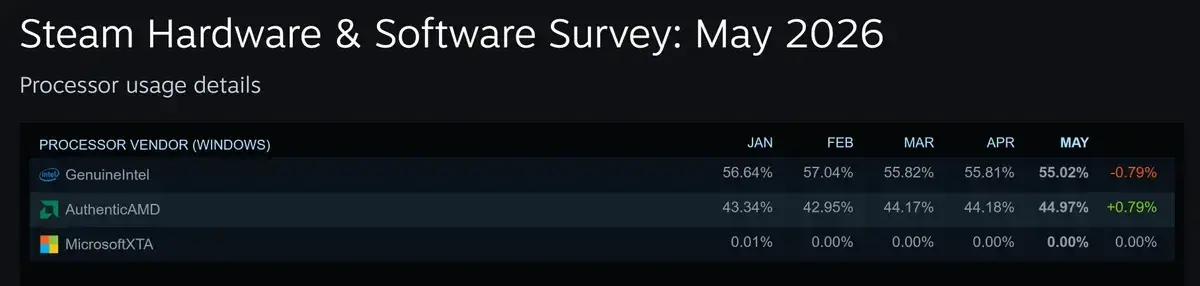
According to the May 2026 Steam Hardware Survey released by Valve, AMD has achieved a significant milestone in the PC gaming landscape, with its processor market share among Windows users reaching 44.97 percent. This data highlights a narrowing gap between the two industry giants, as Intel currently holds 55.02 percent of the market. The latest figures demonstrate a consistent growth trajectory for AMD, reflecting a shifting preference among gaming enthusiasts. As competition intensifies within the desktop and mobile segments, this shift underscores the long-term impact of architectural advancements and the sustained popularity of high-performance gaming hardware in the global PC market.
- AMD captured 44.97 percent of the Steam Windows user base as of May 2026.
- Intel experienced a 0.79 percent decline in market share during the same period.
- The expansion of AMD is attributed to the successful Zen architecture and 3D V-Cache technology.
- AMD secured approximately 46 percent of the x86 server market through its EPYC processor line.
The Red Team Continues to Narrow the Gap
The transition from April to May 2026 proved pivotal for the ongoing processor rivalry. While Intel saw its market presence dip by 0.79 percentage points, AMD captured an identical portion of the market, effectively eroding Intel’s lead. At the beginning of the year in January, Intel maintained a more dominant position with 56.64 percent, compared to AMD’s 43.34 percent. This steady upward trend for the red team signals a robust performance in the consumer sector.
AMD’s consistent growth highlights a fundamental shift in user preference for high-performance gaming CPUs.
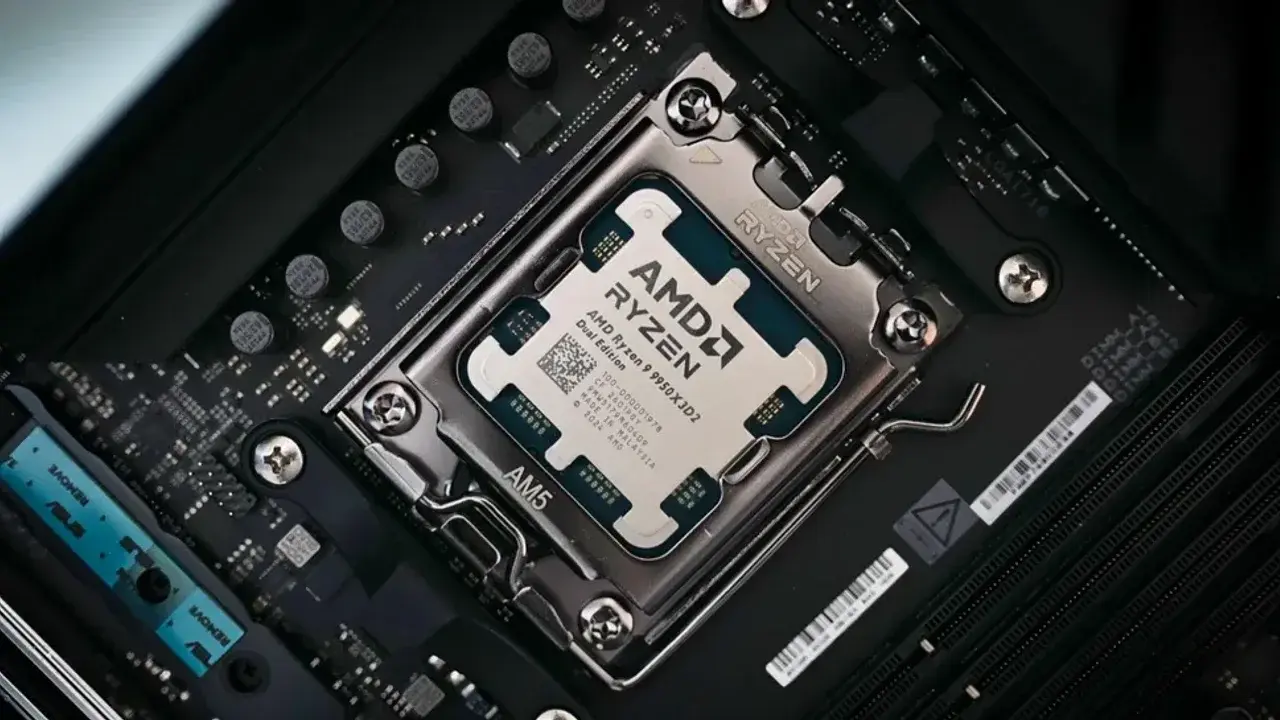
Much of this momentum stems from a strategic foundation laid back in 2017 with the introduction of the first Ryzen processors. By committing to the Zen architecture, the company has successfully transitioned from a challenger to a primary contender. Furthermore, the integration of 3D V-Cache technology has provided a tangible competitive advantage, particularly for gamers seeking maximum frame rates and efficiency. Models such as the 5800X3D continue to resonate with users, while newer iterations like the 9950X3D2 push the boundaries of what is possible in modern gaming rigs.
Intel Prepares New Technologies to Retain Dominance
Intel is not standing idle as it prepares for future market challenges. The company aims to regain its technological edge in the desktop segment with the upcoming Nova Lake processor family. Additionally, Intel is focusing on the mobile landscape, planning to utilize its Panther Lake series to maintain a competitive footprint against the rising pressure from its rival. Despite these efforts, the market remains highly dynamic and sensitive to new performance benchmarks.
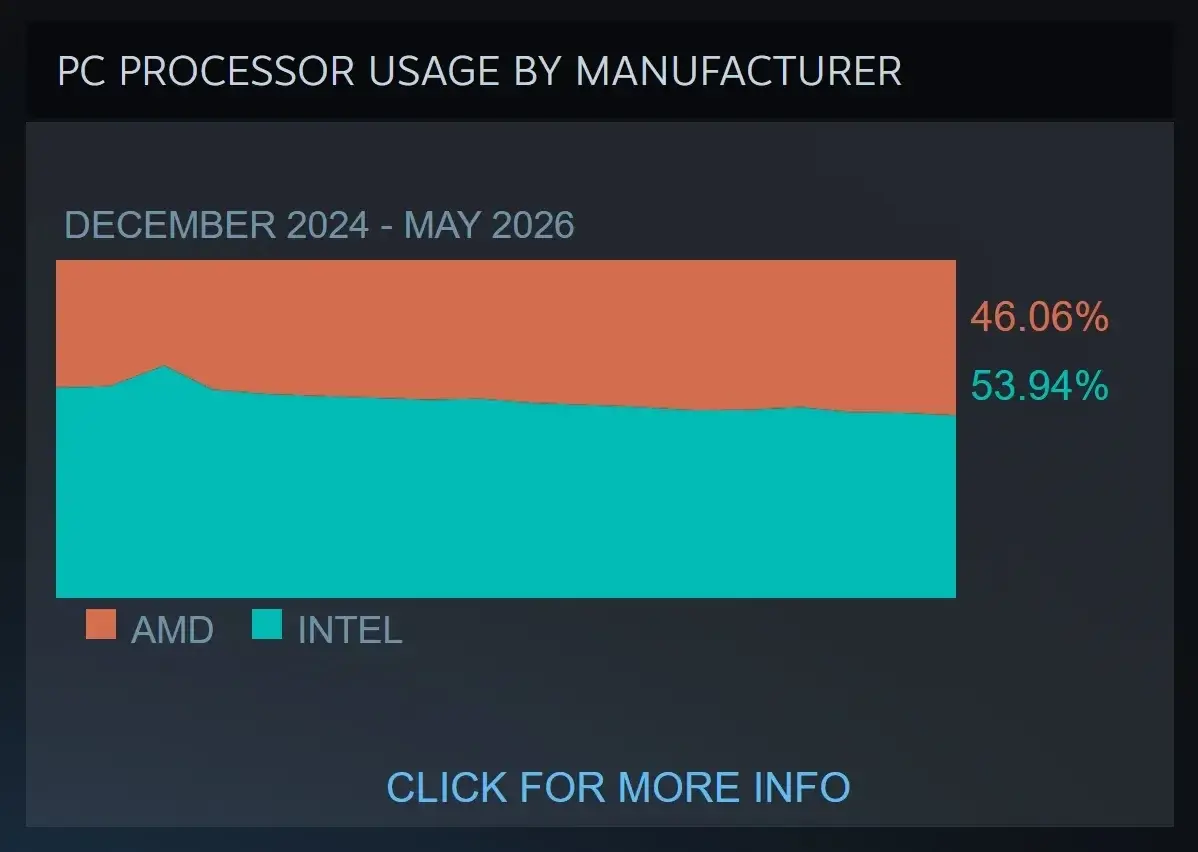
The success of the red team is not confined solely to the gaming desktop sector. AMD has successfully expanded its footprint in the professional and enterprise environments, reaching a market share of approximately 46 percent in the x86 server sector with its EPYC processor family. Looking ahead, the company plans to refresh this lineup with the Venice update this year and the Verano architecture in 2027.
Industry experts continue to monitor whether Intel can successfully defend its historical market leadership against these aggressive innovations.
We are curious to hear your thoughts on this ongoing processor battle. Do you believe that AMD will eventually overtake Intel’s market leadership in the coming years, or will upcoming architectures allow Intel to reclaim its top position? Share your predictions in the comments section below.
Your comment has been submitted,
it will be published after approval.