

AMD has just pulled the curtain back on its new AMD processors, but the announcement focuses more on incremental updates than revolutionary leaps. The company revealed that its latest chips for both laptops and desktops are slight improvements on models released in 2024 and 2025. While this might be disappointing for some, it could present a great opportunity for those looking to buy older-generation products at a discount.
What’s New with the AMD Processors?
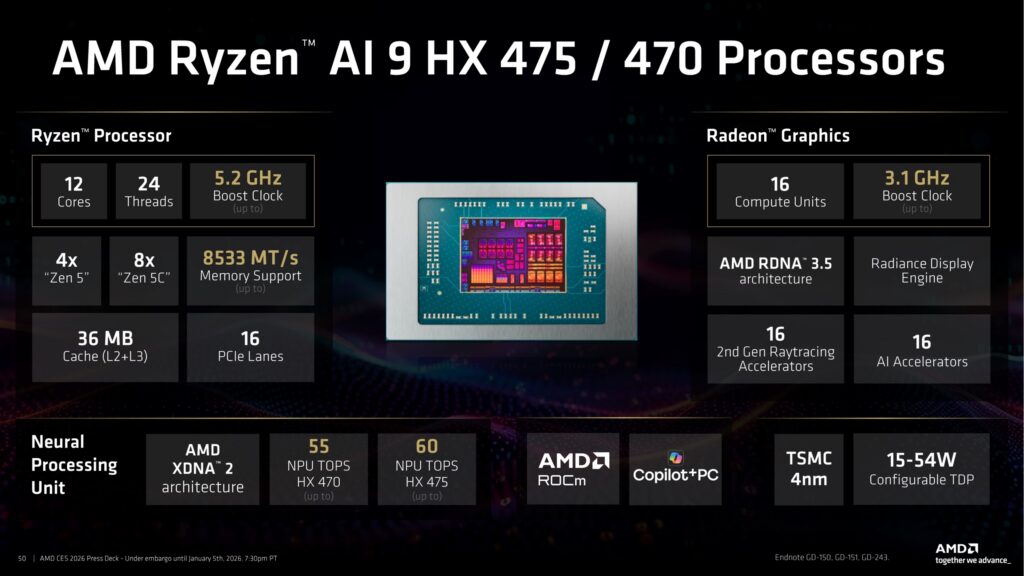
The main highlight of the announcement is the Ryzen AI 400 series for laptops, which serves as a successor to the Ryzen AI 300 series. Built on the same core architecture, these new processors offer some modest improvements. For example, the top-tier model, the Ryzen AI 9 HX 470, features a boost clock speed of 5.2 GHz, up from the previous 5.1 GHz. Memory support has also been upgraded from LPDDR5x-8000 to LPDDR5x-8533.
Furthermore, the Neural Processing Unit (NPU) performance, which is crucial for AI tasks, has been increased from 50 TOPS to an impressive 60 TOPS. Apart from these minor tweaks, the Ryzen AI 400 series uses the same building blocks as its predecessor: high-performance Zen 5 cores, efficient Zen 5c cores, an integrated GPU based on RDNA 3 architecture, and a 4 nm manufacturing process.
This strategy isn’t new for AMD, as they have rebranded older series with small updates before. Therefore, if you find a device with a Ryzen AI 300 series chip at a good price, you won’t be missing out on much in terms of performance.
Better Value for Gamers: Ryzen AI Max+ Series
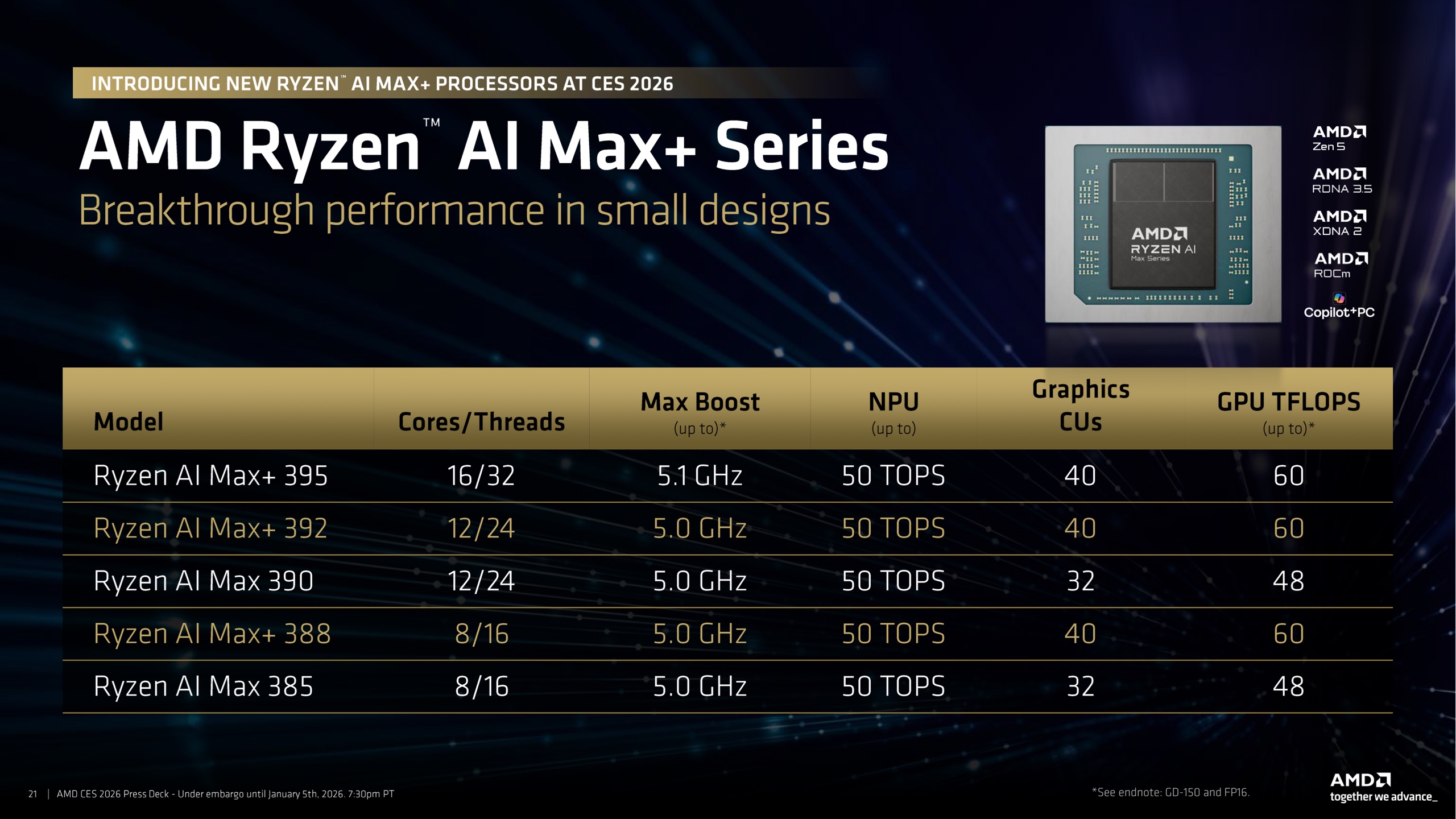
AMD’s additions to the Ryzen AI Max+ 300 series might be more exciting for gamers and mini PC enthusiasts. The standout feature of this series is its powerful integrated Radeon GPU, which can compete with entry-level discrete graphics cards. Previously, getting a Max+ processor with all 40 RDNA 3.5 GPU cores active meant you also had to get all 16 CPU cores.
However, AMD is changing this with the new Ryzen AI Max+ 392 and 388 models. These new chips retain the full-power GPU but come with fewer CPU cores—12 and 8, respectively. This reduction in CPU cores is not expected to significantly impact gaming performance. As a result, this creates more affordable options for users who want maximum graphics performance without paying for extra CPU cores they don’t need.
It’s important to note a key detail: since all these processors use the existing RDNA 3 graphics architecture, they will not benefit from AMD’s new “FSR Redstone” upscaling technology, which was announced to compete with Nvidia’s DLSS. Redstone features will only work on hardware with the RDNA 4 architecture.
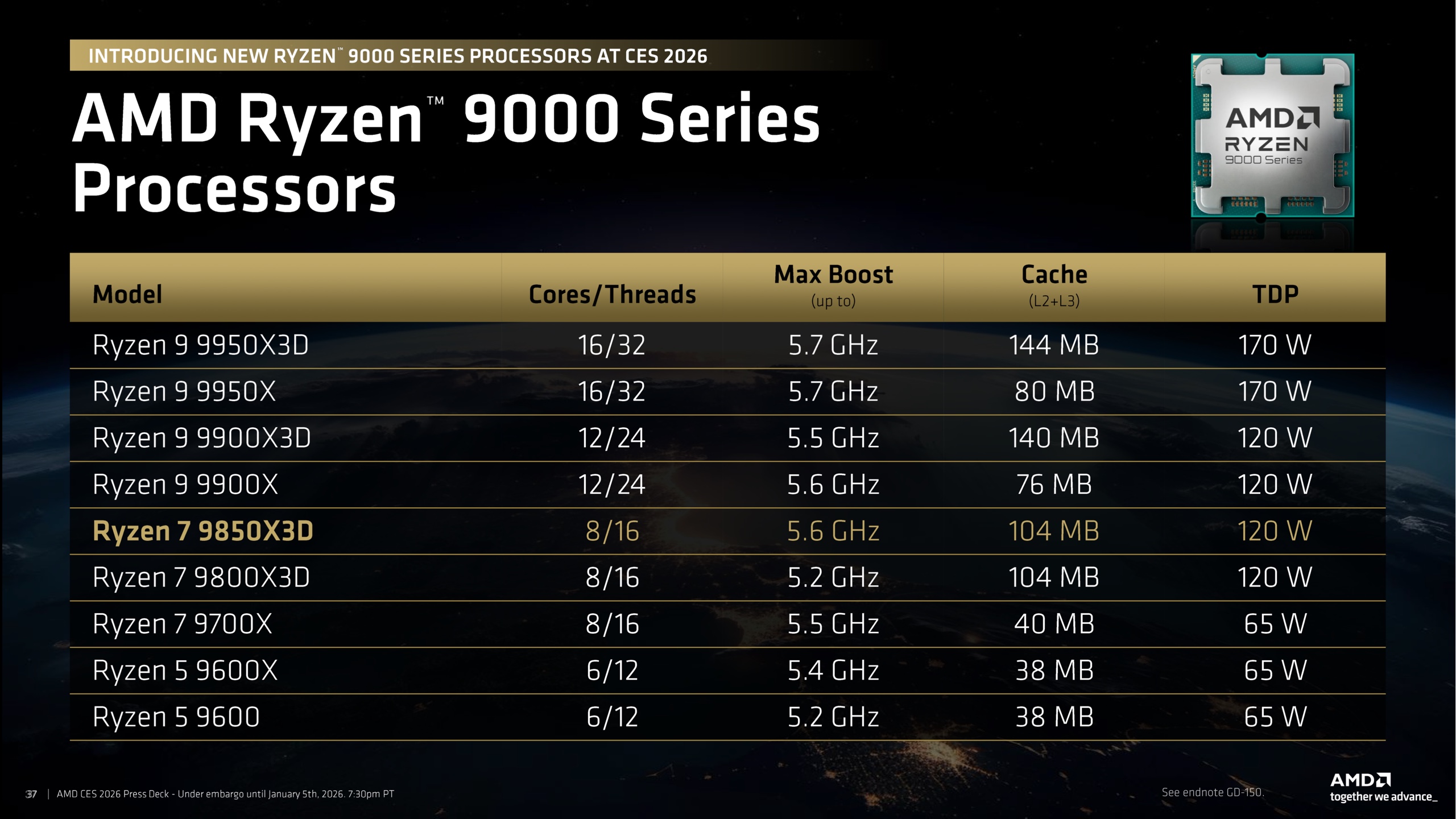
For desktop PC builders, there’s only one new AM5 socket processor: the Ryzen 7 9850X3D. This chip is an 8-core Zen 5 processor featuring AMD’s 64 MB 3D V-Cache technology. Essentially, it’s a faster version of the Ryzen 7 9800X3D, reaching 5.6 GHz instead of 5.2 GHz. Users waiting for Zen 6 or a more significant innovation will have to keep waiting.
So, what are your thoughts on AMD’s new processor strategy? Share your opinions with us in the comments!