
AMD Unveils Ryzen AI Embedded X100 for Physical AI Systems

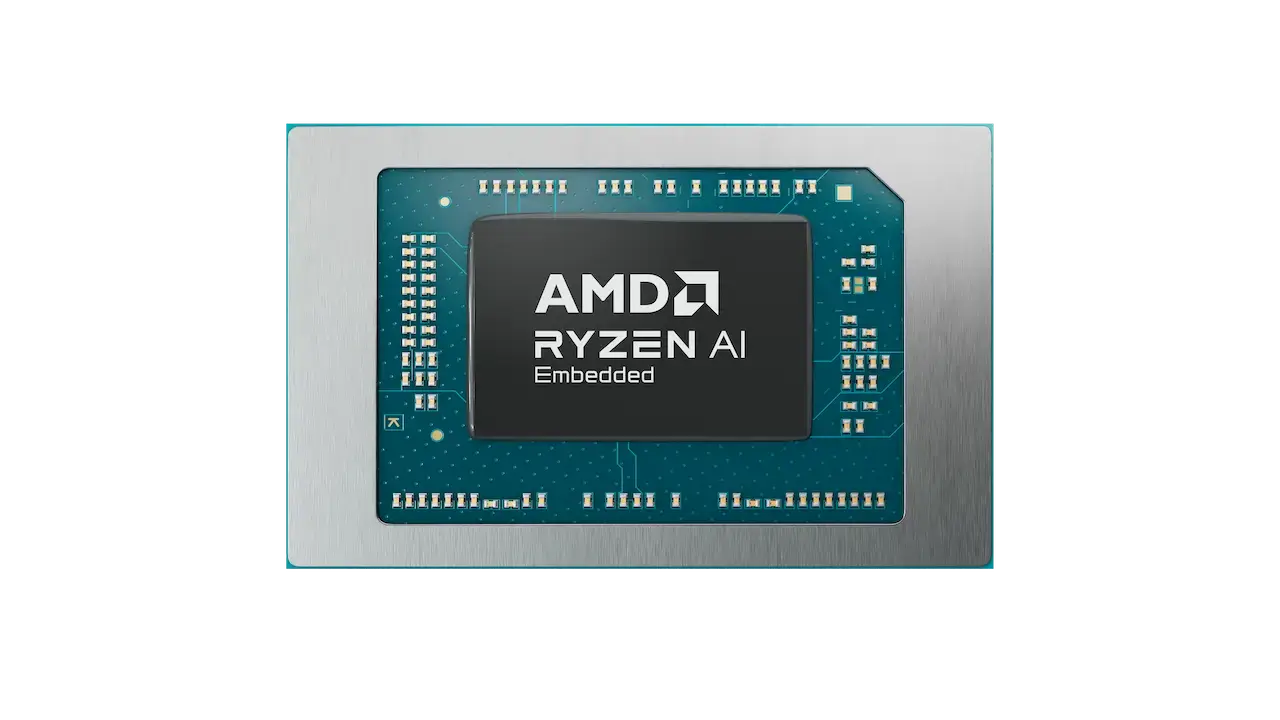
AMD has officially announced the launch of the Ryzen AI Embedded X100 processor series, a groundbreaking system-on-chip (SoC) designed specifically for the next generation of physical AI and real-time embedded systems. Unveiled to address the growing demands of robotics, industrial automation, and autonomous vehicles, this new architecture integrates up to 16 ‘Zen 5’ CPU cores, a high-performance integrated GPU, and a dedicated NPU into a single package. The product line is set for mass production in the fourth quarter of 2026, targeting a broad range of sectors from healthcare to defense by providing unparalleled computational efficiency for edge environments.
- The Ryzen AI Embedded X100 series combines 16 Zen 5 cores with specialized NPU technology for high-performance edge computing.
- The SoC delivers up to 3.5 times higher AI token generation speeds compared to the Intel Core Ultra Series 3.
- These industrial processors operate reliably in extreme temperatures ranging from -40°C to +105°C for up to 10 years.
Physical AI Demands Specialized Hardware Architectures
Physical artificial intelligence requires more than just raw processing power. Systems operating in the real world, such as surgical robotics or autonomous industrial machines, demand deterministic control and near-zero latency. AMD designed the Ryzen AI Embedded X100 series to solve these specific challenges by utilizing a unified memory architecture.
This unified design minimizes data transmission latency between the CPU, GPU, and NPU, ensuring that critical decisions happen in milliseconds.
Performance Standards are Redefined for Industrial Markets
AMD has provided comparative data showing significant leads over established industry competitors. In benchmarks against the Intel Core Ultra Series 3, the X100 series achieves up to 2.1 times higher multi-core performance and 1.7 times faster graphics processing. Furthermore, when compared to the Nvidia Jetson T5000, the new AMD chips offer up to 3 times higher peak FP32 performance for signal processing tasks. 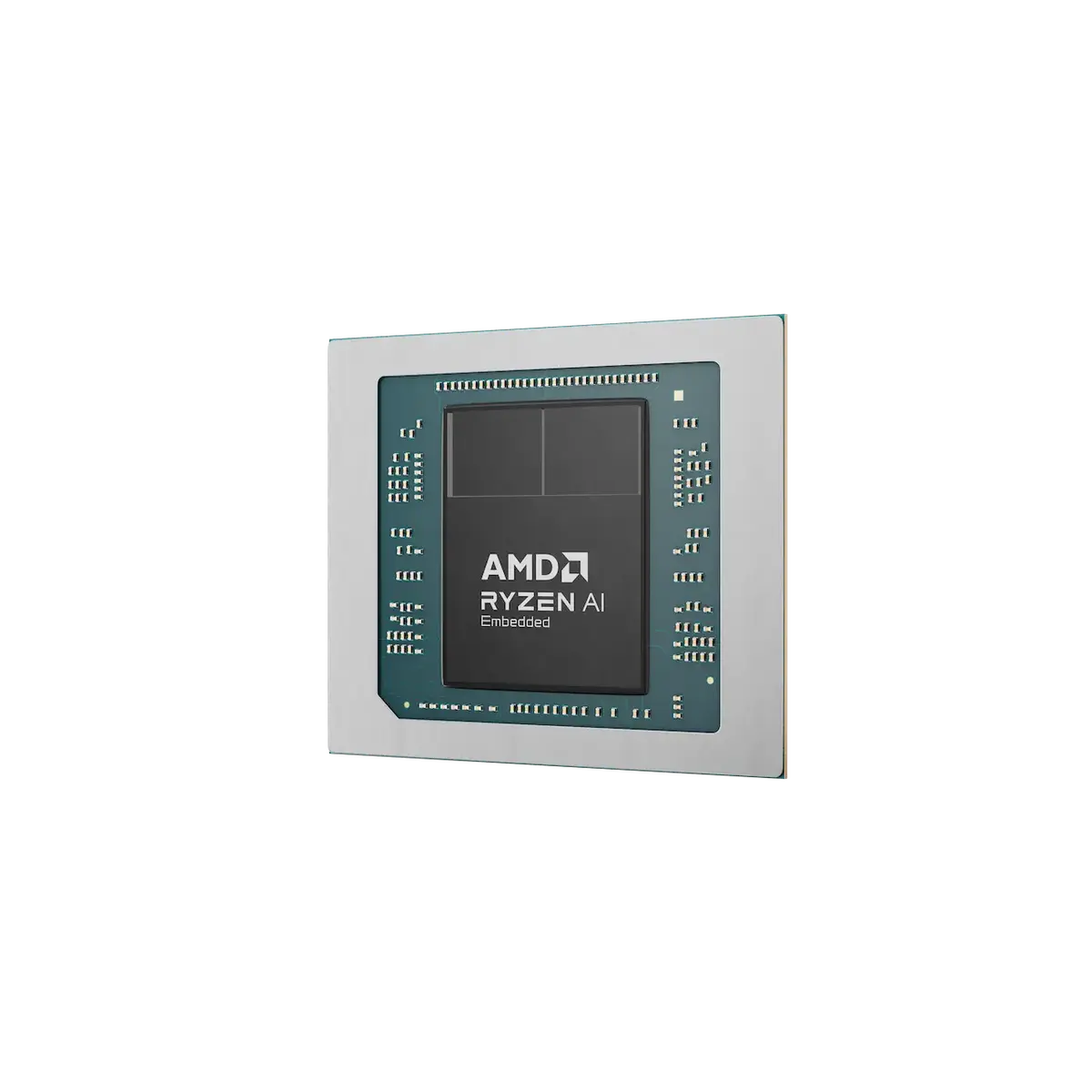
For specialized applications such as medical ultrasound, the series reportedly outperforms discrete solutions like the Nvidia RTX 4000 Ada by an average of 1.7 times. These metrics highlight the potential for the X100 series to replace larger, power-hungry systems with a compact, high-efficiency SoC.
Open Source Software Support Enhances Development Flexibility
Beyond hardware capabilities, AMD is prioritizing a robust software ecosystem. The processors support the AMD ROCm software stack, allowing developers to utilize common machine learning libraries like PyTorch, ONNX, and TensorFlow. The platform is also fully compatible with the Xen Hypervisor, facilitating seamless virtualization for industrial deployments.
To accelerate adoption, AMD has included tools that enable the migration of existing CUDA-based code to the ROCm architecture. This approach ensures that developers are not locked into a single hardware vendor, providing greater flexibility for long-term project planning.
Major industry partners including Congatec, Sapphire, and iBase have already committed to supporting the platform with modular hardware solutions.
How do you foresee the integration of high-performance physical AI chips changing the landscape of industrial automation and robotics in the coming decade? Share your thoughts and technical predictions in the comments section below.
Your comment has been submitted,
it will be published after approval.