
The AI race continues to heat up as Anthropic officially announces its latest advanced model, Anthropic Opus 4.6. This new version, a significant update for the company’s AI platform, introduces groundbreaking features like ‘agent teams’ and a massive 1 million token context window, aiming to expand its utility beyond software development to a broader range of professionals.
What’s New in Anthropic Opus 4.6?
Perhaps the most striking innovation in Opus 4.6 is the feature the company calls “agent teams”. This system enables the management of large, complex tasks by breaking them down into smaller, manageable parts. Instead of a single AI agent handling tasks sequentially, the workload is distributed among multiple agents. Consequently, each agent takes on a specific part and works in coordination with the others. Anthropic’s Product Manager, Scott White, compares this feature to having a talented human team working for you.
This division of responsibilities allows for parallel processing of tasks, which significantly speeds up the entire process. This new capability is currently available for API users and subscribers as part of a research preview. Furthermore, the model comes with a longer context window, enhancing its ability to remember more information per user session.
Anthropic Opus 4.6 now offers support for a 1 million token context window, matching the capacity of the company’s Sonnet models. This expanded memory not only simplifies working with large codebases but also allows for the processing of much larger documents. Therefore, the model becomes more efficient not just in software development but also in various other professional fields.
Enhanced Productivity with PowerPoint Integration
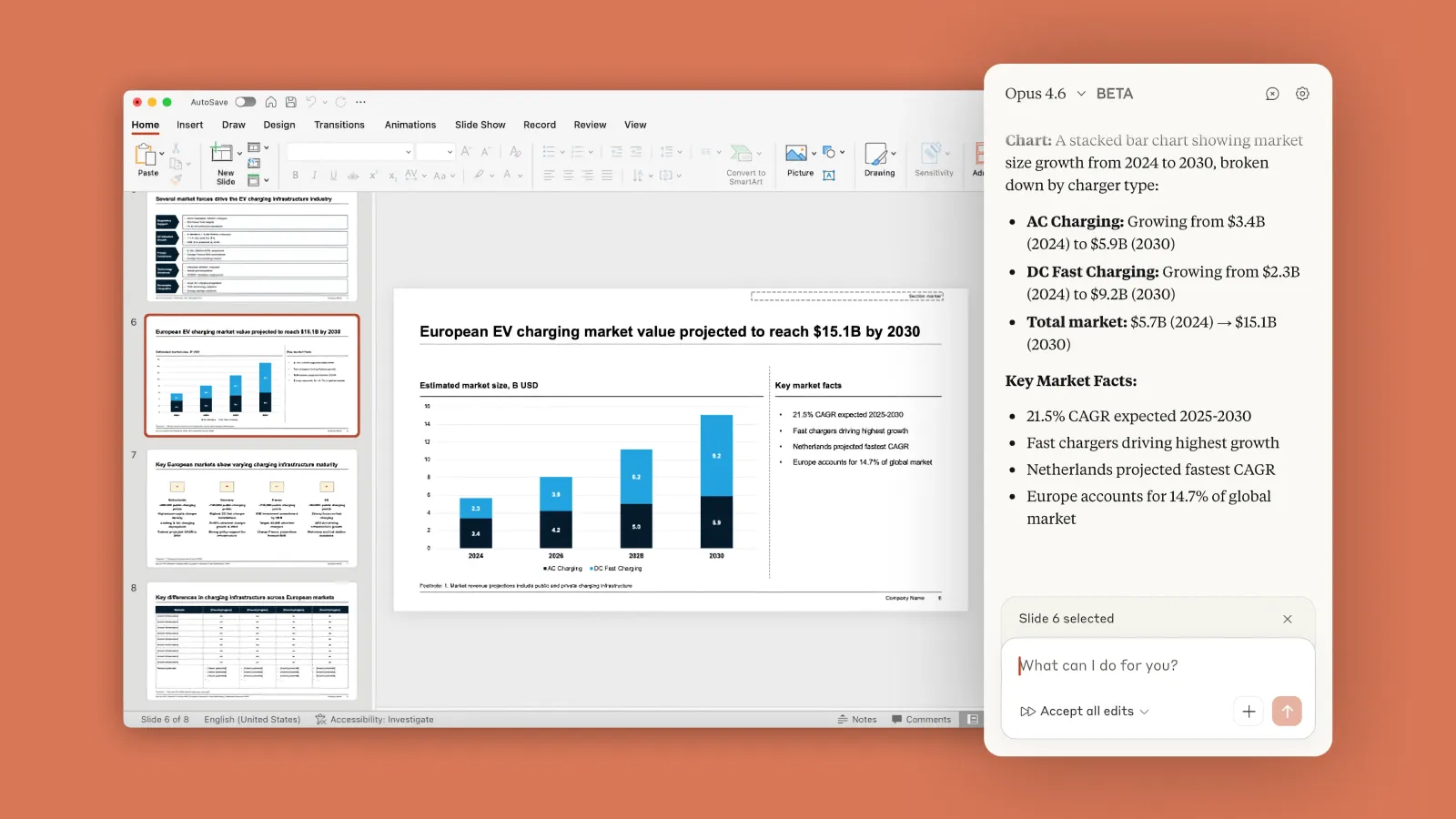
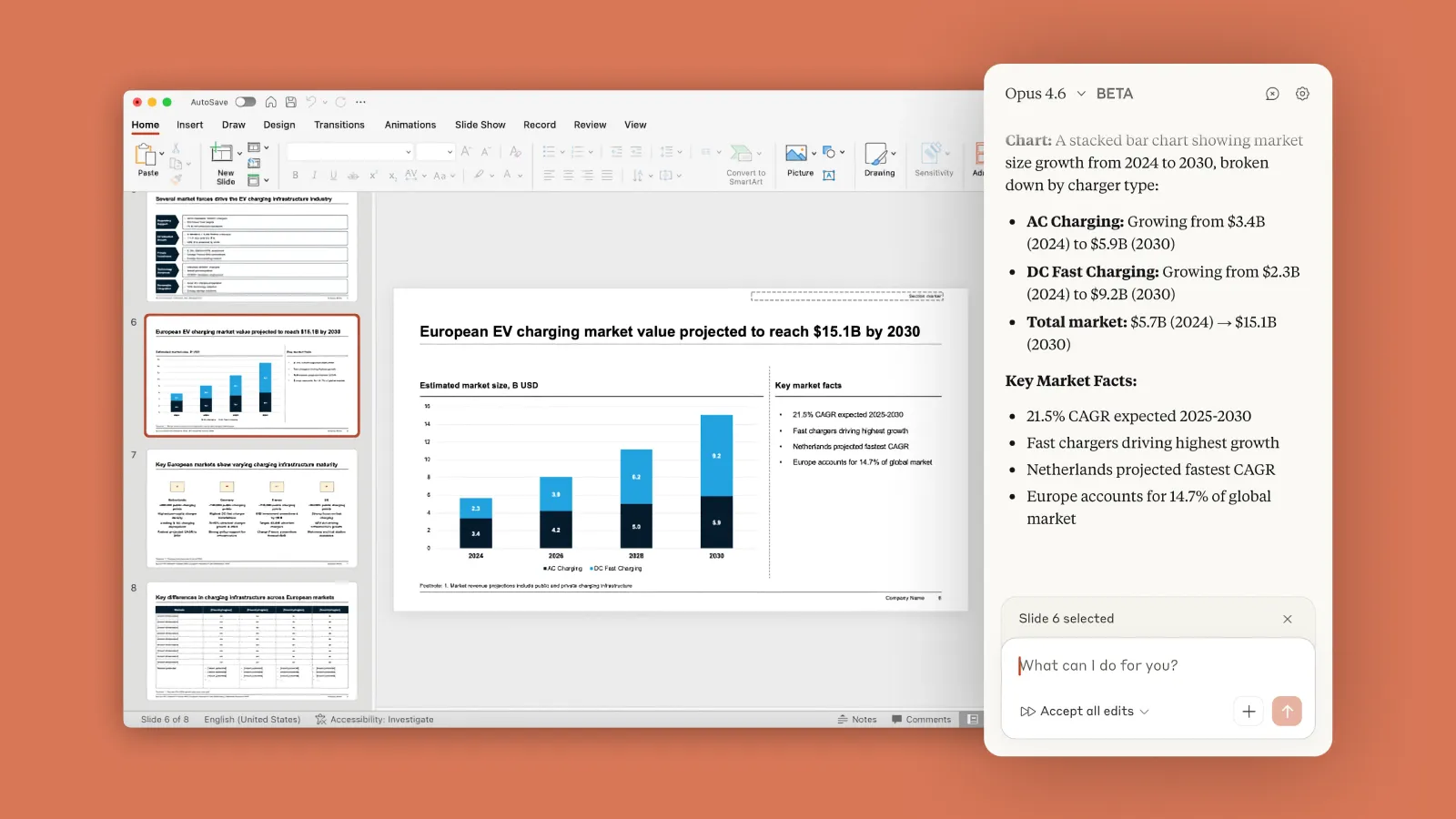
Another significant improvement comes with the integration of Microsoft PowerPoint. Opus 4.6 is now directly embedded into PowerPoint as an accessible side panel. Previously, users could ask Claude to prepare a presentation, but they had to transfer the file to edit it. Now, presentations can be created directly within the PowerPoint interface with real-time assistance from Claude.

Scott White notes that Opus has evolved from a model focused solely on software development into a useful program for knowledge workers in general. The company has observed that, in addition to software engineers, professionals such as product managers, financial analysts, and experts from various industries are using this technology extensively.
So, what are your thoughts on these new features in Anthropic Opus 4.6? Share your opinions with us in the comments!