
Apple to Launch M6 Chip With Enhanced AI Capabilities

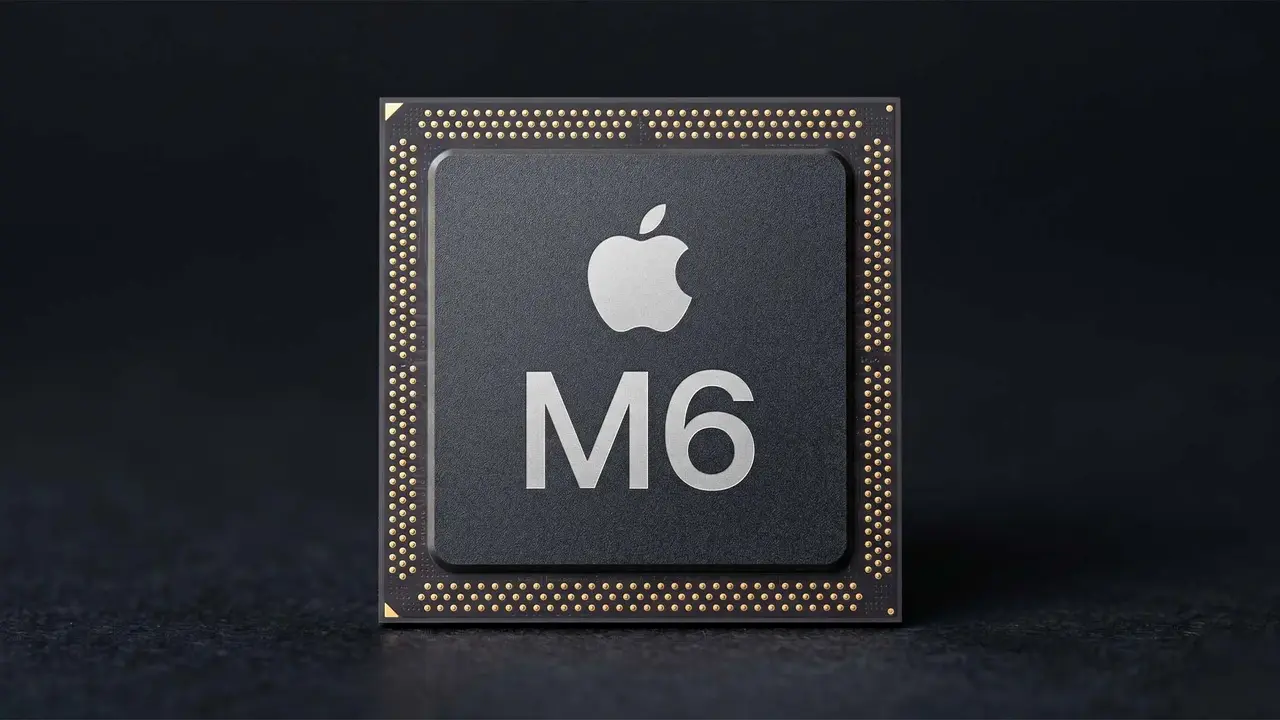
Apple is preparing to introduce its next-generation M6 chip to the global market later this year, marking a significant shift in its silicon strategy. According to industry reports from Bloomberg, the Cupertino-based tech giant intends to release only a base model of the M6, departing from its traditional practice of launching multiple high-performance variants simultaneously. This strategic decision aims to bolster on-device artificial intelligence performance by significantly increasing memory bandwidth. By prioritizing a refined base architecture, Apple seeks to optimize its hardware for the evolving demands of modern machine learning and complex professional workflows.
- The M6 chip increases memory bandwidth to 200 gigabytes per second to support advanced AI tasks.
- A new 12-core GPU configuration replaces the previous 10-core design to enhance graphical performance.
- Apple will omit Pro, Max, and Ultra variants for the M6 generation to streamline its current product lineup.
- The company schedules the release of the more advanced M7 processor for the first half of 2027.
Apple Upgrades Technical Specifications for M6
The transition to the M6 architecture provides users with substantial hardware enhancements compared to the existing M5 series. Most notably, the memory architecture has undergone a major overhaul, allowing for faster data transfer speeds. While the M5 series was limited to a bandwidth of 153 GB/s, the M6 pushes this threshold to 200 GB/s. This technical leap ensures that on-device AI operations run with greater fluidity, reducing latency for complex data processing tasks.
Enhanced memory bandwidth directly boosts the performance of all professional-grade applications.
Graphical capabilities also receive a notable boost in this iteration. The move from a 10-core GPU in the M5 to a 12-core unit in the M6 represents a deliberate effort to improve rendering efficiency. Professionals engaged in high-resolution video editing, 3D modeling, and gaming will benefit from a more responsive interface and faster frame processing.  Additionally, improved video encoding and decoding hardware will solidify the device’s utility in demanding daily production environments.
Company Shifts Its Long-Term Strategy
The defining characteristic of the M6 generation is Apple’s decision to simplify its product hierarchy. Since the inception of the Apple Silicon era, the company has consistently offered high-performance Pro, Max, and Ultra variants alongside base models. However, reports suggest that Apple will bypass these high-end tiers for the M6 to focus resources on the upcoming M7 architecture. This approach suggests that the M6 serves as a bridge, maintaining competitiveness while development teams focus on more substantial innovations for the 2027 cycle.
Apple decided to keep the M6 series limited to allow for a major leap in the M7 architecture.
New Devices Implement Updated Hardware
The M6 chip is expected to debut in updated MacBook Pro models, which are currently undergoing testing phases. Industry analysts anticipate an autumn launch, positioning these machines as a refined intermediate option before the next major generation arrives. Given the expected 2027 release date for the M7 processor, the M6 will likely serve as a focused, short-term upgrade for specific product groups rather than a comprehensive overhaul of the entire Mac lineup.
How do you feel about Apple’s decision to skip the Pro and Max variants for the M6 release? Do you believe this focus on a single, powerful base model is a smart move, or are you concerned about the lack of high-end options? Let us know your thoughts in the comments section below.
Your comment has been submitted,
it will be published after approval.