
ASELSAN Secures 780 Million Euro Contract for Steel Dome

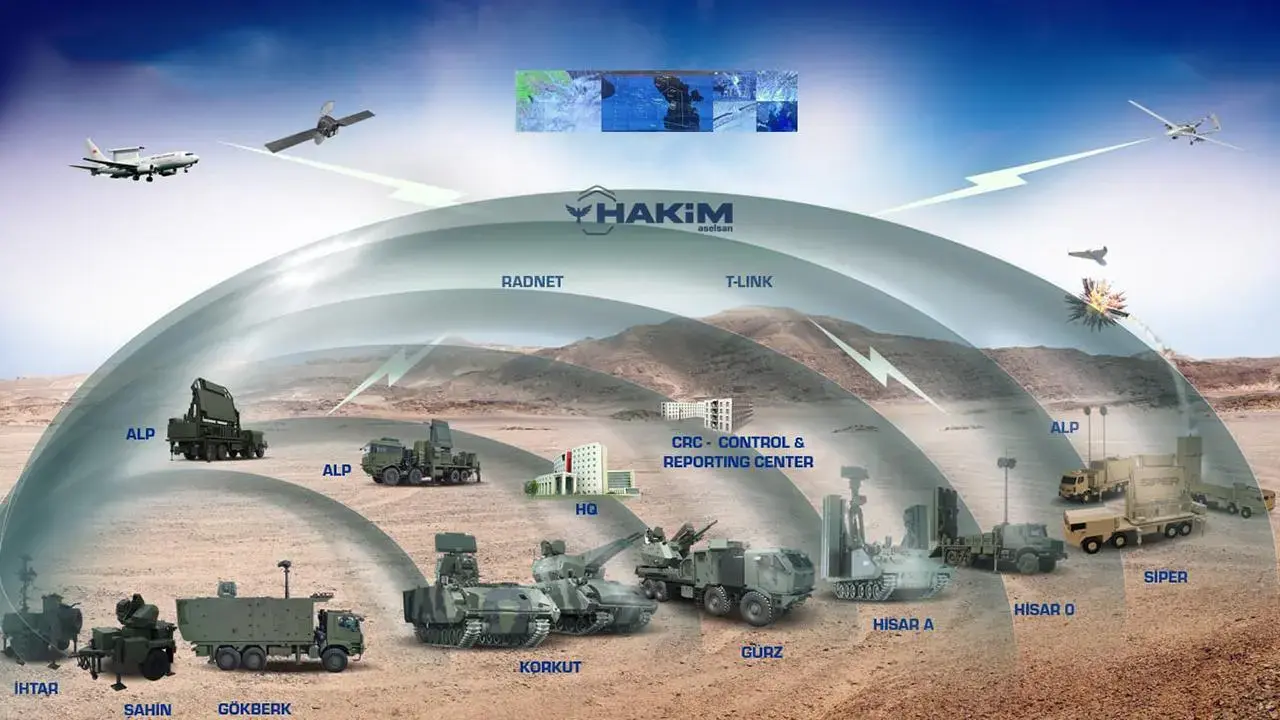
Turkey has taken a monumental step in bolstering its national defense capabilities as the Presidency of Defense Industries (SSB) finalized a 780 million Euro contract with the defense giant ASELSAN. This significant financial agreement aims to accelerate the procurement and integration of advanced air defense systems, serving as the backbone for Turkey’s comprehensive “Steel Dome” project. By combining cutting-edge radar technology, command-control networks, and versatile weapon systems, the initiative ensures that Turkish airspace remains fully protected against diverse aerial threats ranging from low-altitude drones to long-range ballistic missiles.
- The Presidency of Defense Industries and ASELSAN signed a 780 million Euro contract for air defense procurement.
- The agreement facilitates the operational implementation of the nationwide multi-layered air defense architecture known as the Steel Dome.
- The project integrates artificial intelligence-supported command systems to coordinate various air defense assets across all altitudes.
The Steel Dome Operates as a System of Systems
The Steel Dome represents a paradigm shift in Turkey’s defensive posture. Rather than relying on a single platform, it functions as a sophisticated “system of systems” that unifies all available air defense assets under a common artificial intelligence-powered command network. This integrated structure provides the capability to detect, identify, and neutralize threats with optimal precision.
The Steel Dome transforms Turkey’s air defense into an impenetrable shield against modern combat threats.
The project addresses a wide spectrum of dangers, including micro-drones, kamikaze UAVs, cruise missiles, and advanced fighter jets. By leveraging ASELSAN’s decades of engineering expertise, the Turkish military is establishing a robust defense network that functions as a game-changer in regional security. 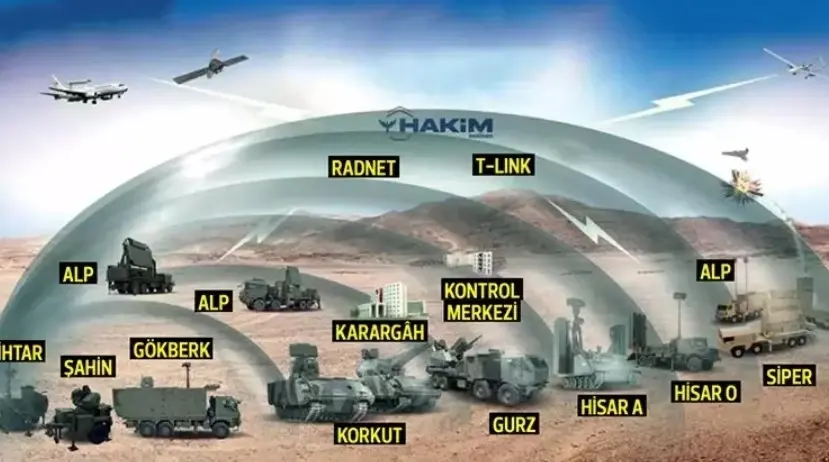
Defense Systems Provide Multi-Layered Protection
The architecture of the Steel Dome is organized into four distinct layers, each tailored to specific altitudes and threat types. At the lowest level, systems such as DroneDef, KORKUT, and GÜRZ counter the rising threat of drone swarms and kamikaze UAVs. These platforms offer cost-effective and immediate defensive responses.
The medium-altitude layer is dominated by the HİSAR missile family, including the HİSAR A+ and HİSAR O+, which intercept enemy aircraft and cruise missiles at significant distances. Finally, the long-range SİPER system forms the outermost perimeter of the Steel Dome, protecting strategic national infrastructure from high-altitude and ballistic threats.
Artificial Intelligence Enhances the HAKİM System
The 780 million Euro investment focuses heavily on the software and AI infrastructure required to synchronize these diverse hardware components. The HAKİM Air Command and Control System acts as the “mastermind” of the entire network. By utilizing advanced AI algorithms, HAKİM processes real-time radar data to evaluate the nature, speed, and trajectory of incoming threats.
HAKİM determines the most effective weapon system to neutralize a target in milliseconds.
By automating target selection, the system minimizes human error and maximizes reaction speed. This seamless orchestration allows the military to engage threats with the most appropriate resources, ensuring efficient resource management during intense combat scenarios.
National Defense Achieves Technological Independence
The development of the Steel Dome marks a critical threshold in Turkey’s quest for technological sovereignty. By fostering synergy between major domestic entities like ASELSAN, ROKETSAN, and TÜBİTAK SAGE, the nation has shifted from a dependent buyer to a self-sufficient producer of advanced military hardware. This contract not only speeds up serial production but also significantly expands the arsenal of the Turkish Armed Forces, reinforcing national airspace security through indigenously developed early warning and interception capabilities.
What are your thoughts on how artificial intelligence is changing the future of national air defense? Share your opinions and insights in the comments section below.
Your comment has been submitted,
it will be published after approval.