

In a move to strengthen its presence in China, Audi has unveiled a new electric sub-brand called AUDI, ditching its iconic “four rings” logo for four capital letters (A-U-D-I). However, this latest concept doesn’t abandon the brand’s traditional “long-roof” German design language.
670 HP, 800V Architecture
Developed in partnership with Audi’s Chinese manufacturing partner, SAIC, the all-new AUDI E SUV concept is built on the PPE (Premium Platform Electric) skateboard chassis. This model is the second model introduced by the local sub-brand, which was founded just a year ago.
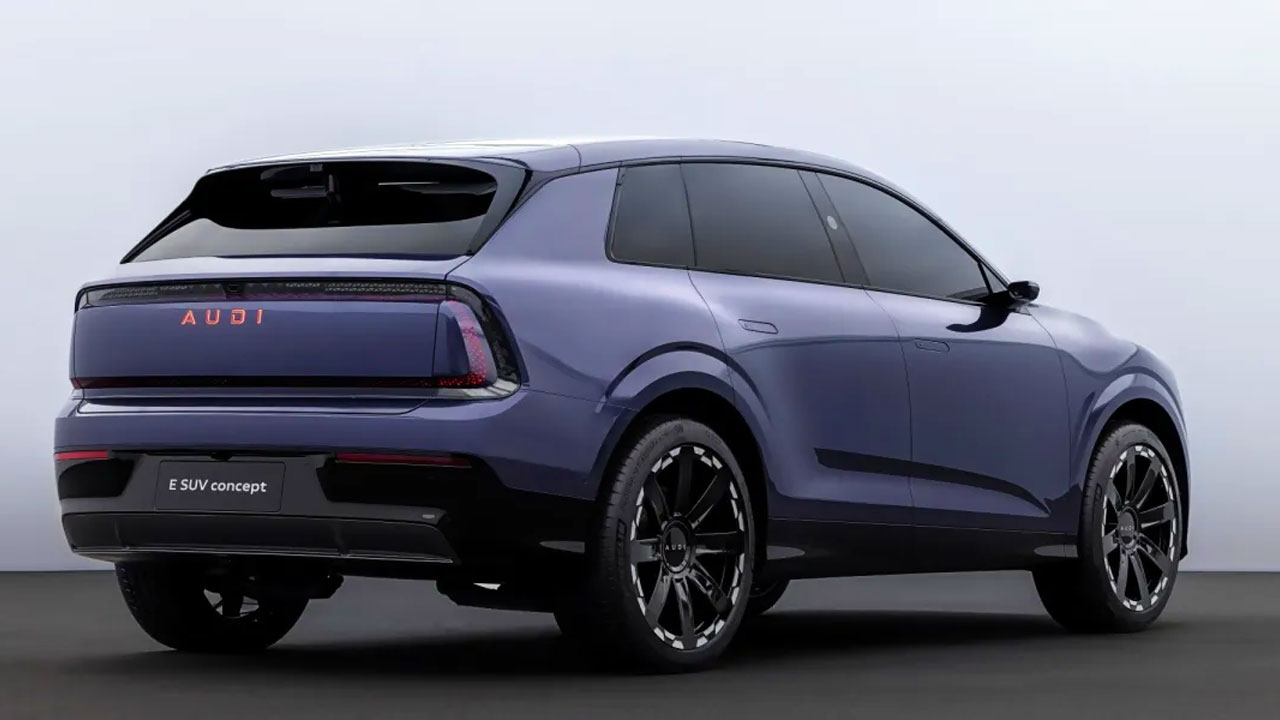
Speaking at the E SUV launch, Audi and SAIC CEO Fermín Soneira said, “The AUDI E SUV concept celebrates the first anniversary of the new AUDI brand, following the debut of the E concept in Guangzhou (in 2024).” “It showcases an unmistakably AUDI design language, giving the SUV a prestigious, progressive stance without compromising on sporty aesthetics or interior spaciousness and versatility. This concept embodies our vision of premium electric mobility, fulfilling our commitment in China by combining Audi’s engineering heritage with digital innovation,” Soneira added.
The AUDI E SUV concept promises to “handle like an Audi” and is driven by a pair of electric motors producing a combined output of 500 kW (~670 hp). This power can propel the large crossover from 0 to 100 km/h in approximately five seconds.
These efficient motors are fed by a 109 kWh battery built on AUDI’s 800V Advanced Digital Platform system architecture. A high-power DC fast-charging station can reportedly add 320 km (~200 miles) of range in under 10 minutes.
Designed for autonomous driving technology enthusiasts, the AUDI 360 Driving Assistance System is featured in the AUDI E SUV concept. This system “provides a comfortable and safe driving experience on highways, in heavy city traffic, and during assisted parking.”
Pricing has not yet been announced, but it’s unclear whether this model will be available in other markets. While the AUDI sub-brand has been successful in China, it’s unlikely this concept will reach markets outside of China.