

The ZTE Nubia M153, the first AI-powered smartphone developed by ByteDance, the parent company of TikTok and Douyin, in collaboration with ZTE, sold out quickly despite its limited release in China. The device, which runs the company’s in-house Doubao agent-assisted assistant, was marketed as an engineering prototype rather than a commercial product.
Nubia M153 Prototype Sold Out
According to industry sources, only the first batch of approximately 30,000 units was released to test real-world performance. Despite this limited supply, consumer interest was high, so much so that used market prices for the device increased by more than 40% from its retail price.
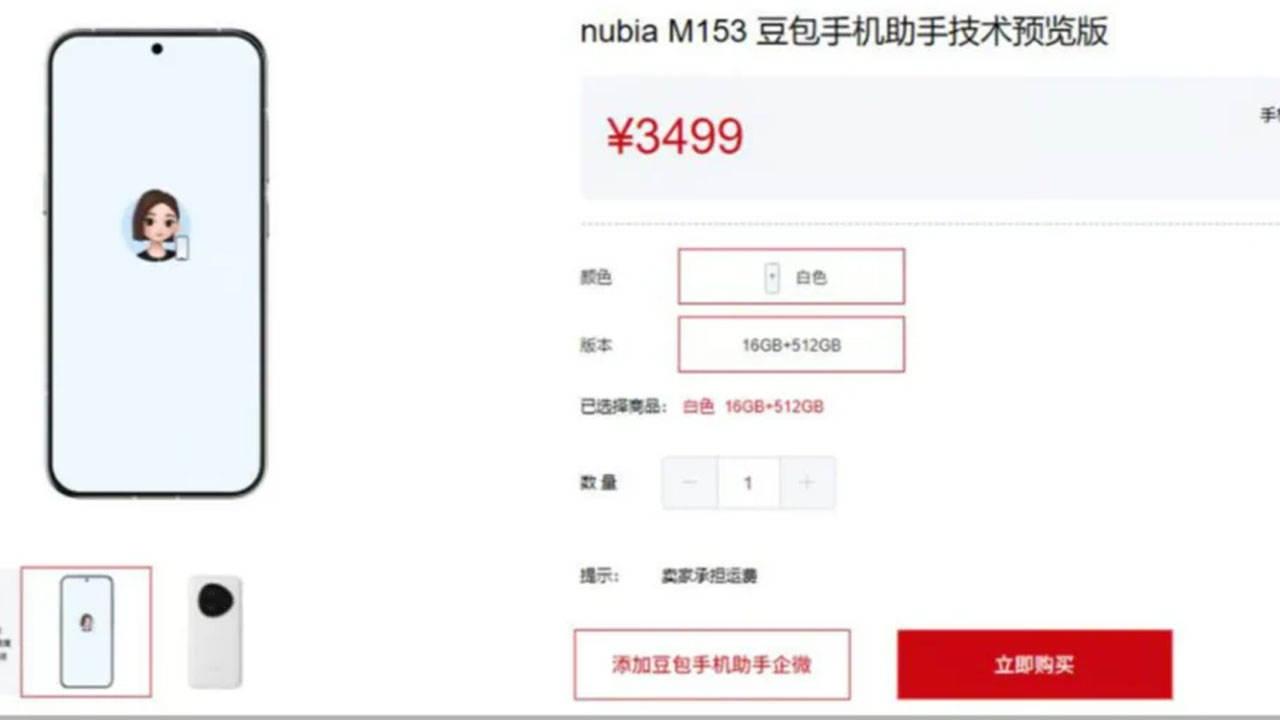
ByteDance intentionally positioned the first phone as a market experiment. The primary goal was to test Doubao’s system-level automation capabilities. These capabilities included ticket and restaurant reservations, price comparisons, and complex task coordination across apps. This early-stage feedback is expected to inform the design of hardware and AI capabilities for future devices.
Shortly after launch, the phone faced a national backlash from China’s major app platforms. Many platforms with high usage blocked or restricted access to the Doubao assistant. This was primarily due to concerns about the assistant’s ability to compete fairly, access data, and control apps at the operating system level (without traditional API permissions). This reflects growing industry unease about agentic AI taking action across apps.
ByteDance and ZTE have halted production of this prototype and are now shifting their focus to joint development of the second-generation smartphone. This new version, expected to be more mature in terms of hardware and AI integration, is scheduled for release in late 2026.
TikTok owner ByteDance has stated that despite entering the market with early-model phones, it does not plan to become a long-term phone manufacturer. The company’s primary goal is to develop Doubao into an operating system-level AI layer that other smartphone manufacturers can adopt.
However, analysts at Morgan Stanley and IDC warn that collaborating with top hardware partners may be difficult for ByteDance, as major OEMs like Apple, Huawei, and Xiaomi are expected to rely on their AI systems.