
Castlevania: Belmont’s Curse Review: A Bittersweet Reunion After 20 Years

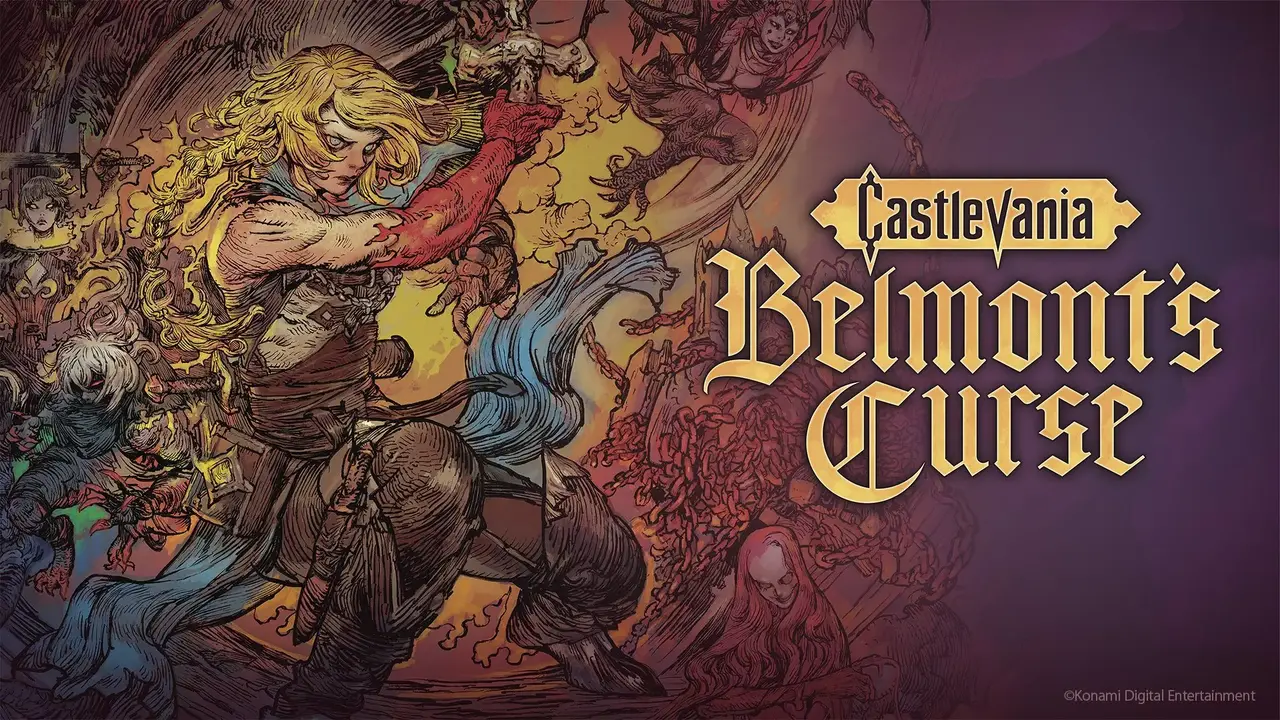
After nearly two decades, fans can finally delve into a pure, single-player Metroidvania Castlevania experience with Castlevania: Belmont’s Curse. The game, developed by Motion Twin and Evil Empire, aims to recapture the magic of the beloved series, drawing parallels to Sega’s successful revival of Sonic Mania. This new installment introduces Rose Belmont, daughter of Trevor Belmont, as the playable protagonist in 1499, shortly after the events of Castlevania III: Dracula’s Curse. While it embraces the Metroidvania genre, Belmont’s Curse diverges significantly from the Igarashi-era titles in its structure and mechanics.
- Castlevania: Belmont’s Curse offers a new Metroidvania experience after a 20-year hiatus for the series in this format.
- The game introduces Rose Belmont, a skilled warrior with unique abilities like a grapple whip and double dodge.
- Belmont’s Curse streamlines inventory management and item acquisition, moving away from the complex systems of older titles.
- The game features challenging combat and platforming sections, complemented by a robust Tarot card system for magical abilities and customization.
Rose Belmont Steps Onto the Scene
Rose Belmont, the daughter of the legendary Trevor Belmont, is the central figure in Castlevania: Belmont’s Curse. Set in 1499, the narrative picks up threads from Curse of Darkness, though the game’s structure offers a departure from traditional Igarashi-style Metroidvanias. Rose is a formidable warrior, inheriting her father’s legacy with a robust move set that includes wall climbing and a double dodge from the outset. As players progress, her arsenal expands, notably with the introduction of the grapple whip, a key mechanic highlighted in promotional materials.
The game significantly simplifies the inventory system found in older Castlevania titles. Gone is the complex management of numerous items; Rose instead utilizes three easily accessible healing potions that replenish at save points. Players can temporarily increase their potion count by collecting items dropped by enemies. Consumables are designed for immediate use, restoring health and mana upon collection rather than occupying inventory space.
This streamlining extends to the acquisition of weapons and accessories. Belmont’s Curse abandons the frustrating design choice of relying on rare drops (as low as 1%) for crucial items. Instead, it offers seven distinct weapon types scattered throughout the map, each with unique abilities that can be combined with the grapple whip for impressive combos. Furthermore, Rose gains access to magical abilities through Tarot cards obtained after defeating bosses. These cards are not merely offensive spells; they can be upgraded by completing in-game challenges, allowing for deep customization of the player’s playstyle.
[image_1]
Challenging Combat and Rich Lore Await Players
Despite Rose’s agility and extensive arsenal, Castlevania: Belmont’s Curse proves to be a demanding experience. Both regular enemies and bosses inflict substantial damage, echoing the unforgiving nature of classic Castlevania titles. Success hinges on strategic positioning and careful observation of enemy patterns, as a reckless approach will quickly lead to defeat without significant grinding.
The game’s difficulty is woven into its level design, platforming sequences, and puzzles. New abilities often unlock challenging platforming sections that require mastery of Rose’s expanded move set. While these sections can be demanding, the satisfaction of overcoming them is enhanced by shortcuts that facilitate revisits. For players finding the platforming too strenuous, comprehensive accessibility options are available, allowing for a tailored difficulty experience.
Beyond the challenge, the game excels in its world-building through level design and the Tarot card system. Nostalgic nods to Dracula’s Castle are present, but Belmont’s Curse also delves into Rose’s character development through extensive dialogue tied to the Tarot cards. These interactions not only flesh out Rose’s personality but also provide fascinating background information on familiar characters within the Castlevania lore. The narrative may not be overly complex, but the well-written character dialogues create an engaging experience.
Pacing Issues Hamper Early Progress
One of the most significant drawbacks of Belmont’s Curse is the scarcity of movement upgrades in the game’s initial hours. This limitation exacerbates the issue of the map feeling excessively large. The opening area, Paris, encompassing its streets, catacombs, and cemetery, can feel like a chore to navigate, taking around three hours to traverse with only the basic whip and limited abilities.
The game encourages exploration, but without faster traversal mechanics, backtracking through these vast environments becomes tedious. While the non-linear, open-ended structure is appreciated, the lack of fluid movement options in the early game significantly impacts the pacing. The game truly finds its rhythm and addictive Metroidvania flow only upon reaching Dracula’s Castle and acquiring more substantial upgrades. The extended sections in Paris could have been trimmed without detriment to the overall experience.
Puzzles Create Frustration Towards the End
Castlevania: Belmont’s Curse is a game with significant potential, blending classic Castlevania gameplay with modern Metroidvania elements. The challenging combat and platforming are enjoyable, but the game falters with its open-ended design, leading to bloated areas and frustrating, sometimes inscrutable puzzles.
Two specific puzzles at the end of the game significantly marred the experience. The first involved a hidden secret that appeared after completing a main objective, leading to a near-100% map completion search that yielded no clues. The second puzzle, tied to a Tarot card requiring interaction with specific safe rooms, lacked any in-game indication or logical direction, preventing access to the game’s true ending. This particular puzzle’s obscurity raises questions about whether it’s a design flaw or a potential bug, as its connection to the true ending feels poorly implemented, leaving the finale feeling incomplete.
What are your thoughts on Castlevania: Belmont’s Curse? Did the challenging gameplay and rich lore win you over, or did the pacing and puzzle design detract from your experience? Share your opinions in the comments below!
Your comment has been submitted,
it will be published after approval.