
Chinese space companies are stepping up their efforts to adopt SpaceX’s fully reusable rocket technology, the Starship concept. A new startup called “Beijing Leading Rocket Technology” has named its latest rocket concept “Xingzhou-1.”
The Chinese integrated SpaceX design.
This name choice, which can be translated into Turkish as “Starship-1,” once again reveals China’s insistence on copying American aerospace technologies. Published design images show that many technical details, from the overall proportions of the rocket to the grid fins that guide the Super Heavy booster during landing, are almost identical to Elon Musk’s Starship design.
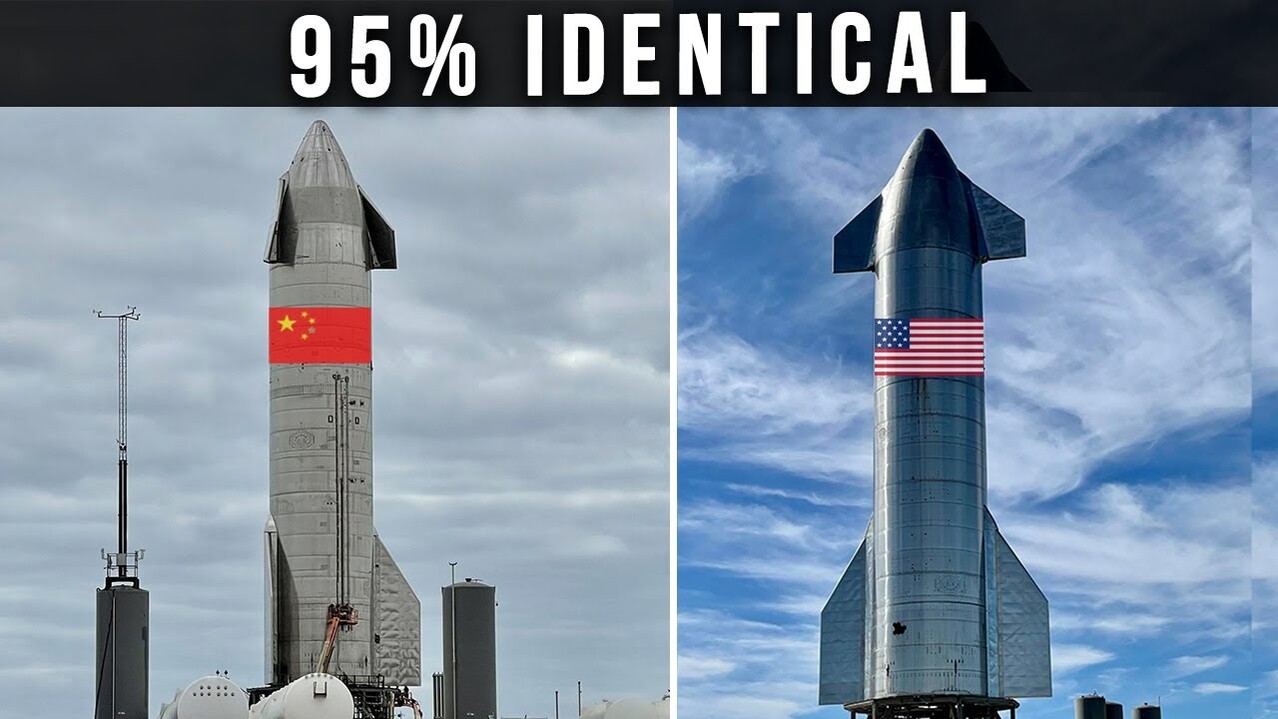
This technological trend in China is not limited to name similarities; private startups like Cosmoleap and Astronstone are following similar paths. Cosmoleap has fully integrated the mechanism that catches the Super Heavy booster in mid-air during landing—what SpaceX calls a “chopstick”—into its own design.
Another company, Astronstone, explicitly states that it has fully aligned its technical approach with SpaceX’s methodology, focusing on stainless steel fuselages and methane-fueled engine systems. Even the heavy-lift rocket designs showcased last year by China’s national space authorities are described as a direct copy of the Starship model, with their aerodynamic fin placement and two-stage reusable structure.
However, Chinese companies have yet to reach SpaceX’s level of success in bringing these ambitious designs to fruition. In early December 2025, the private space company LandSpace conducted the first orbital test of its Zhuque-3 rocket, which has a Falcon 9-like structure and reusable capabilities.
While the rocket’s second stage successfully reached its planned orbit, the first stage, the booster block, crashed and exploded due to engine failure during landing. This accident once again proves that complex return maneuvers and vertical landing technologies cannot be solved solely through visual similarities.
SpaceX is similarly undergoing a challenging process to ensure the reliability of its massive Starship platform, which has a payload capacity of 150 metric tons. The fact that Starship is not yet ready for NASA’s Artemis III mission, which aims to send astronauts to the Moon after 50 years, is also causing a tight schedule on the US side.
While the first flight dates targeted by small-scale Chinese startups for 2027 are seen as moves to attract investor attention, it is argued that these efforts will not yield results without the production of a reliable and functioning full-flow staged combustion engine.