
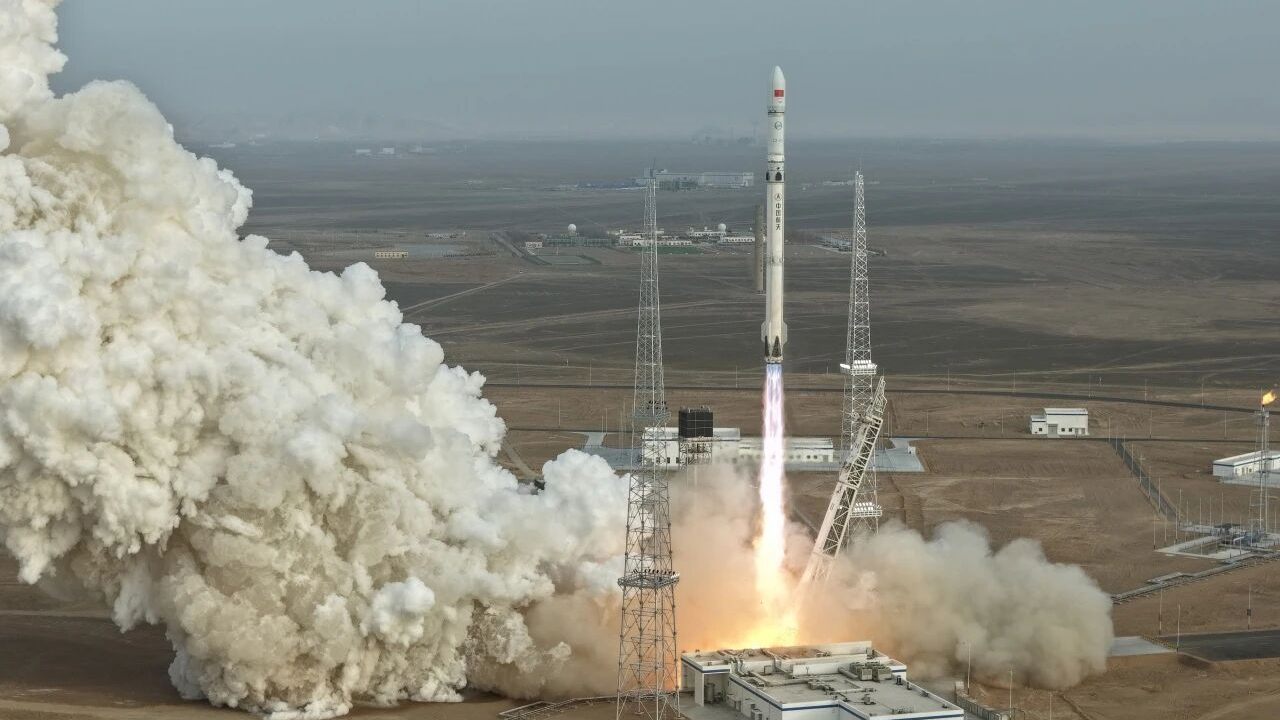
China has conducted its second reusable rocket test this month. The Long March 12A rocket, launched from the Jiuquan Satellite Launch Center on Monday, successfully reached low Earth orbit on its maiden flight. Similar in size to SpaceX’s Falcon 9 rocket, the Long March 12A has approximately the same height and diameter.
Long March 12A reached orbit on its first flight, but failed to land.
The rocket’s methane-fueled first-stage booster traveled at supersonic speeds as it re-entered the atmosphere approximately 10 minutes after launch. However, it failed to complete its deceleration burn at the planned landing site and crashed in a remote area about 300 kilometers from the prepared location on the edge of the Gobi Desert.
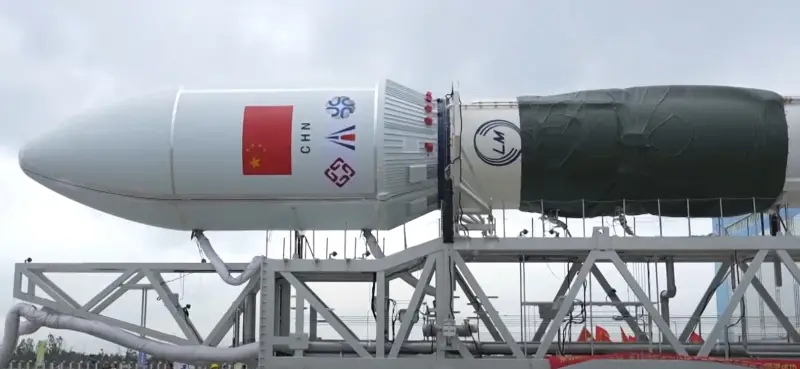
The China Aerospace Science and Technology Administration (CASC) announced that the upper stage of the rocket successfully reached its intended orbit, but the first stage could not be recovered. According to the agency, the causes of the failure are currently being analyzed and investigated.
This result is similar to the maiden flight of the Zhuque-3 rocket on December 2nd. Developed by the privately-backed LandSpace company, Zhuque-3 also successfully reached orbit on its first launch, but its recoverable booster stage fell off during a landing attempt. While Zhuque-3’s first stage landed very close to the landing zone, the Long March 12A appears to have landed at least several kilometers away.
In a statement, CASC said that although the mission did not achieve the planned rocket first stage recovery, critical engineering data was obtained. The agency stated that this data forms an important basis for future launches and reliable stage recovery procedures.
The key difference between Zhuque-3 and Long March 12A is that the latter was developed by the Shanghai Academy of Spaceflight Technology, one of China’s state-owned contractors. This academy is a subsidiary of CASC and also produces China’s Long March 4 and Long March 6 rockets.
Both rockets utilize the pusher landing architecture pioneered by SpaceX. However, instead of landing on floating platforms in the ocean, the Zhuque-3 and Long March 12A boosters target landing sites in desert regions, far from inland launch pads.
China’s rocket has conducted 89 orbital launch tests this year. While this number is less than half that of US launch vehicles, it far surpasses the rest of the world. The US and China together account for more than 90 percent of all orbital launches by 2025.
China has achieved this launch rate with a fleet of expendable rockets. With reusable rockets, it will be able to conduct more frequent and lower-cost launches. This could initiate a revolution in China similar to the low-cost launch services era launched in the US by SpaceX’s Falcon 9.
Several more small and medium-sized reusable rockets are under development in China. Commercial rockets like Space Pioneer’s Tianlong-3 and CAS Space’s Kinetica-3 are expected to be ready in the first months of next year. Both rockets have recoverable boosters, and their manufacturers say they deliver the rockets to launch sites.
Galactic Energy’s Pallas-1 rocket, i-Space’s Hyperbola-3, and Deep Blue Aerospace’s Nebula-1 are also designed for reusability and could fly by 2026.
China’s largest rocket developer, the China Launch Vehicle Technology Academy, is working on a pair of super-heavy rockets. The first will be the Long March 10, designed to fly with reusable boosters when launching China’s next-generation crewed spacecraft on lunar missions. Later, possibly in the 2030s, China could introduce the fully reusable Long March 9 rocket, on a scale similar to SpaceX’s Starship.
What are your thoughts on these developments? How do you think China’s rapid progress in the space race will affect the global space industry?