


The smartphone market is facing a significant crossroads as hardware costs reach record highs. According to reports from industry insiders like Ice Universe and Digital Chat Station, several Chinese manufacturers are considering halting the development of their next-generation “Ultra” flagships. The primary culprit? A global surge in memory (RAM) and storage prices that has made the production of these “specs-at-all-costs” devices financially unviable.
The Memory Crunch: RAM Costs Outpace Processors
For the first time in a decade, the cost of a device’s memory is rivaling—and sometimes exceeding—the price of its chipset. Market data from early 2026 shows that 16GB of LPDDR5X RAM combined with 1TB of UFS 4.1 storage can now cost upwards of $280. This price tag exceeds the cost of Qualcomm’s Snapdragon 8 Elite Gen 5, placing an immense burden on the “Bill of Materials” (BoM) for flagship devices.
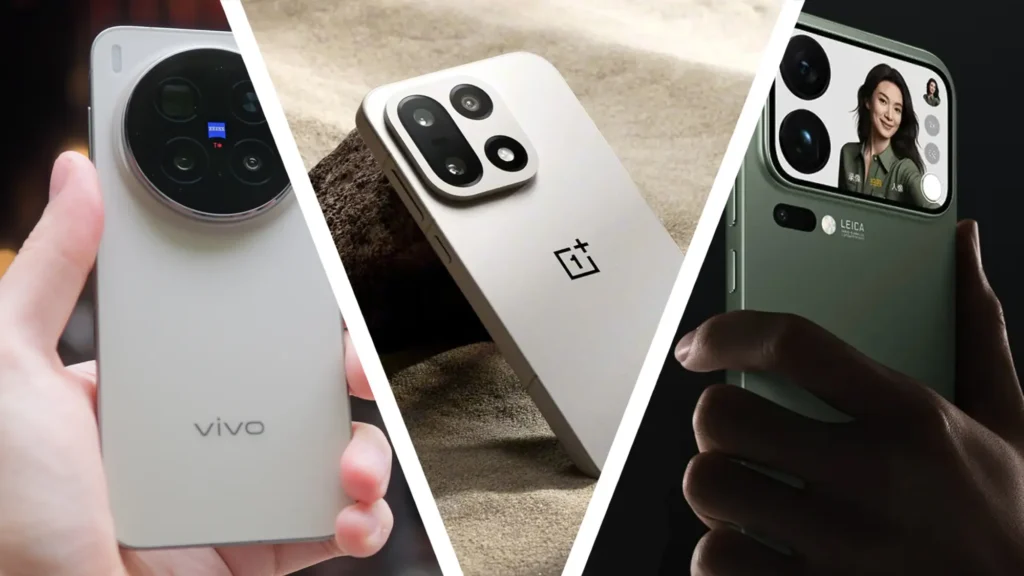
This “Memory Crisis” is largely driven by a pivot in the semiconductor industry, where manufacturers like Samsung and SK Hynix are prioritizing high-margin AI and server chips over consumer-grade mobile RAM.
The Dilemma of the “Ultra” Series
While the standard and “Pro” models provide the bulk of sales and steady profit for brands like Xiaomi, vivo, and OPPO, the Ultra series has always been a technological showcase. These devices are built around expensive, cutting-edge components:
- Massive Sensors: 1-inch (and larger) camera sensors with complex lens arrays.
- Advanced Optics: 10x native optical zoom and five-reflection prism systems.
- Premium Displays: 2K LTPO panels reaching record-breaking 4,000+ nits of brightness.
When combined with rising RAM prices, these components push the retail price of an Ultra model past the $1,500 (10,000 Yuan) threshold. At this price point, Chinese brands find themselves in direct competition with the brand prestige of Apple and Samsung, where consumers are often less willing to take a chance on a high-priced alternative.
Confirmed Changes and Suspensions
The impact of this crisis is already being felt in official roadmaps:
- OPPO: Company officials recently confirmed that the Find X10 Ultra will not be released in 2026. Instead, the brand will focus entirely on the upcoming Find X9 Ultra, which features a 200MP periscope lens and 10x optical zoom.
- Xiaomi: Reports suggest that while the Xiaomi 17 Ultra is proceeding, it will see a notable price hike to offset the “Memory Crunch.” Future “Ultra” projects for late 2026 and 2027 are reportedly under review.
- Market Shift: Many brands are expected to stick to 12GB RAM as the standard for 2026 “Pro” models, reversing the 24GB RAM trend seen in previous years to keep retail prices from exploding.
The era of “infinite specs” at competitive prices seems to be cooling down in favor of a more cautious, sustainable approach. As an academic researcher who studies consumer culture and neoliberalism, do you think this forced slowdown in the “spec war” will help consumers appreciate their devices longer, or will it simply lead to a stagnant market? Share your thoughts in the comments!
Since you are currently tracking Samsung and Xiaomi updates, would you like me to research if Samsung’s vertical integration (making its own RAM) gives them a significant price advantage over Xiaomi and OPPO in the 2026 flagship race? Let me know!