
DDR5 RAM Prices Surge to Five Times Previous Levels

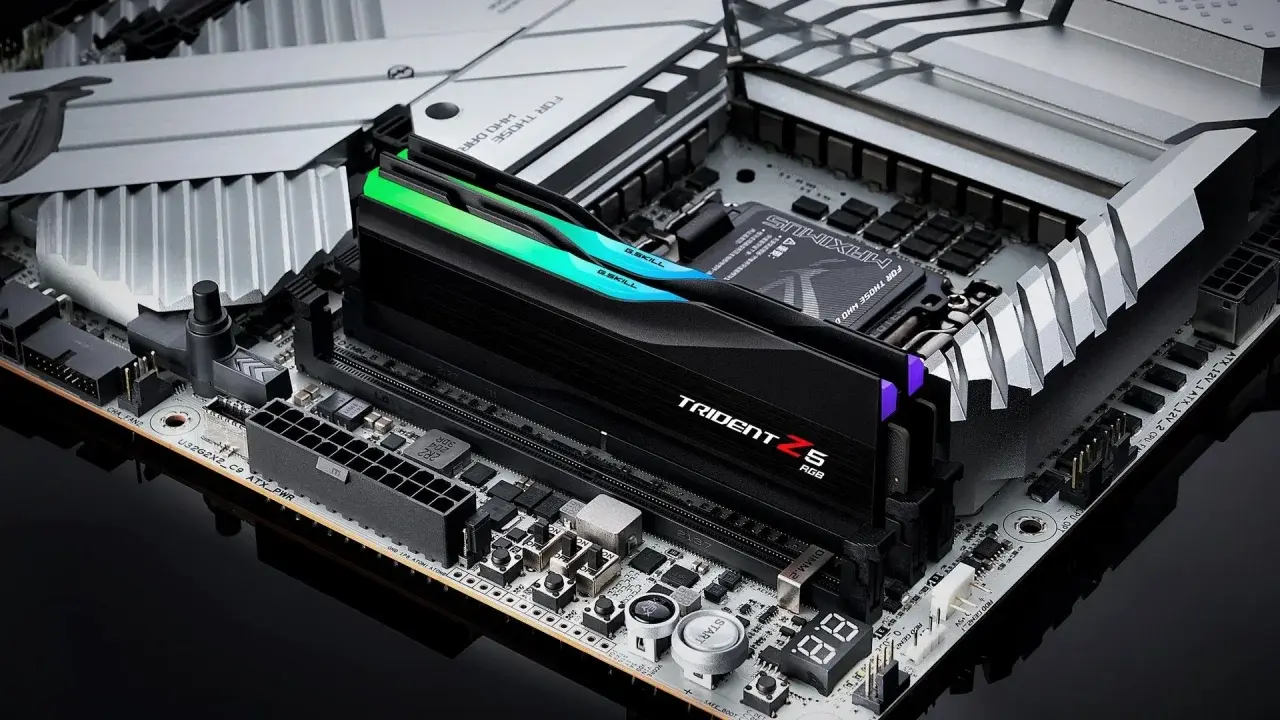
As of late 2026, the global hardware market is grappling with a severe supply chain crisis as DDR5 RAM prices have skyrocketed to nearly five times their July 2025 values. This dramatic inflation, particularly evident in the German market, has created significant financial barriers for consumers and system builders alike. Following a brief period of relative stability during the spring months, costs began an aggressive climb that reached a critical threshold by the fourth quarter. The surge is currently impacting various sectors, from personal computing to mobile devices, forcing industry analysts to reconsider long-term market forecasts for the remainder of the year.
- DDR5 memory prices have surged to approximately 490 percent of their July 2025 baseline costs.
- High-capacity modules, including 64 GB and 48 GB variants, are experiencing the most significant price hikes.
- Artificial intelligence development continues to drive global demand and supply chain volatility.
- Rising memory costs are negatively affecting the total production price of laptops, smartphones, and graphics cards.
Market Data Show Significant Price Increases
Recent data provided by 3D Center, derived from the price-comparison platform Geizhals, highlights the severity of this trend. While July presented initial challenges, August figures confirmed that the market has entered an unprecedented inflationary phase. The price index, which stood at 445 percent in July, climbed to 486 percent in August, effectively confirming that consumers are paying nearly five times more for memory kits compared to the previous year. 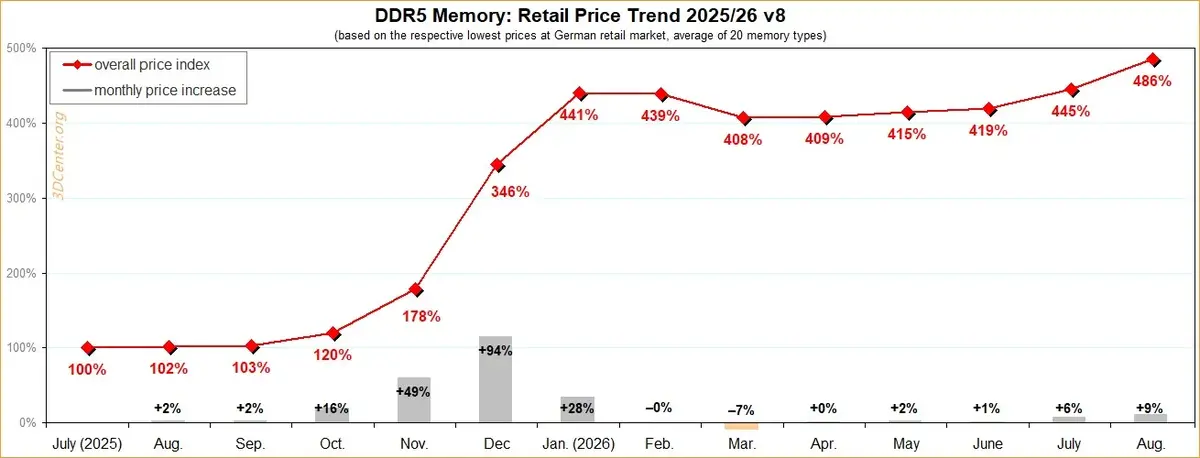
Even the few kits that managed to remain somewhat stable are currently selling at costs exceeding 400 percent of their 2025 prices. The scarcity of affordable options has left the enthusiast and professional PC building communities with very few cost-effective upgrade paths.
The current price trajectory threatens the accessibility of modern computing hardware for average consumers.
Hardware Production Costs Are Rising Globally
The impact of this surge extends far beyond desktop computer builds. Because DDR5 memory is a foundational component of modern technology, manufacturers of laptops, mini PCs, and high-performance graphics cards are forced to pass these increased costs onto the end user. 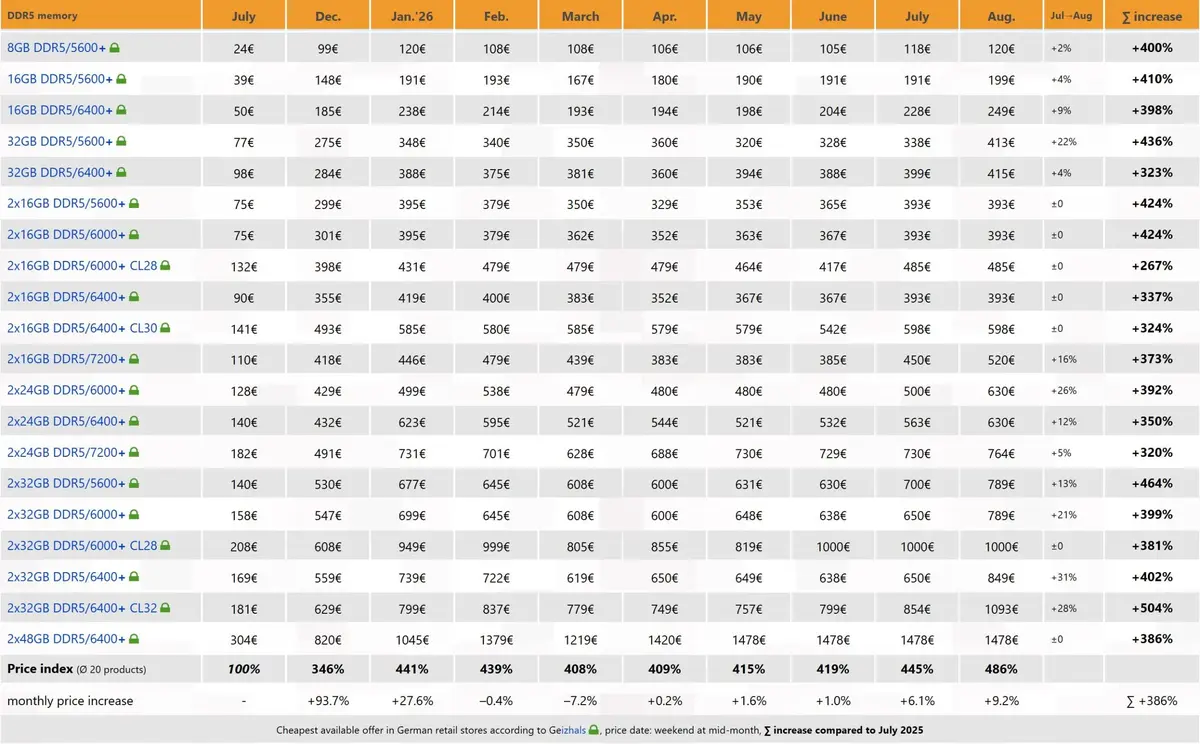
Industry experts suggest that if this upward trend persists, the broader PC market could face a significant decline in sales volume. The ongoing demand for silicon and memory, largely fueled by the rapid expansion of artificial intelligence infrastructure, shows no signs of waning. Consequently, the market remains in a state of high uncertainty regarding when, or if, prices will return to historical averages.
Market analysts remain uncertain about when hardware costs will achieve long-term stability.
Given the drastic rise in component costs, how has this situation influenced your plans for future PC upgrades or system builds? Share your thoughts and experiences in the comments section below.
Your comment has been submitted,
it will be published after approval.