
DeltaV Space Technologies Secures Its First International Export Contract

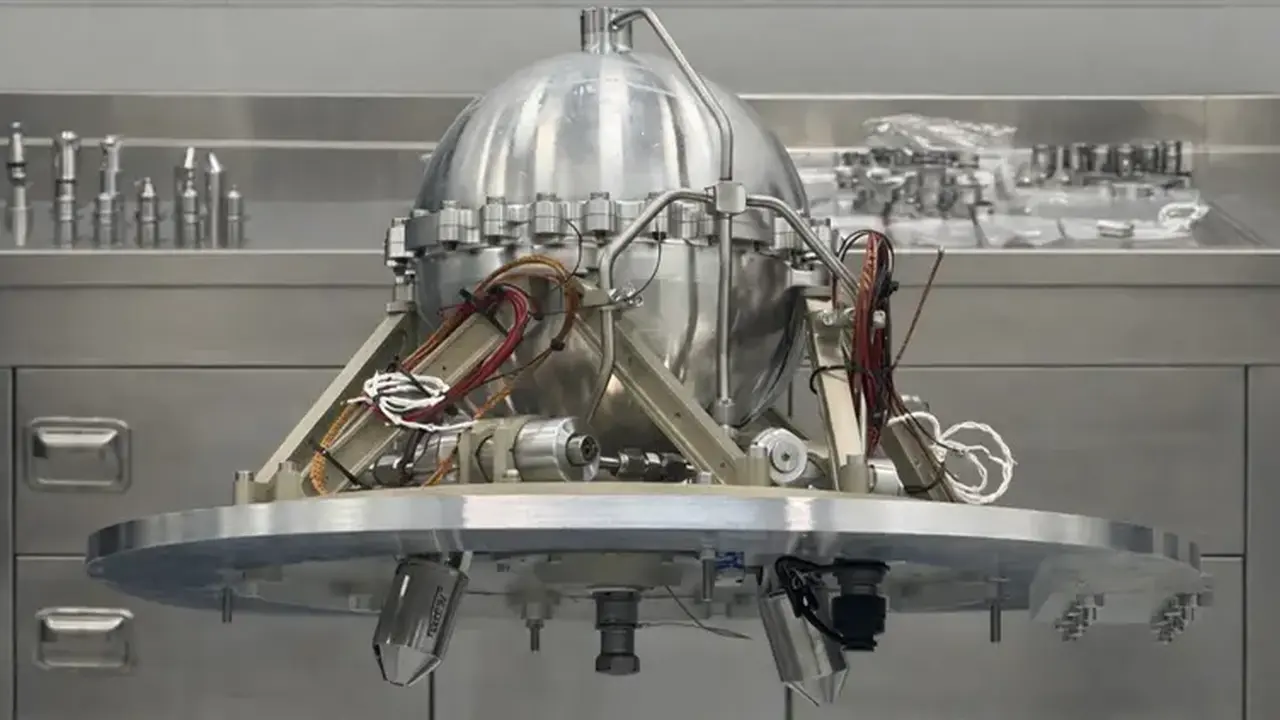
Turkish aerospace firm DeltaV Space Technologies has officially signed its inaugural international contract, marking a significant milestone in its journey toward global market participation. The company announced the agreement via social media, confirming that it will develop a sophisticated attitude control system designed to execute precise maneuvers for a client in space. By securing this overseas project, DeltaV demonstrates the growing competitiveness of Turkey’s domestic aerospace engineering, transitioning its specialized propulsion and control capabilities from local applications to the international stage. Although the specific identity of the client and financial details of the agreement remain confidential, the deal serves as a concrete indicator of DeltaV’s rising influence in the global space sector.
- DeltaV Space Technologies signed its first international contract to provide specialized satellite orientation control systems.
- The company will develop technology capable of performing precise orbital maneuvers to maintain satellite positioning.
- This export deal reinforces the international recognition of Turkey’s domestic engineering capabilities in the aerospace sector.
Satellite Orientation Systems Ensure Operational Precision
In the complex environment of space, a satellite’s orientation is as vital as its orbital location. An attitude control system functions as the critical mechanism that determines and adjusts the satellite’s posture—the specific axis and direction it faces. This precision is essential for mission success, whether a remote sensing satellite is pointing its camera at a target, a communications satellite is locking its antenna toward a ground station, or solar panels are aligning to capture maximum sunlight.
The accuracy of these systems determines the long-term viability and operational success of any satellite mission.
Space is a dynamic environment where nothing remains perfectly static. Various external forces, including atmospheric drag at high altitudes, solar radiation pressure, and irregularities in Earth’s gravitational field, constantly exert torque on a satellite, causing it to deviate from its intended orientation. The attitude control system counteracts these forces by utilizing reaction wheels and miniaturized thrusters to maintain stability. The quality of a system is defined by its ability to hold an angular position with minimal error, which is precisely why the development of such high-precision hardware is a benchmark for aerospace excellence.
DeltaV Continues to Expand Its Technological Capabilities
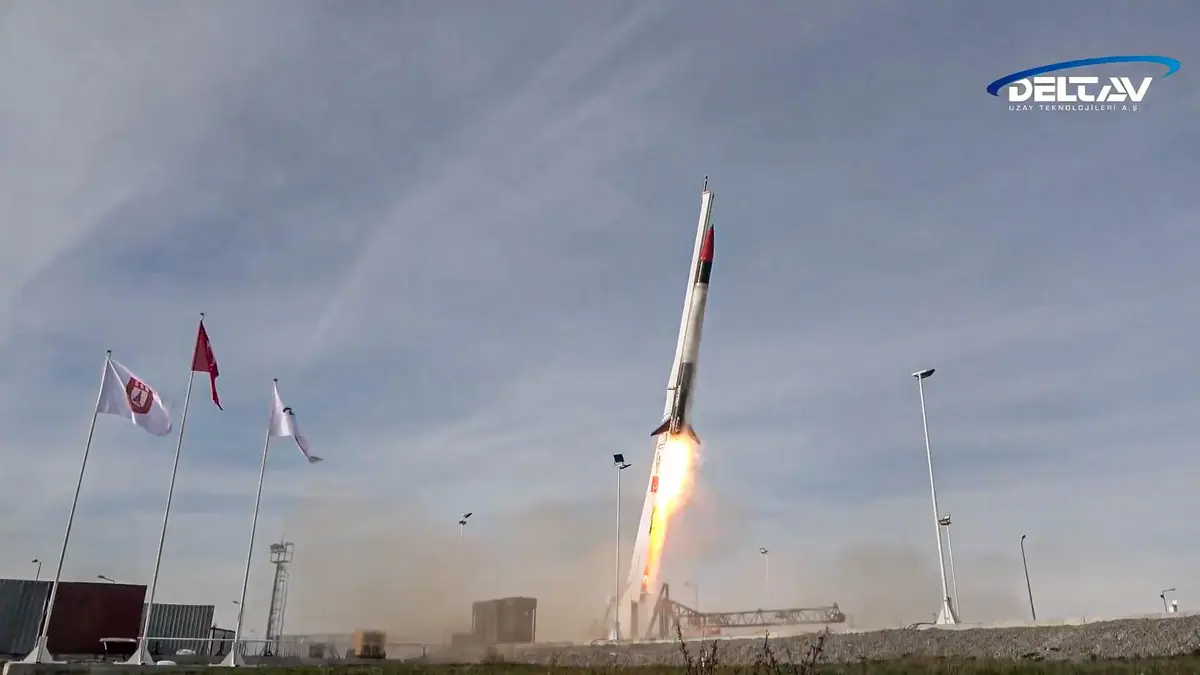
Established in 2017 as a subsidiary of the Presidency of Defense Industries, DeltaV has focused on ensuring Turkey’s independent access to space through advanced propulsion technologies. The company’s diverse portfolio spans several critical domains, including chemical thrusters used in orbital maintenance and hybrid rocket technologies that have set significant altitude records. Furthermore, DeltaV has successfully tested ramjet engines capable of reaching Mach 2.5–3, a technology intended for future cruise missiles and advanced combat aircraft.
The company is currently spearheading several ambitious national programs, most notably the AYAP lunar research initiative. In collaboration with the Turkish Space Agency and TÜBİTAK Space, DeltaV is developing a domestic propulsion system for a lunar landing mission, with a target launch date set for 2027. Additionally, the company has delivered the GÖKTAN rocket system for the deployment of ASELSAN’s TOLUN munitions and continues to refine the HİSTEP hypersonic test platform, which has already demonstrated capabilities at altitudes exceeding 200 kilometers.
How do you evaluate the impact of this first international export on the future trajectory of Turkey’s space program? We look forward to hearing your thoughts in the comments section below.
Your comment has been submitted,
it will be published after approval.