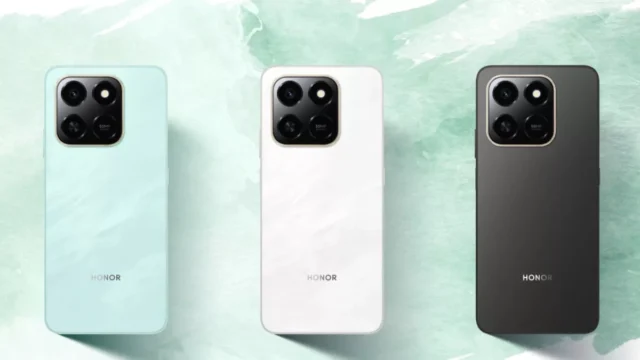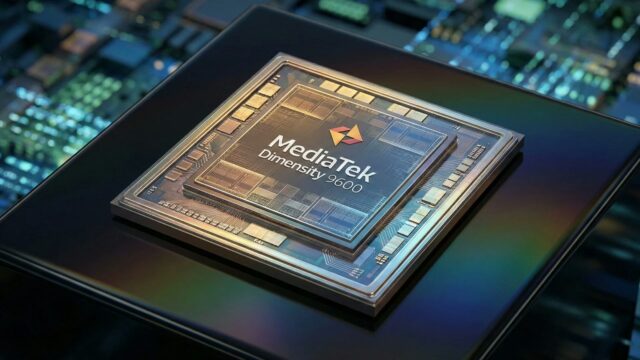

MediaTek’s upcoming Dimensity 8500 has quietly surfaced on Geekbench, powering what appears to be Honor’s next mid-range phone, the Honor Power 2. While it confirms that the chip is real and on its way, early benchmark scores suggest that upgrades over the Dimensity 8400 may be minimal, at least on the surface.
Dimensity 8500 delivers minor performance bump
The chipset made its first appearance under the device ID Honor SER-AN00, paired with 12 GB of RAM. In its best Geekbench run, the Dimensity 8500 posted a single-core score of 1,728 and a multi-core score of 6,762. For comparison, the Dimensity 8400 averages 1,621 and 6,208, respectively.
That’s roughly a 7% improvement noticeable on a chart, but not exactly earth-shattering in real-world use. Of course, since this is an early test, retail performance may shift slightly when the chipset debuts officially.
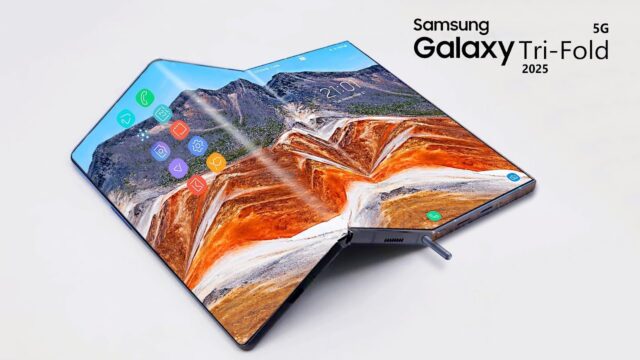
Samsung’s Galaxy Z TriFold fails its first durability test, with plastic panels, weak hinges, and a fragile build that breaks under basic pressure.
Clock speeds are up, but the core layout stays the same
The Dimensity 8500 uses the same core structure as its predecessor. It packs:
- 1x Prime core at 3.40 GHz (up from 3.25 GHz)
- 3x Performance cores at 3.20 GHz (up from 3.0 GHz)
- 4x Efficiency cores at 2.20 GHz (slightly up from 2.10 GHz)
It’s unclear if MediaTek has changed the architecture behind those cores or simply overclocked the existing design. Either way, the performance bump comes more from frequency tweaks than innovation.
GPU upgrade is mostly cosmetic
The GPU section tells a similar story. The Dimensity 8500 features an ARM Mali-G720 MC8, a slight bump from the MC7 found in the 8400. No raw GPU scores were listed, but given the minimal spec change, don’t expect major gains in gaming or graphical performance.
A quiet update for a quiet chipset
At least for now, the Dimensity 8500 doesn’t seem to be aiming for a breakthrough. Instead, it’s a mild refresh higher clocks, a slightly upgraded GPU, and marginal performance gains. For phones like the Honor Power 2, that might be enough, but buyers hoping for a generational leap should temper expectations.
Unless MediaTek surprises with efficiency or thermals, this one’s shaping up to be a safe, quiet iteration.