


DJI has introduced its new model FlyCart 100, which raises the bar in cargo drone technology. Standing out as the company’s most powerful delivery drone to date, FlyCart 100 draws attention with its carrying capacity of up to 80 kilograms. The model is designed to be used in different scenarios and can perform automatic delivery without landing while unloading.
DJI FlyCart 100 unveiled
FlyCart 100 can carry 80 kilograms with a single battery and 65 kilograms with double batteries. The total weight of the drone can reach up to 150 kilograms with the load. The range of the device varies according to the load it carries and the battery configuration.
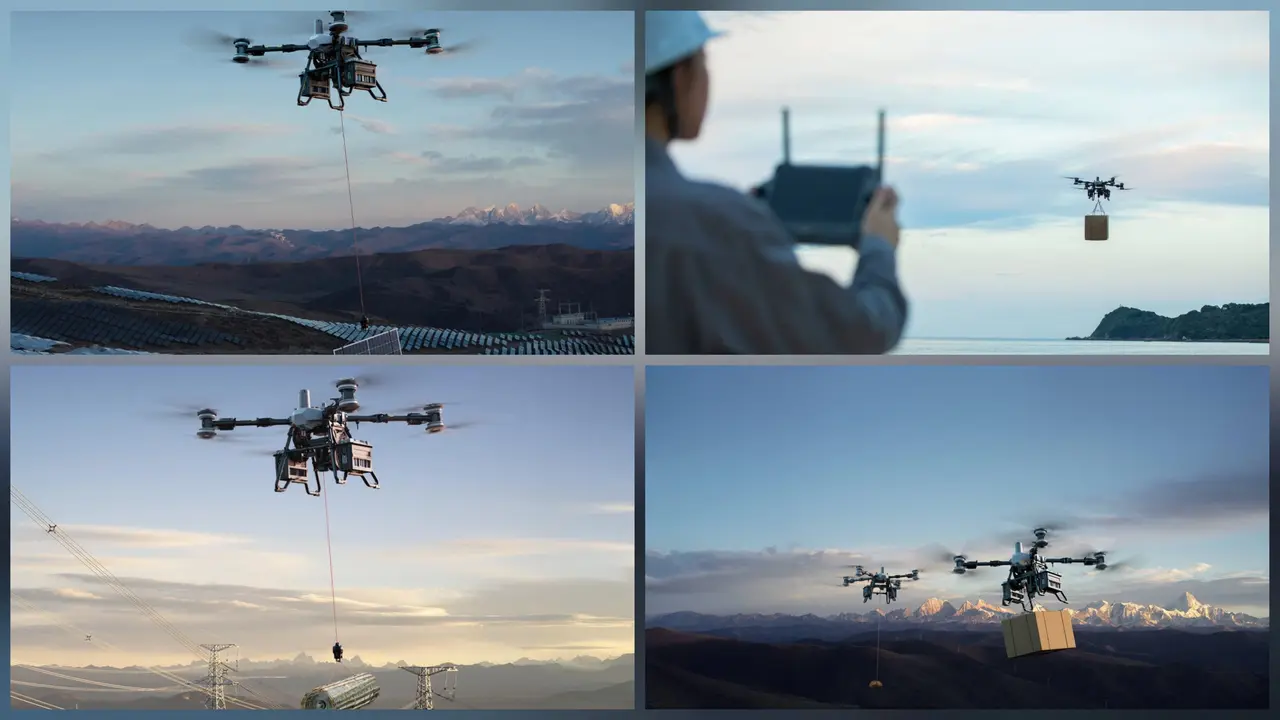
FlyCart 100, which has an average carrying distance of 6 kilometers, can reach 12 kilometers with double batteries and 26 kilometers when empty. The drone, which can reach an altitude of 6000 meters thanks to its 4-axis structure and eight propellers, can also operate in difficult conditions with its 62-inch propellers made of fiber carbon.
One of the drone’s notable safety features is its internal parachute system. This system allows for controlled landings at a speed of 6 meters per second in emergency situations. In addition, the device does not need to be turned off during battery changes. Batteries can be charged in just 9 minutes with optional DJI adapters. This allows for uninterrupted operation in high-paced missions.
FlyCart 100 also has two different options in terms of load release system. With the 30-meter rope-based pull-and-drop system, deliveries can be made from higher altitudes. Alternatively, a dual electric motor system connected to a 10-meter rope makes it possible to release loads more precisely.
The new model is offered for sale in four different configurations. The version with the 10-meter rope system starts at $12,500, while the version with the 30-meter rope starts at $16,300. When the fast charging adapter is preferred, $400 is added to the prices.
With the FlyCart 100, DJI aims to set a new standard not only in cargo transportation, but also in drone use in high-risk mission areas. This model stands out as an alternative solution especially in mountainous regions, natural disaster areas and places where infrastructure services cannot be delivered.