
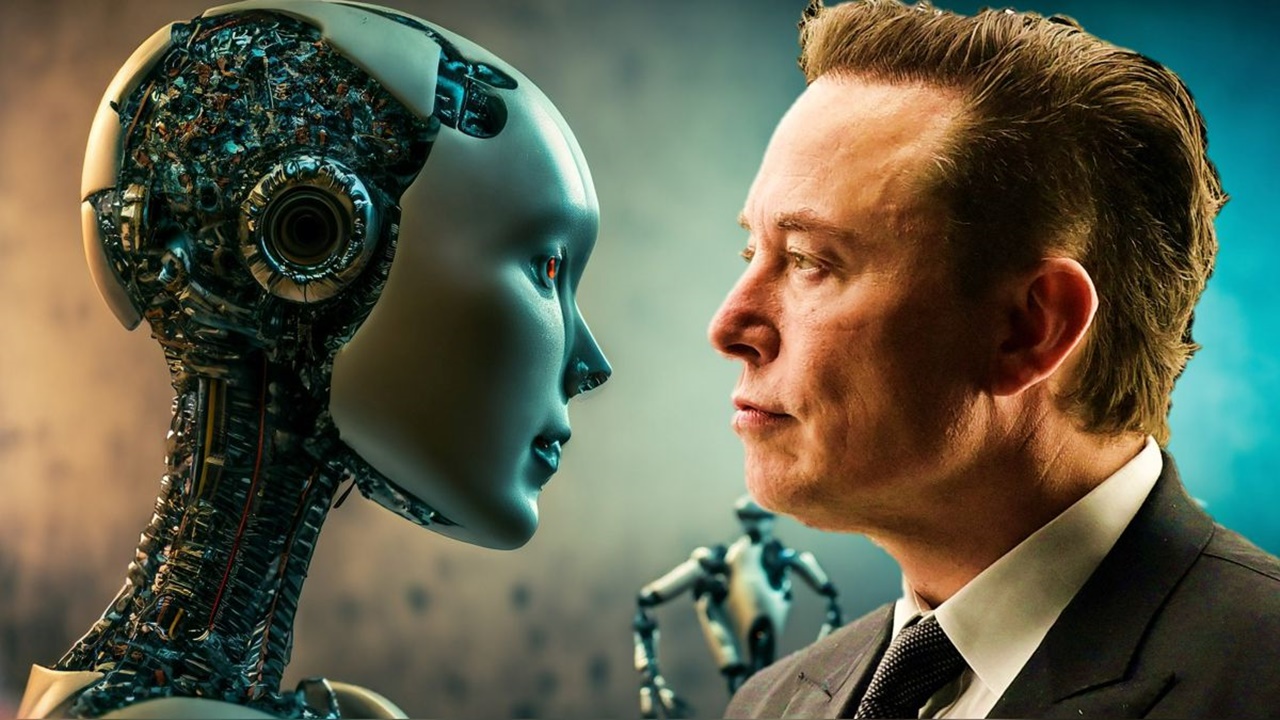
Tesla’s humanoid robot project, Optimus, has become a focal point for the company. While the project didn’t initially progress as quickly as Elon Musk promised, it has recently reached a much more concrete level. Tesla’s humanoid robots are expected to be integrated into the workforce in the very near future, and soon after, they will be offered for sale as assistive robots in homes and workplaces.
Optimus robots can produce new robots
Elon Musk, who recently announced the establishment of Optimus’s mass production lines, has now shared a rather striking detail about his production plans. Musk’s plan is to create a system where Optimus robots can produce their own kind, that is, other Optimus robots.
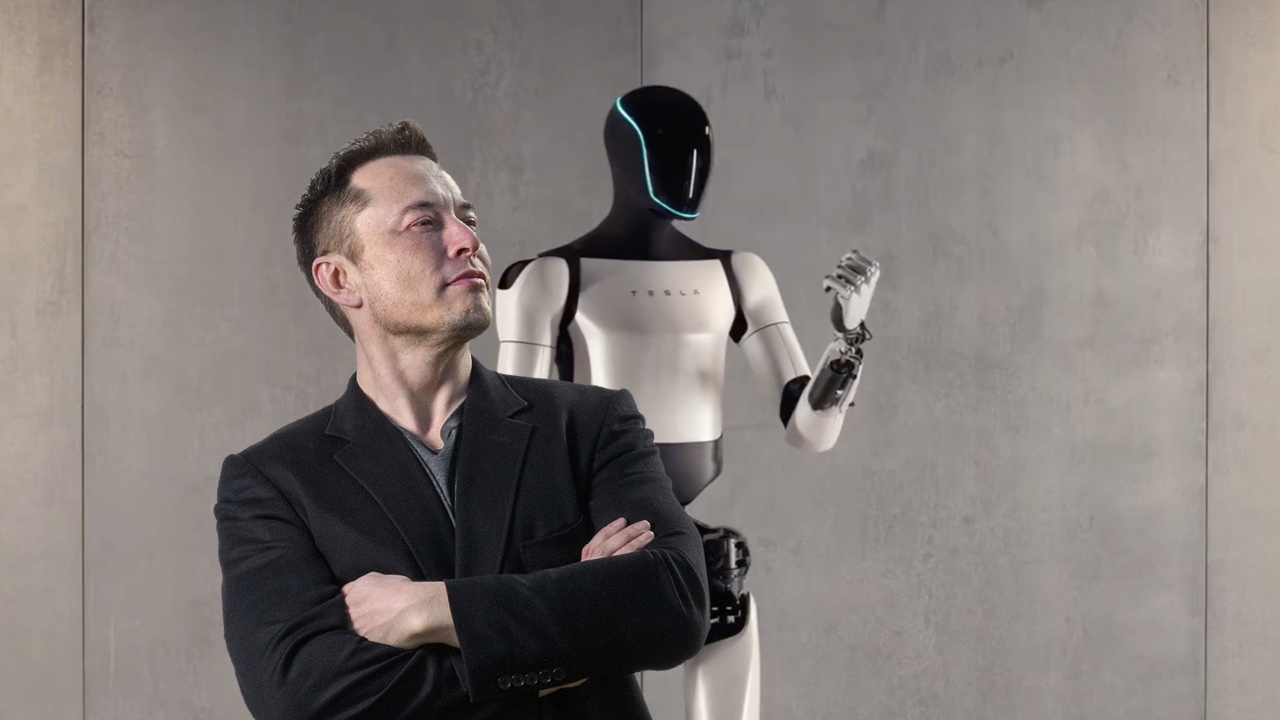
With this idea, Musk is referencing the theoretical concept of self-replicating spacecraft proposed by renowned mathematician John von Neumann in the 1940s. Musk believes Optimus will bring von Neumann’s model to life. This will make Optimus the highest-volume product ever produced.
Musk’s production targets are also quite ambitious. Initially, he plans to build a one-million-unit-per-year production line at Tesla’s Fremont factory. This will be followed immediately by a larger, ten-million-unit-per-year production line at the Gigafactory in Texas.
In the long term, he predicts that Optimus production could reach billions. In this new robotics-driven world envisioned by Elon Musk, the need for human labor appears to be decreasing.
Just this week, Musk made clear his vision, stating that work will become completely optional within 10 to 20 years. However, Musk did not comment on the potential impact of this massive automation on the potential unemployment problem and the socioeconomic changes it will cause in society.