
Flipper One Brings Linux Power to Portable Cyber Tools

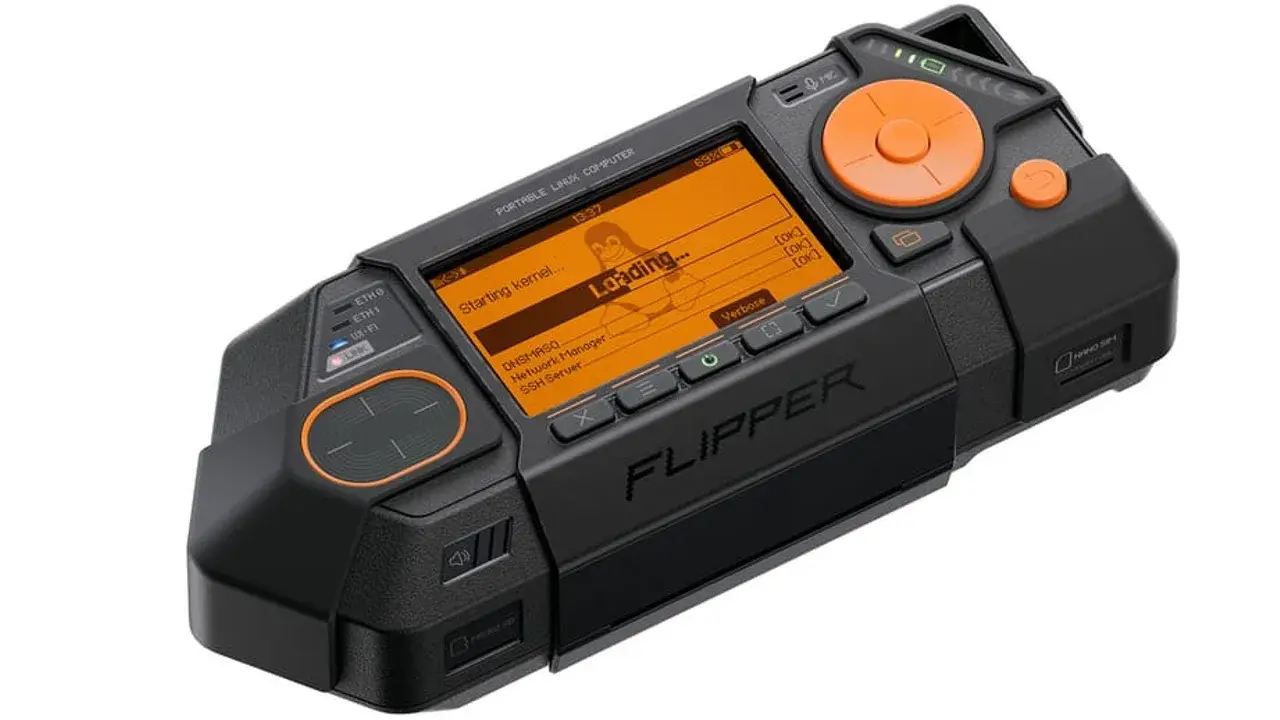
The Flipper One project has emerged as a groundbreaking initiative in the portable computing space, offering developers and cybersecurity professionals a full-scale Linux environment within a compact, handheld form factor. Unlike its predecessor, the Flipper Zero, the Flipper One is designed specifically as a network-connected Linux system, aiming to serve as a comprehensive platform for experimentation, development, and advanced security testing. By integrating powerful hardware with an entirely open-source philosophy, the project seeks to provide a versatile ‘Swiss Army knife’ for IP networks and digital forensics in a device that fits comfortably in the palm of a user’s hand.
- The device features a powerful combination of the Rockchip RK3576 processor and a Raspberry Pi RP2350B microcontroller.
- Connectivity options include 5G, Wi-Fi 6E, and dual Gigabit Ethernet ports for versatile network testing.
- The system runs on FlipperOS, a Debian-based distribution that excludes all proprietary binary blobs.
The Device Offers High-Performance Technical Specifications
At the core of the hardware architecture lies the Rockchip RK3576 processor, supported by 8 GB of RAM and 64 GB of internal storage. This robust configuration allows the device to handle intensive tasks while maintaining portability. The integration of a low-power Raspberry Pi RP2350B microcontroller ensures efficient management of auxiliary functions, while the 7000 mAh battery provides the necessary longevity for field operations. 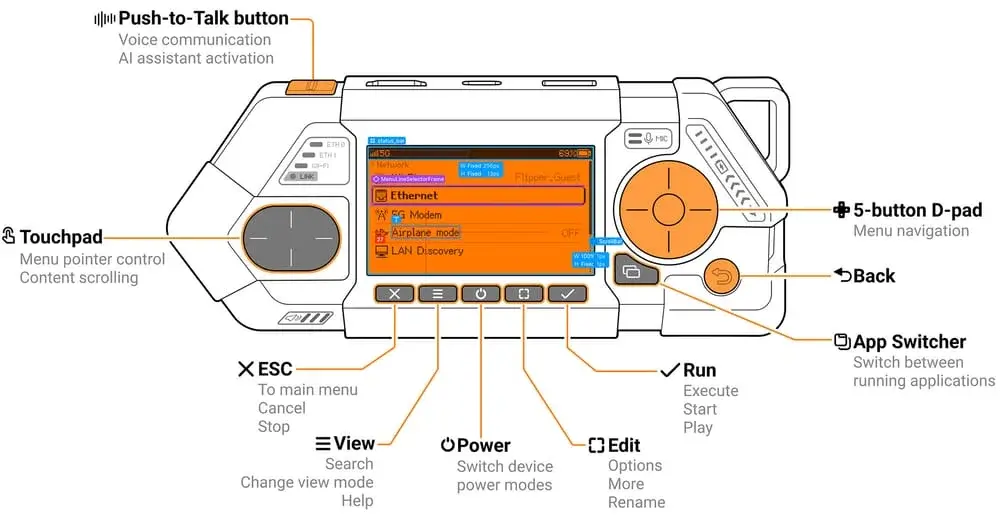
The device functions as a fully capable Linux-based workstation when connected to an external monitor.
Connectivity is a primary focus for the Flipper One. It includes a 5G modem, Wi-Fi 6E, and two dedicated Gigabit Ethernet ports. The inclusion of a 5 Gbps USB-C connection, along with HDMI output, USB-A ports, and an M.2 expansion slot, transforms the device into a modular tool for various professional environments. Whether used as a thin client, a portable desktop replacement, or a media player via Kodi, the hardware is built to adapt to the user’s specific infrastructure requirements. 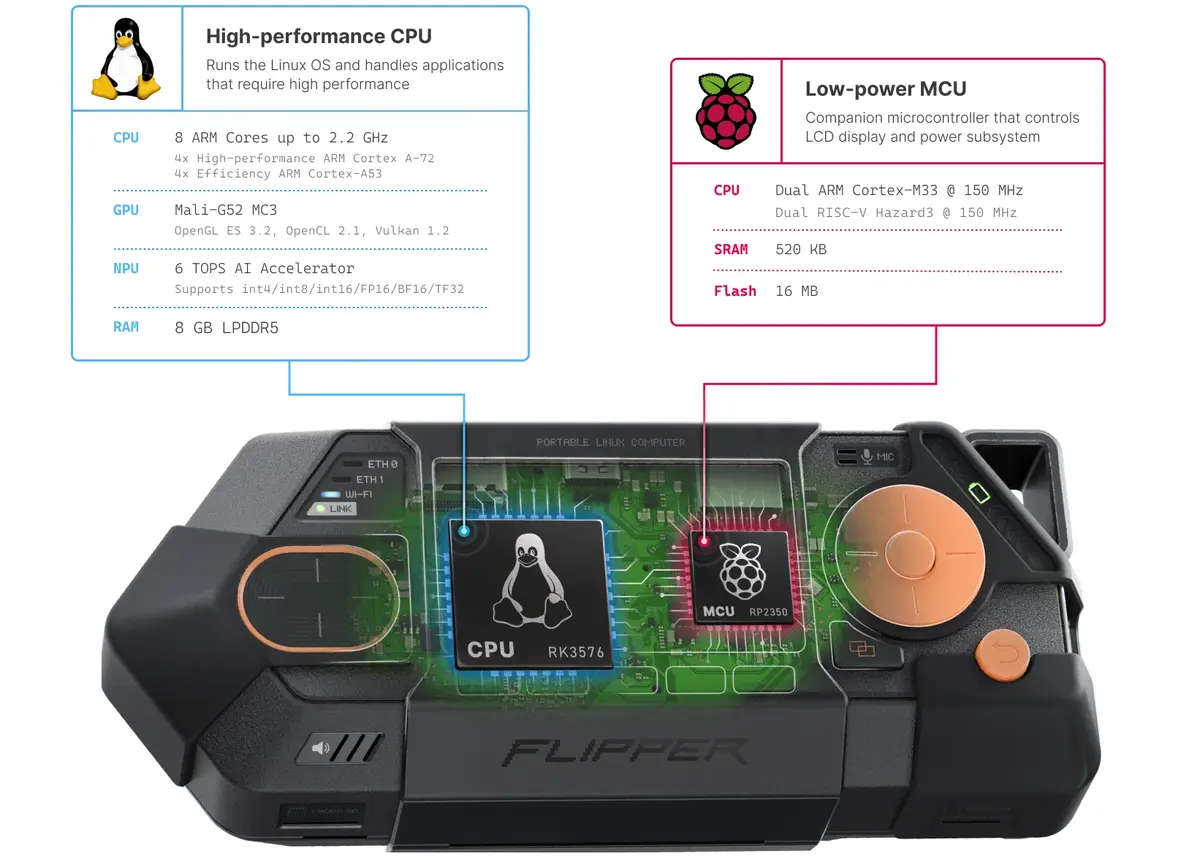
The Software Philosophy Emphasizes Open Transparency
The Flipper One runs on FlipperOS, which is a Debian-based environment stripped of proprietary binary blobs to ensure complete transparency. The interface, known as FlipperCTL, is optimized for the device’s 256×144 pixel monochrome screen, allowing operators to execute diagnostic tools such as Nmap, traceroute, and ping with minimal latency. This focus on a clean, open-source stack reflects the project’s commitment to community-driven development and secure, auditable software practices.
Community Contributions Drive the Development Process
The Flipper One is currently in an active development phase, relying heavily on community feedback and contributions. To facilitate this, the development team has launched a dedicated portal where enthusiasts can participate in hardware design, firmware optimization, and interface refinement. 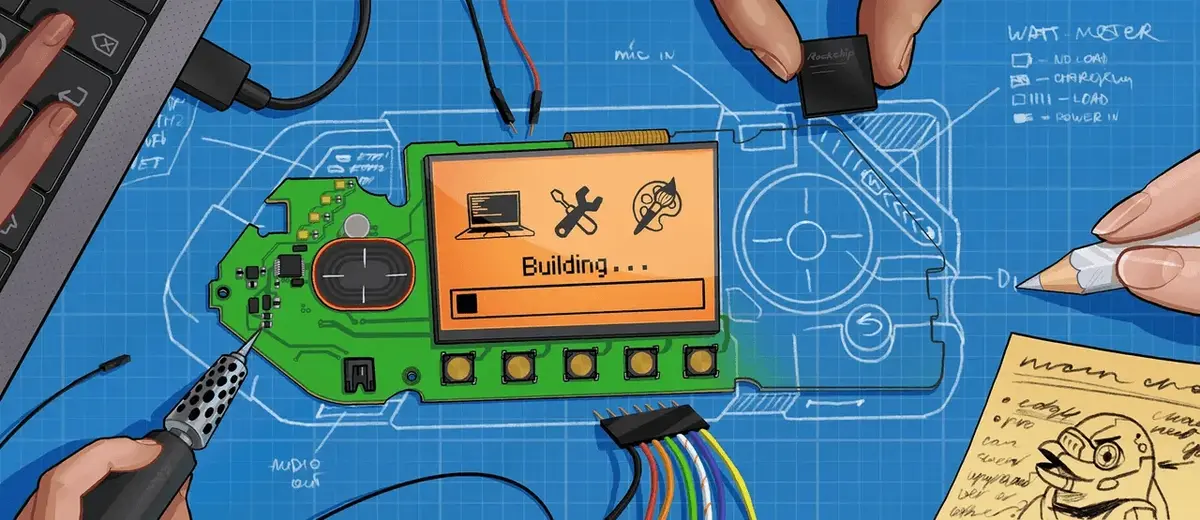
The project invites developers and designers to shape the future of open-source portable hardware.
By sharing all design documentation and source code publicly, the team hopes to foster a culture of user-led innovation. This open approach is intended to ensure that the Flipper One remains a relevant and evolving tool for cybersecurity experts and network administrators worldwide. As the project matures, the collaborative efforts of the community will define the final capabilities and security standards of the platform.
We are curious about your perspective on this new portable powerhouse; how do you envision the Flipper One changing the landscape of cybersecurity, and what specific features would you like to see in the final version?
Your comment has been submitted,
it will be published after approval.