
Global PC Market Declines as Apple Achieves Growth

In the second quarter of 2026, the global PC market experienced a significant downturn, with total shipments falling 4.9% year-over-year to 68.2 million units, according to recent IDC data. This contraction marks the end of a nine-quarter growth streak, primarily driven by severe memory shortages and rising manufacturing costs that have stifled the industry. While major x86 manufacturers struggled to maintain momentum amidst geopolitical tensions and supply chain bottlenecks, Apple emerged as a notable exception. By achieving a 10.1% increase in shipments, Apple successfully navigated these challenging economic conditions, outperforming its competitors through strategic supply management and product appeal.
- Global PC shipments reached 68.2 million units in Q2 2026, marking a 4.9% annual decline.
- Apple defied industry trends by increasing its shipment volume by 10.1% during the quarter.
- Industry analysts predict that current memory supply constraints will persist until 2028.
- Traditional x86 manufacturers failed to generate sufficient sales momentum despite releasing new processor architectures.
Memory Shortages Hinder Global Industry Growth
The core of the recent decline in the PC market lies in persistent supply chain disruptions, particularly regarding memory components. As the shortage of essential hardware parts drives production costs higher, manufacturers have been forced to increase prices, which has subsequently cooled consumer demand. Although companies have attempted to protect their profit margins by raising the average selling price of their devices, the strategy has not been enough to offset the drop in unit volume. Jitesh Ubrani and other industry experts note that the market is facing a prolonged period of instability.
The ongoing memory supply crisis is expected to remain a significant barrier for the industry until 2028.
Manufacturers Must Develop New Strategic Approaches
Major industry players including Lenovo, HP, Dell, and ASUS reported substantial losses in their quarterly shipment figures. Brands such as HP and Dell are currently facing intense pressure to preserve their existing market share, while companies like ASUS have struggled to maintain a stable growth trajectory. Although these firms pinned their hopes on new devices featuring Intel’s latest Wildcat Lake processors to entice consumers, limited stock levels and delayed product launches hindered their ability to capitalize on new technology. 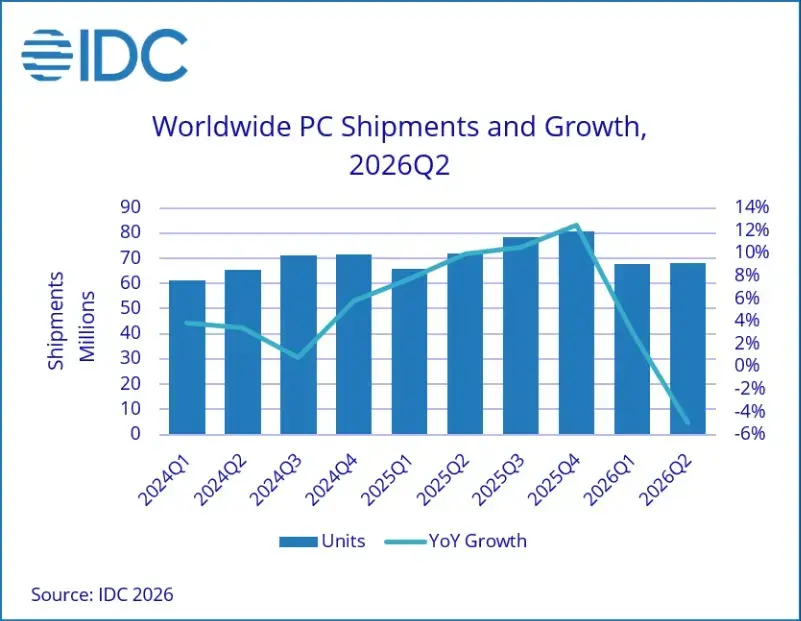
Apple’s resilience suggests that success in this environment depends heavily on proactive supply chain management. While other manufacturers hesitated, Apple secured vital memory components early, demonstrating that relying solely on processor updates is no longer a viable strategy for market dominance. The contrast between Apple’s growth and the stagnation of its competitors highlights a fundamental shift in how hardware leadership is defined today.
Traditional manufacturing methods now pose a significant risk to companies failing to innovate.
Artificial Intelligence Demand Necessitates Market Evolution
Looking ahead, the growing interest in local artificial intelligence applications could serve as a catalyst for a hardware refresh cycle. However, given the reality of the memory bottleneck that is projected to last for several years, hardware updates alone will not suffice. To remain competitive, PC manufacturers must shift their focus toward providing localized computing solutions that alleviate the burden of rising cloud subscription costs for end-users.
Do you believe that Apple will maintain its lead in the coming year, or will x86 manufacturers find a path to recovery? We invite you to share your thoughts in the comments section below.
Your comment has been submitted,
it will be published after approval.