
Global Smartphone Market Sales Plummet by 11 Percent

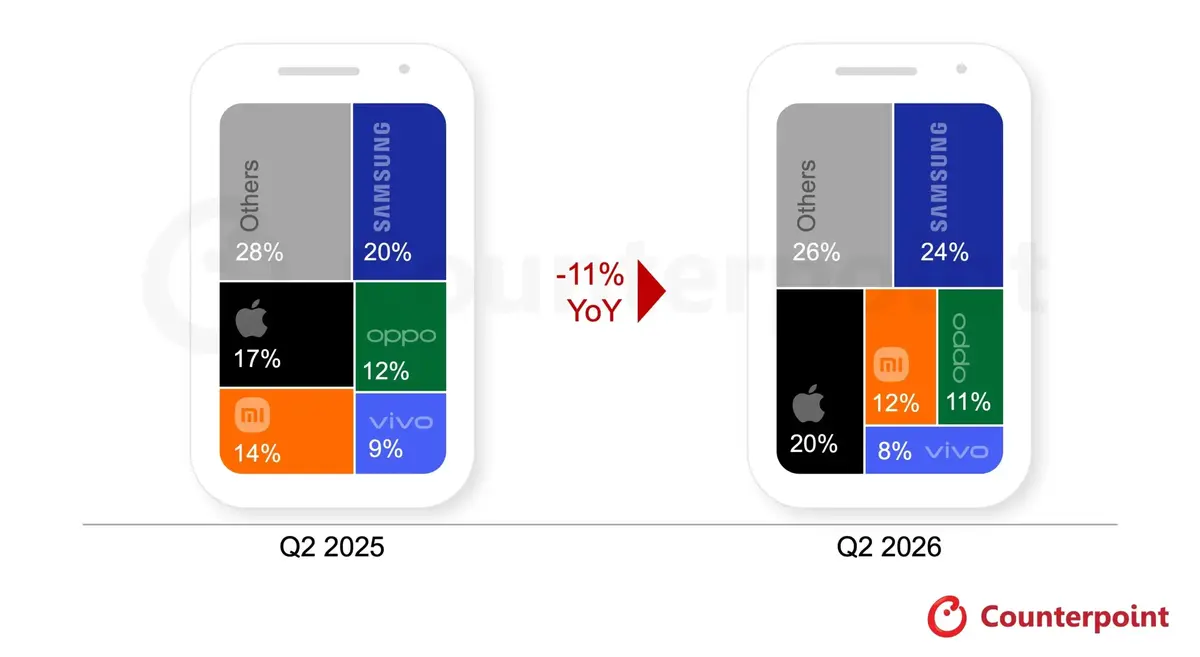
The global smartphone market faced a significant downturn during the first quarter of 2026, recording an 11 percent decline in sales compared to the same period in the previous year. According to industry data, this performance marks the second-weakest second-quarter result observed over the past 13 years. Economic instability across global markets, combined with persistent supply chain disruptions specifically related to memory technology, has forced major manufacturers to drastically revise both their production capacities and annual sales targets. This sharp contraction reflects a cooling effect on the tech industry as consumer sentiment shifts in response to broader economic pressures.
- Global smartphone sales experienced an 11 percent year-over-year decline in the first quarter of 2026.
- Analysts identified this period as the second-weakest second-quarter performance in the last 13 years.
- Persistent memory chip shortages and supply chain constraints served as the primary drivers for the market downturn.
The technology sector is currently navigating one of its most challenging periods due to the severe memory chip crisis.
Memory Shortages Continue to Hinder Global Production
At the center of this market decline lies a critical scarcity of semiconductor components, specifically high-performance memory modules. The limited availability of these essential parts has stifled the ability of smartphone manufacturers to ship new models to retail channels. As production lines face bottlenecks, companies have adopted a cautious approach to inventory management to mitigate rising costs and the risks associated with supply chain volatility.
This production slowdown has led to a noticeable reduction in the volume of new devices reaching store shelves. Simultaneously, inflationary pressures and changes in consumer purchasing power have significantly extended the replacement cycles for mobile devices. Many users are opting to retain their current hardware for longer durations, which has further dampened the demand for next-generation smartphones and contributed to the ongoing market stagnation.
Industry Leaders Prepare for a Difficult Future
Market analysts suggest that a recovery in 2026 will require more than just marginal upgrades; it will necessitate significant technological breakthroughs. The introduction of advanced devices integrated with artificial intelligence could potentially stimulate consumer interest and drive new demand. However, until the underlying supply issues within the memory sector are resolved, a return to previous levels of market vibrancy remains unlikely.
In response to these bottlenecks, technology firms are diversifying their corporate strategies. While some brands are pivoting their focus toward the mid-range device segment, others are attempting to maintain market share by introducing exclusive high-end series. Despite these efforts, the persistence of the downward trend throughout the remainder of the year remains a primary concern for stakeholders across the sector.
The drastic decline in global smartphone sales will force tech giants to fundamentally overhaul their long-term strategies.
How do you believe the smartphone industry will navigate these supply chain hurdles, and are you planning to upgrade your device despite the current market conditions? Share your thoughts and predictions regarding the future of the technology sector in the comments section below.
Your comment has been submitted,
it will be published after approval.