
Global Smartphone Processor Market Declines by 15 Percent in 2026

A recent report released by Counterpoint Research reveals a significant downturn in the global smartphone processor market during the first half of 2026. The industry experienced a sharp 15 percent decline in total shipments, highlighting a major shift in consumer demand and intensifying competition among key chip manufacturers. While major industry players like Qualcomm and MediaTek suffered notable double-digit losses due to weakening demand in the mid-to-low-end device segments, other firms managed to defy the trend. Companies such as Apple, Samsung, and Unisoc successfully expanded their market presence, signaling a transformative period for the global technology supply chain.
- Global smartphone processor shipments recorded a 15 percent decline during the first half of 2026.
- Market leaders Qualcomm and MediaTek experienced significant double-digit shipment losses.
- Apple, Samsung, and Unisoc achieved growth despite the prevailing market downturn.
Market Contraction Challenges Industry Growth
The semiconductor industry, often regarded as the heartbeat of modern technology, is currently facing performance levels that fall short of initial projections. Analysts indicate that the decline in smartphone processor shipments is not limited to specific regions but represents a worldwide slowdown. This cooling effect is primarily attributed to inventory management adjustments by manufacturers and a broader deceleration in consumer interest regarding new-generation hardware.
Market leaders are facing an unexpected competitive landscape this year.
Major Suppliers Struggle While Others Advance
The core of the market volatility lies in the performance of its largest suppliers. Qualcomm and MediaTek have been disproportionately affected by the shrinking market, as their reliance on high-volume, mid-range mobile devices proved to be a vulnerability during this period of reduced spending. 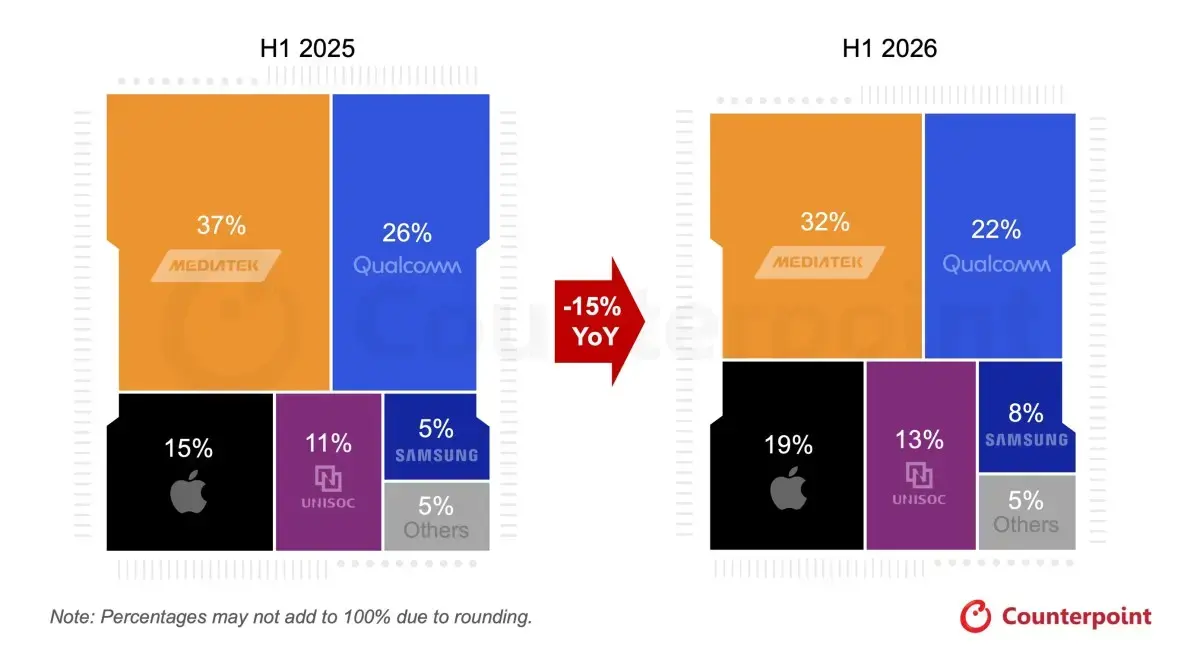 In contrast, firms that utilize vertical integration strategies have demonstrated remarkable resilience. By developing proprietary chipsets and keeping production within their own ecosystems, Apple and Samsung have successfully insulated themselves from the broader industry slump. Meanwhile, Unisoc has effectively maintained its market standing by continuing to provide competitive, cost-effective solutions for the budget-conscious segment of the mobile market.
Unisoc continues to capture value through its strong performance in the affordable device sector.
Future Market Expectations Remain Cautious
The future trajectory of the smartphone processor market depends heavily on how manufacturers navigate cost management and artificial intelligence integration. Industry experts suggest that while minor recoveries might materialize in the second half of the year, a comprehensive annual rebalancing is expected. For processor developers, the transition to more efficient manufacturing processes and aggressive cost-reduction strategies has become an absolute necessity to regain momentum. Future device launches slated for the upcoming months will serve as the definitive barometer for how the market recovers and whether current strategies will yield long-term stability.
How do you anticipate this decline in smartphone processor shipments will influence the retail pricing of upcoming flagship devices? We invite you to share your insights and predictions regarding the future of the mobile industry in the comments section below.
Your comment has been submitted,
it will be published after approval.