
Google Pixel 11 Enhances Face Unlock Performance in Low Light


Google has officially announced a significant upgrade for the Pixel 11 series, focusing specifically on improving the Face Unlock functionality in low-light conditions. According to the latest product documentation, the Pixel 11, 11 Pro, and 11 Pro Fold models utilize advanced machine learning algorithms to ensure that the facial recognition system remains both faster and more secure than the previous generation. By optimizing how the camera-based biometric sensor processes visual data in dark environments, Google aims to provide users with a seamless and reliable authentication experience when accessing their devices during nighttime or in dimly lit surroundings.
- Google has upgraded the Face Unlock technology for the Pixel 11 series to perform better in low-light settings.
- The enhanced system leverages the integration of Tensor processors and advanced machine learning algorithms.
- The new biometric security features operate in conjunction with the Titan M3 chip to protect user data.
- Google continues to rely on software-based optimizations instead of transitioning to dedicated infrared hardware.
Low Light Performance Reaches Higher Reliability
Since the introduction of the Pixel 8, Google has consistently maintained high biometric standards for its camera-based authentication systems. With the Pixel 11, the company has refined these algorithms to bridge the performance gap in challenging lighting scenarios. This development is part of a broader security ecosystem that includes the Titan M3 security chip, built-in VPN services, and robust scam detection tools. By integrating these layers, Google ensures that biometric data remains protected while the speed of unlocking is improved significantly compared to the Pixel 10.
The integration of advanced software algorithms allows the Pixel 11 to achieve superior facial recognition without requiring additional hardware sensors.
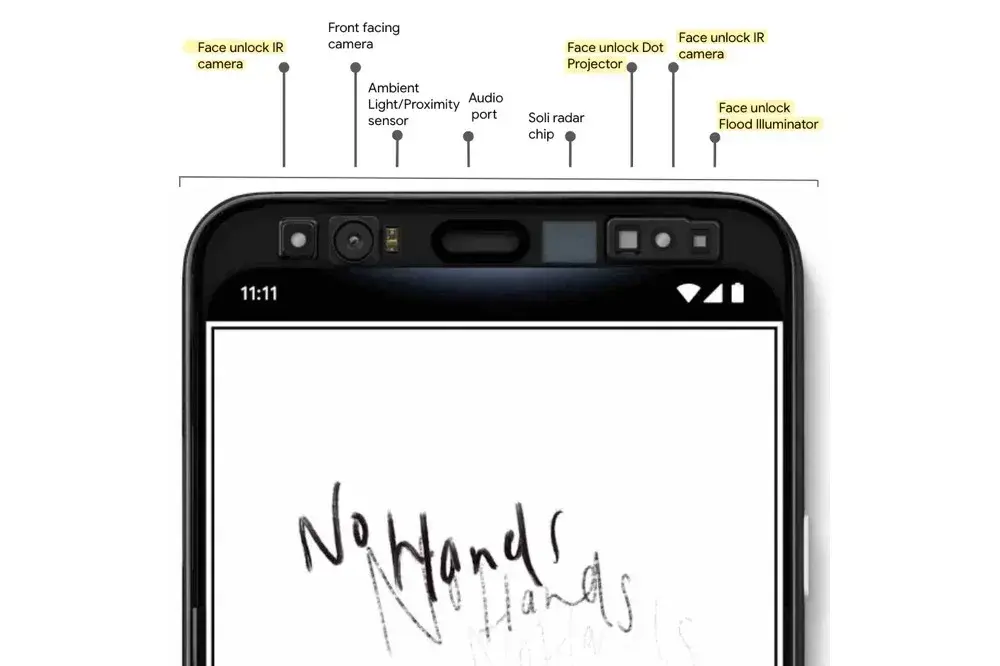
The company emphasizes that this update is not merely a minor patch but a core improvement to the user interface experience. As users increasingly rely on their smartphones for sensitive tasks like mobile payments and banking authentication, the reliability of face recognition becomes paramount. Google’s commitment to refining this feature suggests that it is prioritizing software-driven efficiency to enhance its current security suite.
Hardware Limitations Influence Future Design Choices
Despite these improvements, industry experts argue that the reliance on standard camera hardware poses inherent limitations. Unlike Apple’s Face ID, which utilizes specialized infrared sensors to map facial features in three dimensions, Google’s solution remains constrained by the optical input provided by the front-facing camera. While previous leaks hinted that Google might be developing a dedicated infrared-supported system, the Pixel 11 series continues to utilize the existing camera-based approach combined with sophisticated processing power.
The ongoing reliance on software optimization highlights Google’s strategy to maximize existing hardware capabilities before committing to significant structural changes.
Ultimately, the performance of the Pixel 11 demonstrates how far machine learning can push standard optics. While the system may not yet match the environmental versatility of dedicated hardware sensors, it represents a substantial step forward for users who prioritize convenience and security. As Google continues to iterate on its Tensor-powered architecture, the future of biometric authentication on Android devices appears to be shifting toward even more intelligent, software-centric solutions.
We would love to hear your thoughts on these new biometric improvements; do you believe software-based facial recognition is finally efficient enough to replace specialized hardware, or do you prefer the physical sensors found in competing devices? Share your experiences and opinions in the comments section below.
Your comment has been submitted,
it will be published after approval.