
Google’s Tensor processors, which power its Pixel series, have so far remained “decent” but struggled to match the raw power of its competitors. The current Tensor G5, in particular, pales in comparison to its rivals, while MediaTek’s Dimensity 9500 chip dominates the market with its performance. Recent reports suggest Google has learned from this and is copying two critical elements from MediaTek for the Tensor G6 (codename: Malibu), expected in the second half of 2026.
Google Tensor G6 features: Saying goodbye to efficiency cores?
According to leaked information, Google will switch to TSMC’s 2nm manufacturing process with the Tensor G6. However, the real revolution lies in the core arrangement. MediaTek’s Dimensity series, which reduces efficiency cores and focuses on performance cores, has inspired Google.
The 1+5+2 (1 Super, 5 Performance, 2 Efficiency) arrangement in the Tensor G5 is becoming a thing of the past. The Tensor G6 is expected to adopt a 1+6+1 configuration:
- 1 ARM Cortex-X930 “Super Core”
6 ARM Cortex-A730 “Performance Cores” - 1 ARM Cortex-A5xx series “Efficiency Core”
Google’s second lesson from MediaTek was “updating.” While the Tensor G5 used Cortex-X4 cores from 2023, the G6 will use the latest Cortex-X930 cores, which haven’t even been released yet. This move is a critical step to close the performance gap.
However, everything isn’t rosy. While Google is pushing the limits on the processor side, it may slow down on the graphics unit. According to rumors, the Tensor G6 will come with a 3-core IMG CXT graphics unit, an older architecture than the IMG DXT GPU in the G5 model. Google’s habit of always limiting its own processor capabilities in one area seems set to continue with this model.
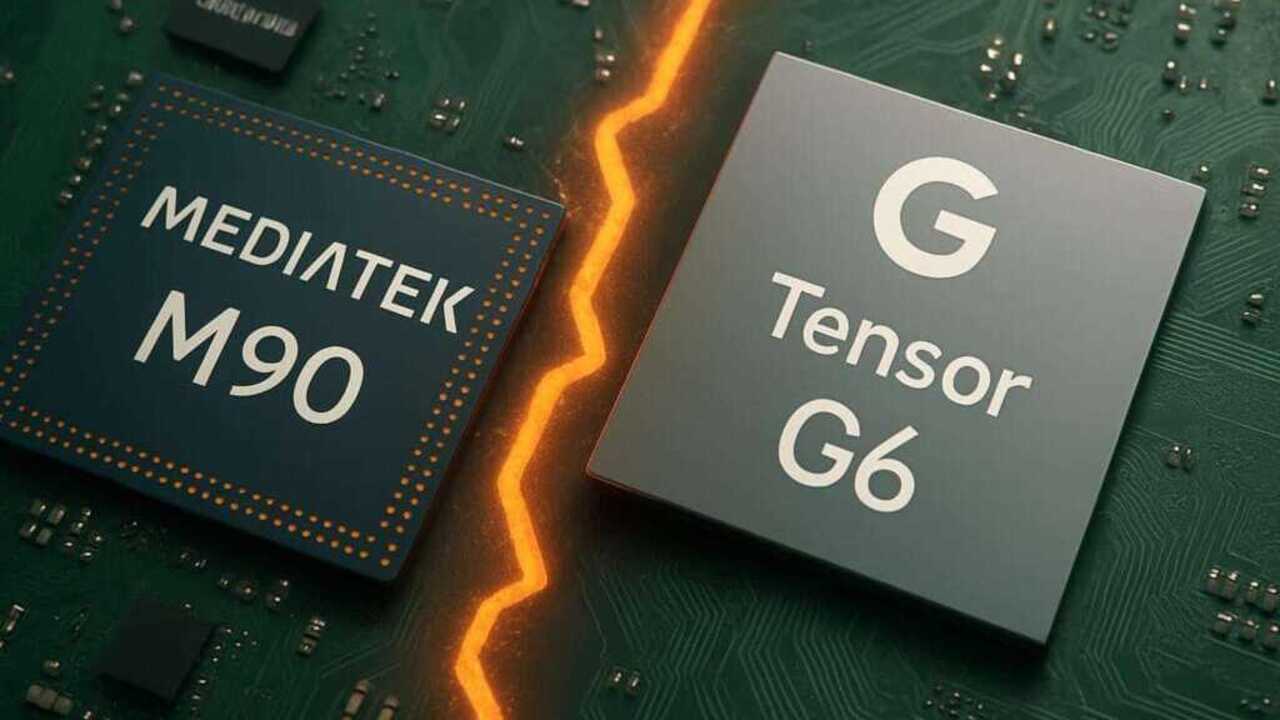
A major shift in connectivity technologies is also on the horizon. With the Tensor G6, Google is expected to abandon Samsung modems and switch to the MediaTek M90 modem, offering 12Gbps download speeds. This could put an end to the connectivity issues Pixel users have long complained about.
So, what are your thoughts on these leaked Google Tensor G6 specifications and MediaTek strategy? Can Google finally achieve flagship performance? Share your thoughts in the comments!