
How to watch the partial solar eclipse on March 29

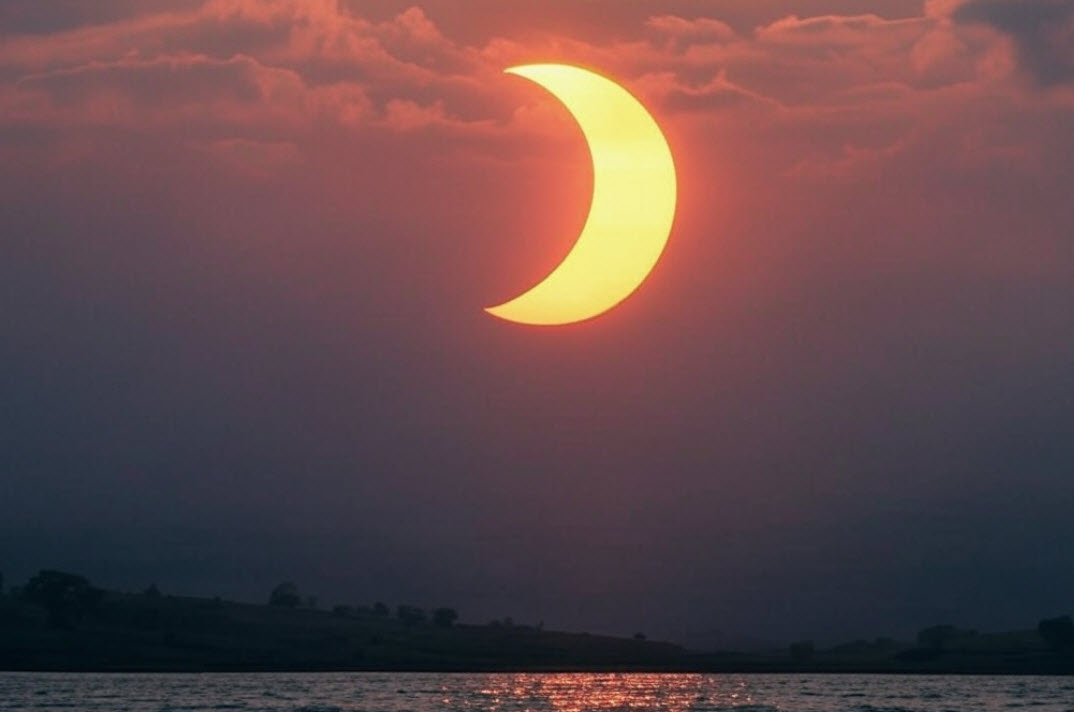
As the Moon partially obscures the Sun, people in Europe, North America, and parts of Africa and Asia will experience this rare astronomical spectacle. A partial solar eclipse occurs when the Moon passes between the Earth and the Sun, but doesn’t perfectly align. This creates a visual where only a portion of the Sun is hidden, making it look like a glowing crescent or as if something took a bite out of it.
The degree of the Sun’s coverage will vary depending on location. Different regions will witness unique shapes and timings of the eclipse.
Where to watch partial solar eclipse
Europe:
In Spain, the eclipse begins around 10:30 AM, peaks at 11:45 AM, and ends by 1:00 PM. Sun coverage will range from 32.6% in Galicia to just 8.7% in Menorca.
United Kingdom:
The eclipse starts near 10:00 AM, peaks at 11:00 AM, and concludes by noon. Northern Scotland and Northern Ireland may see up to 40% of the Sun covered. Areas like London and the southeast will experience roughly 30% coverage.
United States:
Northeastern states, especially Maine, will witness the eclipse at sunrise. It begins around 6:13 AM Eastern Time, peaking with a spectacular “double sunrise” effect. The event wraps up by 7:17 AM.
Safety First
Watching an eclipse without protection can damage your eyes permanently.
Regular sunglasses do not provide adequate protection. Use eclipse glasses certified with ISO 12312-2 standards or view indirectly through pinhole projectors.
Stay safe. Prepare early. Many astronomical societies offer free guides on how to observe safely.
Warframe Update 35.5 Patch Notes
Watch the Weather
Clouds can block your view, especially in regions like Scotland, where rain and overcast skies are expected. Northern England may have clearer conditions.
Always check your local forecast. If clouds cover your area, follow a live stream to still enjoy the show.
More Eclipses to Come
This eclipse is only a preview. Spain will see a total solar eclipse on August 12, 2026, followed by another on August 2, 2027, and an annular eclipse on January 26, 2028.
These events are expected to attract global attention, boosting tourism and public engagement in space science.
The Magic of the Sky
This March 29 event offers a reminder of our universe’s power and wonder.
Whether you’re watching from a balcony, a remote hill, or online — this is a chance to connect with the cosmos.
Don’t miss it.
Your comment has been submitted,
it will be published after approval.