
Huawei and Apple Grow as Chinese Smartphone Market Shrinks

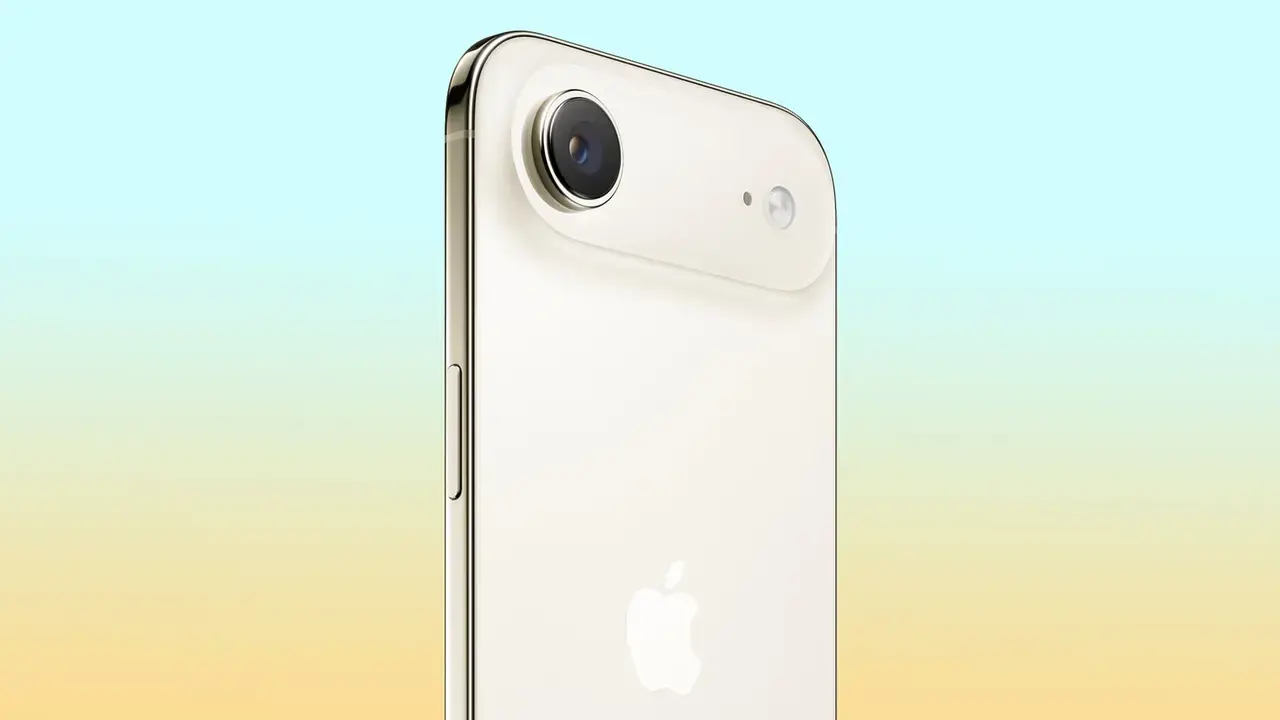
In a challenging period for the global technology sector, the Chinese smartphone market experienced a 2% year-over-year decline in the second quarter of 2026, totaling 66.1 million units shipped, according to a recent report by Omdia. Despite this broader contraction, industry giants Huawei and Apple defied market trends by successfully increasing their respective market shares. While the overall landscape struggles with component cost inflation and memory supply crises, these two manufacturers have demonstrated remarkable resilience. Huawei surged to lead the market with 15.2 million shipments, while Apple maintained a robust position with 12.4 million units sold during this difficult quarter.
- Huawei increased its total shipments to 15.2 million units, securing a 23% market share.
- Apple captured 19% of the Chinese smartphone market, marking a significant annual growth.
- Major competitors including Xiaomi, Oppo, and Vivo reported double-digit declines in their sales volumes.
- Industry analysts at Omdia project that the Chinese smartphone market will contract by 6% throughout 2026.
Huawei and Apple Strengthen Their Market Positions
The impressive performance of Huawei amidst a general downturn is largely attributed to the popularity of its latest models, including the Pura X Max and the Enjoy 90 Pro Max. Analysts suggest that the company’s strategic commitment to consistent pricing and its deep integration with local supply chains have served as critical buffers against market volatility. 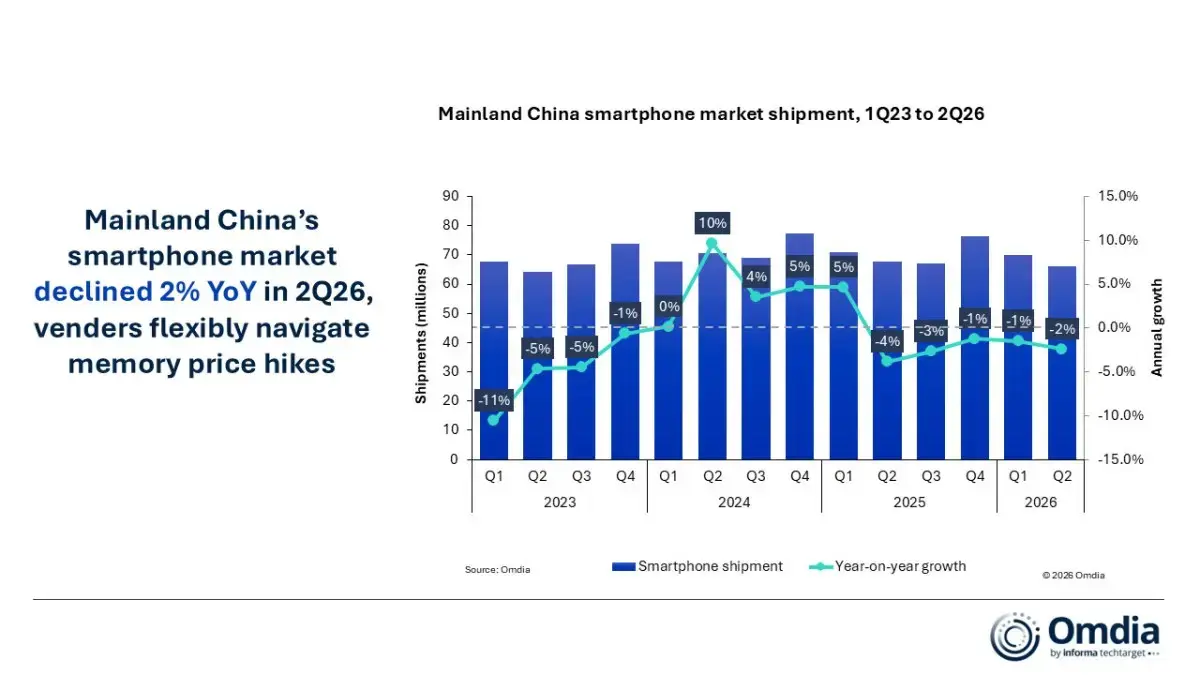 Apple has similarly fortified its competitive standing by adopting a calculated pricing strategy, choosing to avoid aggressive price hikes that might alienate its established user base in China.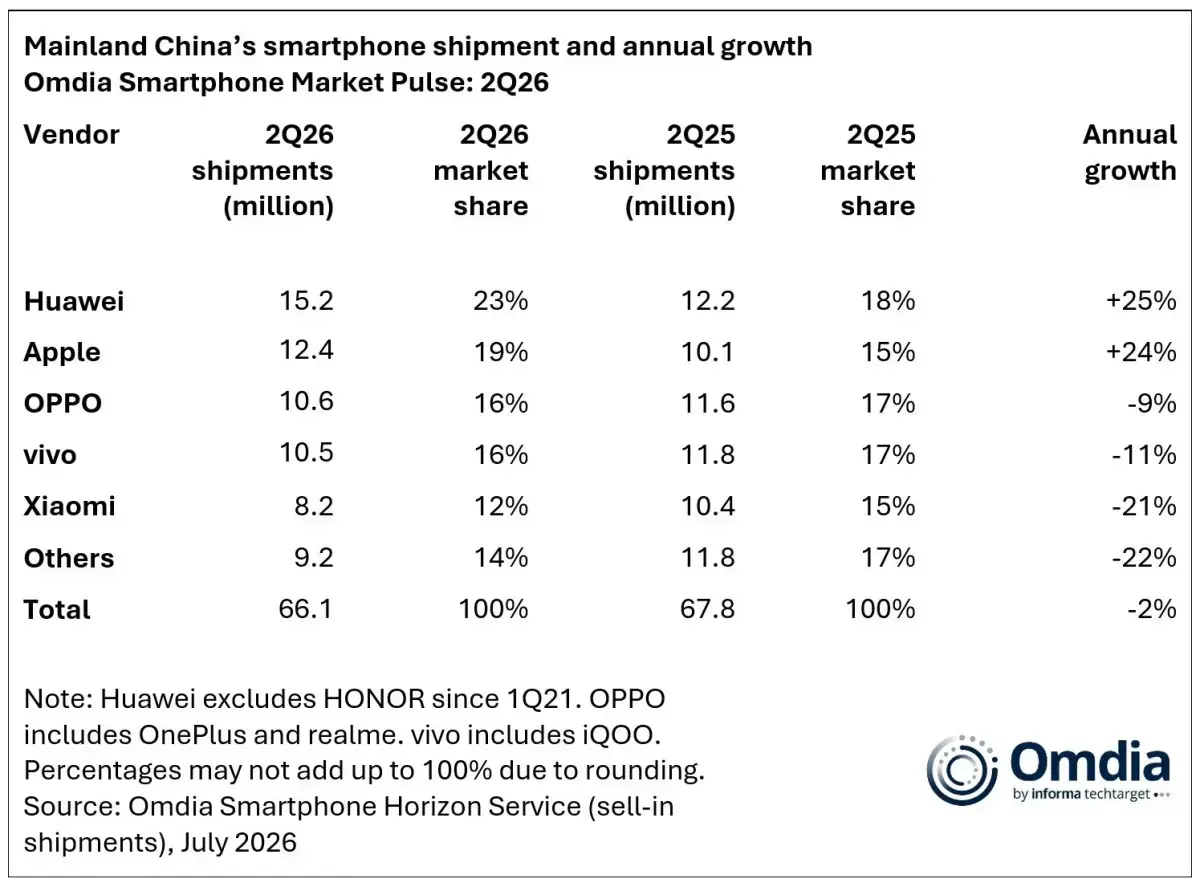
Huawei’s localized research and development capabilities provide the firm with superior insulation against fluctuating global component costs.
Other Manufacturers Face Significant Operational Challenges
The situation for the rest of the industry appears markedly more difficult, as most major players struggle to maintain their sales volumes. Oppo reported 10.6 million shipments, resulting in a 16% market share but representing a 9% year-over-year decrease. Vivo faced a similar trajectory with 10.5 million shipments, reflecting an 11% decline in sales. Xiaomi, currently occupying the fifth position in the regional rankings, suffered the most significant impact among top-tier manufacturers with a sharp 21% drop in shipments. 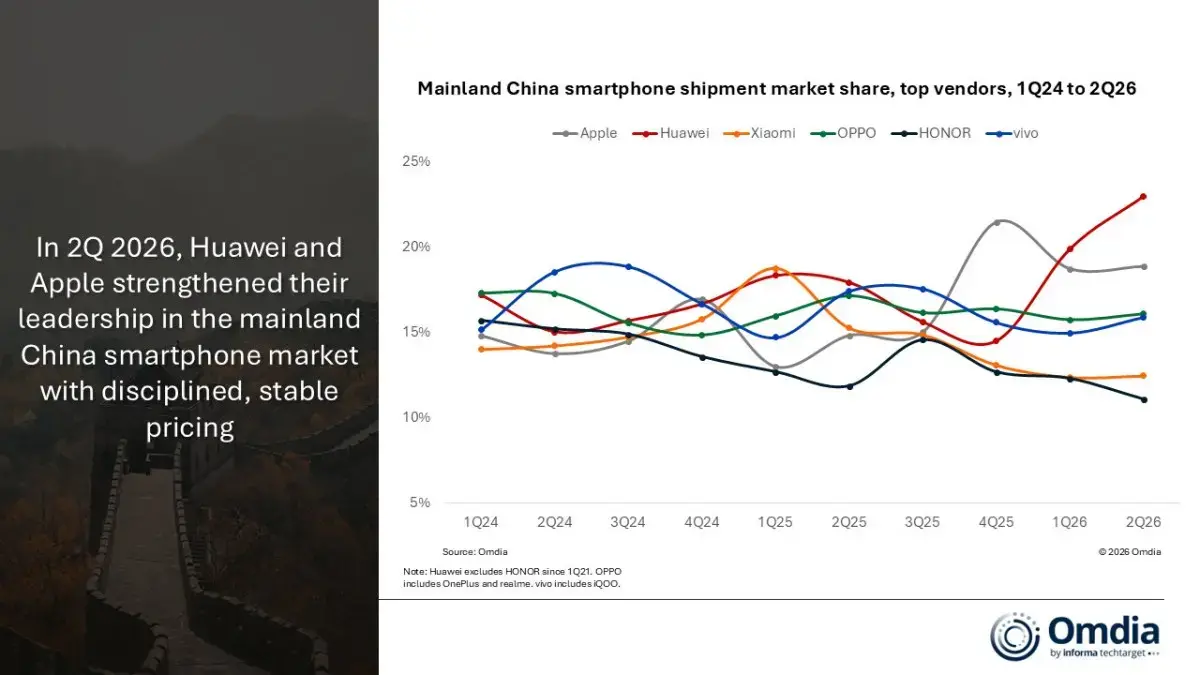
Market Future Remains Shrouded in Uncertainty
Industry experts emphasize that smartphone manufacturers are being forced to optimize their product portfolios to better align with current economic realities. The ongoing rise in component costs on a global scale continues to accelerate market polarization within China. As consumers adopt a more cautious approach to upgrading their devices, the trend toward a shrinking market is expected to persist for the remainder of the year. Omdia has officially updated its annual forecast, warning stakeholders to expect a total market contraction of 6% by the end of 2026.
Do you believe that rising smartphone prices and the slowing pace of technological innovation are encouraging consumers to hold onto their devices for longer periods? Please share your thoughts and the factors you prioritize when purchasing a new smartphone in the comments section below.
Your comment has been submitted,
it will be published after approval.