
Intel Nova Lake Processors Set for 2027 Launch


Intel is preparing to redefine the desktop computing landscape with its upcoming Nova Lake processor architecture, which aims to counter AMD’s aggressive 3D V-Cache strategy. Leaked internal documentation reveals that the highly anticipated Nova Lake-S series will introduce a massive 52-core configuration utilizing a dual-compute tile design. While production for these chips is scheduled to begin later this year, the initial market rollout is projected for the first quarter of 2027. This move represents a strategic pivot for Intel, as it balances immediate performance needs with long-term architectural scalability to maintain its competitive edge in the high-end desktop segment.
- Intel plans to launch the Nova Lake-S processor series in the first quarter of 2027.
- The architecture introduces a dual-compute tile design to support up to 52 cores.
- Initial market releases will feature 28-core single-tile configurations to address immediate competitive pressures.
- The platform utilizes the new LGA 1954 socket which promises long-term motherboard compatibility.
Nova Lake-S Development Follows a Phased Release Schedule
Leaked slides from a Chinese partner presentation provide a clear roadmap for the deployment of Nova Lake-S. Unlike previous generations where top-tier chips arrived at launch, Intel is adopting a staggered approach. The first wave in early 2027 will consist of 28-core single-tile models, designed to provide immediate performance gains against existing market competitors. This strategy allows Intel to stabilize the production of its more complex, high-core-count variants before they reach the general consumer market later in the year. 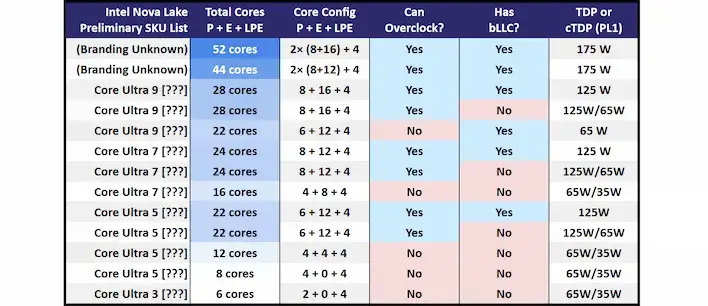 As the year progresses, the product lineup will expand, eventually transitioning to the successor Razor Lake architecture by the end of 2027.
Dual-Compute Tiles Provide Significant Performance Advantages
The decision to delay the release of the 52-core flagship models is primarily driven by the engineering complexities of the dual-compute tile design. By integrating two separate processing modules into a single package, Intel aims to push core counts to unprecedented levels for the consumer desktop segment. This architectural change is intended as a direct response to future iterations of AMD’s Zen architecture. While the single-tile 28-core models handle current competitive demands, the 52-core variants will serve as Intel’s primary weapon against upcoming multi-core focused processors, ensuring the company maintains its leadership in heavy-duty multitasking and content creation scenarios.
LGA 1954 Socket Ensures Long-term Platform Support
Beyond the silicon, the platform transition to the LGA 1954 socket is a major highlight for system builders. Intel has confirmed that this socket will provide support across multiple generations, addressing widespread user concerns regarding the frequency of motherboard upgrades. This move is expected to improve the total cost of ownership for enthusiasts. However, industry experts are already questioning whether the current DDR5 memory interface will provide sufficient bandwidth to feed a 52-core processor effectively. The real-world impact of these potential bottlenecks will become clearer as extensive benchmarking begins throughout 2027. The industry remains expectant to see how these hardware choices influence overall system efficiency and thermal management in a consumer environment.
Do you believe that increasing core counts to 52 is the right path forward for desktop gaming, or should Intel focus more on single-core performance and cache efficiency? We would love to hear your thoughts on the upcoming Nova Lake platform in the comments section below.
Your comment has been submitted,
it will be published after approval.