
iPhone 18 Pro Max Production Costs Rise by $300


Apple is bracing for significant financial challenges as reports indicate that the production cost of the upcoming iPhone 18 Pro Max is set to increase by approximately $300 compared to the previous iPhone 17 Pro Max. According to data published by Counterpoint Research, this surge in manufacturing expenses is primarily driven by the escalating global prices of NAND flash storage and DRAM memory components. As Apple prepares to launch its next flagship device, the combination of advanced hardware requirements and market volatility poses a substantial burden on the company’s manufacturing budget for its premium smartphone lineup.
- The manufacturing cost for the 1TB iPhone 18 Pro Max model has increased by $300 over its predecessor.
- Rising costs of NAND flash and DRAM memory represent the primary drivers of this expenditure increase.
- Apple is expected to implement a price hike of approximately $200 per device to partially mitigate these costs.
- The integration of the 2nm A20 Pro processor contributes significantly to the overall bill of materials.
Even with a projected $200 retail price increase, Apple faces a potential decline in net profit margins per unit.
Memory Costs Drive Production Budgets Higher
The latest market analysis confirms that the spike in hardware costs is not a coincidental event but a result of broader industry trends. Global fluctuations in memory pricing are currently exerting immense pressure on the smartphone sector. The 1TB version of the iPhone 18 Pro Max is disproportionately affected by these hikes, as the high-capacity storage modules required for such a device command premium prices in the current supply chain. 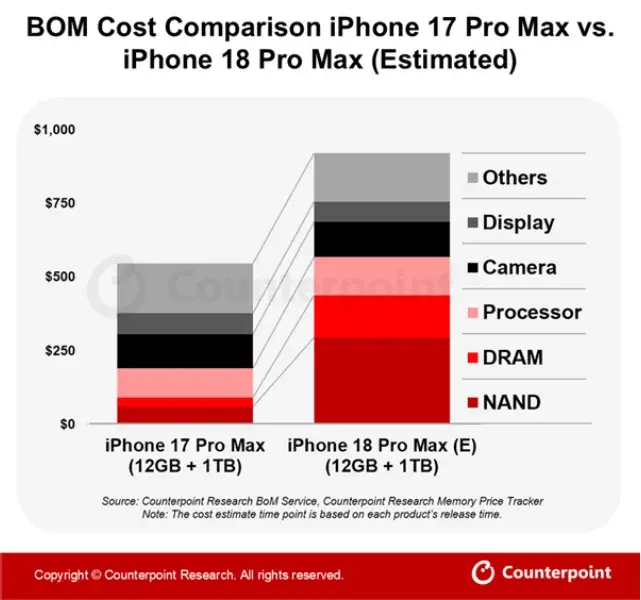
Furthermore, the industry-wide push toward integrating complex artificial intelligence features requires significantly higher RAM capacity. This technological necessity forces manufacturers to procure more expensive components, further inflating the bill of materials. While Apple has managed to offset some expenses in entry-level models, the high-end variants are bearing the brunt of these financial shifts.
Advanced A20 Pro Chips Increase Manufacturing Complexity
Beyond memory components, the technical specifications of the new flagship are driving costs to unprecedented levels. The device will be powered by the A20 Pro processor, which utilizes TSMC’s cutting-edge 2-nanometer manufacturing process. While this silicon architecture provides superior energy efficiency and performance, it remains one of the most expensive manufacturing solutions currently available. 
The transition to 2nm chip technology solidifies the A20 Pro as a primary cost driver for the upcoming hardware cycle.
Additional hardware upgrades, such as the rumored variable aperture camera technology, further compound the manufacturing expenses. Although there are minor cost reductions in display panels and certain secondary components compared to the iPhone 17 Pro Max, these savings are insufficient to fully cancel out the massive expenditures on processors and storage modules.
Strategic Pricing Adjustments are Being Considered
To manage the current fiscal strain, it is anticipated that Apple will adopt a tiered pricing strategy rather than a blanket increase across the entire product range. By adjusting prices based on storage capacity, the company aims to keep the entry-level Pro Max models relatively competitive while protecting margins on higher-tier configurations. Industry experts note that this strategy is essential for maintaining the company’s financial health, even if it leads to a reduction in total profit per device compared to previous years.
How do you feel about the potential price increase for the next generation of flagship smartphones; would you still upgrade if the cost is significantly higher than previous models? Share your thoughts in the comments below.
Your comment has been submitted,
it will be published after approval.