
iPhone 18 Pro Max Sets New Standards for Cooling Performance

Apple’s latest flagship, the iPhone 18 Pro Max, has introduced a significant advancement in thermal management technology, effectively challenging dedicated gaming smartphones. Recent comprehensive thermal testing conducted by tech analyst Geekerwan reveals that the device’s sophisticated vapor chamber system provides industry-leading stability under heavy workloads. Powered by the high-performance A20 Pro chipset, the iPhone 18 Pro Max cooling performance manages to maintain lower temperatures while delivering sustained power compared to its primary Android competitors. This breakthrough in hardware engineering demonstrates Apple’s commitment to optimizing internal thermal architecture for intense gaming sessions and high-demand professional tasks.
- The iPhone 18 Pro Max utilizes a redesigned vapor chamber system to achieve superior thermal regulation during intensive tasks.
- Thermal tests indicate that the device maintains lower temperatures than rivals like the OnePlus 15 and iQOO 15 Ultra under similar power limits.
- Apple achieves high efficiency through passive cooling, eliminating the need for external fan accessories required by some competitors.
Testing Data Highlights Superior Thermal Efficiency
In side-by-side thermal comparisons, the iPhone 18 Pro Max was pitted against market leaders such as the OnePlus 15 and iQOO 15 Ultra, both of which utilize the Snapdragon 8 Elite Gen 5 processor. The data shows that the iPhone 18 Pro Max maintained a temperature of 44.3°C at a 5.9W power limit, showcasing an impressive improvement over the iPhone 17 Pro Max, which reached 45.2°C at a 5.4W limit. 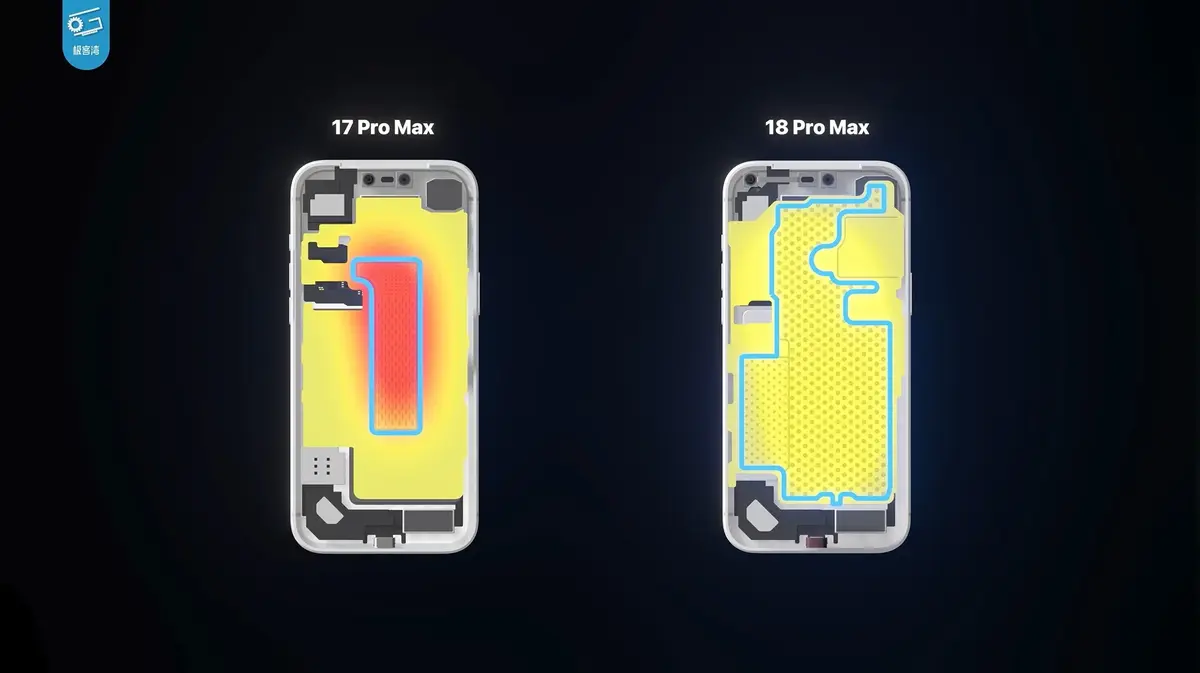
Conversely, the OnePlus 15 struggled to manage its heat output, reaching 47.2°C at a 6.1W limit. Similarly, the iQOO 15 Ultra hit a temperature of 47.2°C while operating at the same 5.9W power limit as the iPhone 18 Pro Max. These findings underscore the effectiveness of Apple’s current internal design in dissipating heat without sacrificing performance for the end user.
Hardware Design Defines Performance Limits
The iQOO 15 Ultra attempts to compensate for its thermal limitations by utilizing an external cooling fan, which allows it to push power limits up to 7.3W. Even with the fan operating at maximum speed, the device still recorded a temperature of 46.2°C, which remains higher than the iPhone 18 Pro Max’s result. 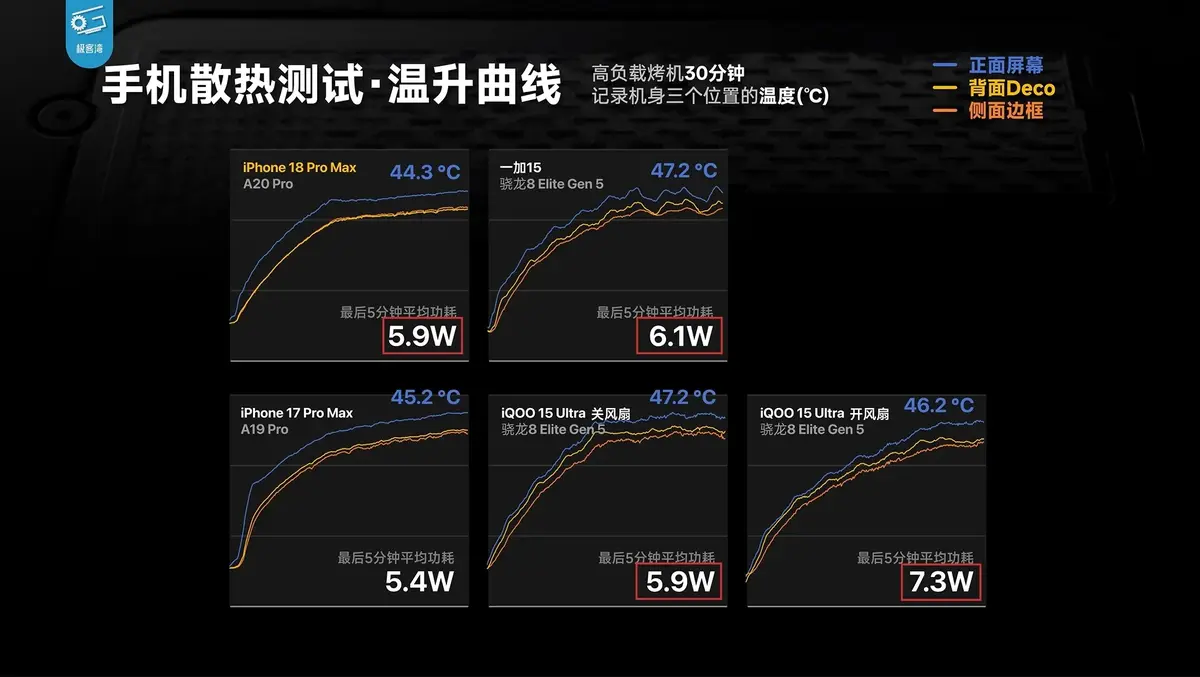
This performance gap highlights the success of Apple’s passive cooling engineering. By integrating the A20 Pro chip with a refined internal layout, Apple has created a device that balances raw power and temperature control exceptionally well. While future generations of processors like the Snapdragon 8 Elite Gen 6 Pro are expected to improve, current benchmarks confirm that the iPhone 18 Pro Max remains a top contender in the smartphone market. The combination of optimized software and specialized cooling hardware ensures that long-duration gaming remains consistent and fluid for mobile gamers.
Given the remarkable efficiency of passive cooling in the latest iPhone model, do you believe smartphone manufacturers should continue prioritizing internal thermal solutions, or is the integration of active cooling fans the inevitable future for mobile gaming? Share your thoughts in the comments below.
Your comment has been submitted,
it will be published after approval.