
Istanbul Airport Becomes the Busiest Aviation Hub in Europe

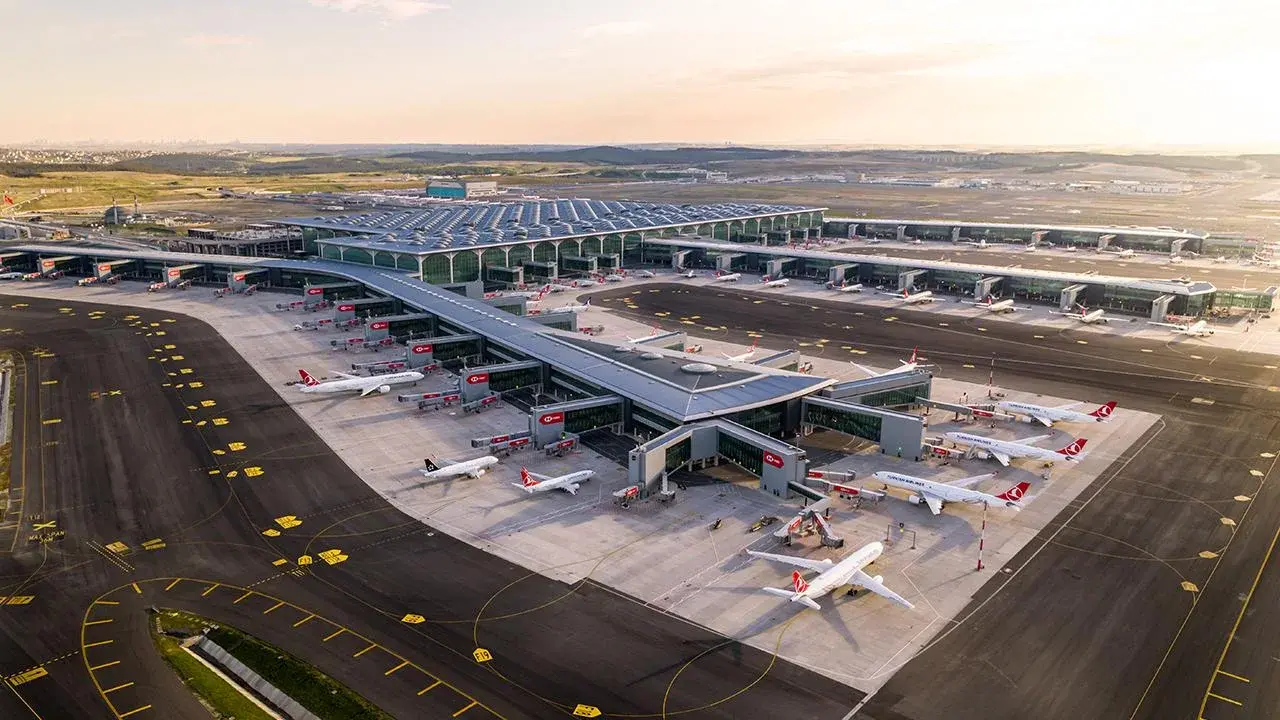
On August 16, 2026, Istanbul Airport reached a historic milestone by setting a new record for both daily passenger volume and flight traffic across Europe. According to official data, the facility successfully managed 290,287 passengers and facilitated 1,739 individual flights within a single day. This unprecedented performance solidified the position of Istanbul Airport as the primary aviation hub on the continent, surpassing previous records held by major international competitors. Transportation and Infrastructure Minister Abdulkadir Uraloğlu emphasized that these figures demonstrate the airport’s growing global importance as a strategic bridge connecting Europe, Asia, the Middle East, and Africa.
- Istanbul Airport processed 290,287 passengers and 1,739 flights on August 16, 2026.
- The facility surpassed London Heathrow to become the busiest airport in Europe during July 2026.
- Istanbul Airport provided the highest seat capacity in the European region during the same period.
- The long-term development plan aims to increase the annual passenger capacity to 200 million.
Istanbul Airport Dominates European Aviation Traffic
The success of the facility extends beyond a single day of record-breaking traffic. Statistical analysis for July 2026 reveals that Istanbul Airport served 8.15 million passengers, effectively overtaking London Heathrow, which recorded 7.86 million passengers during the same window. By capturing this top position, the Turkish hub has officially displaced Heathrow, which had held the title of Europe’s busiest airport since 2023.
Capacity metrics further validate this leadership status. Data provided by OAG indicates that Istanbul Airport offered 4.69 million seats in July, positioning itself ahead of the 4.49 million seats provided by London Heathrow. This shift highlights a significant transformation in global air travel patterns.
Istanbul Airport has officially established itself as the preeminent transit hub for international connectivity.
Infrastructure Plans Support Future Expansion
Currently, the airport operates with a design capacity capable of handling 90 million passengers annually. However, the development strategy is far more ambitious. Upon the completion of all planned construction phases, the facility is designed to scale its operations to accommodate up to 200 million travelers per year. This expansion ensures that the airport remains a critical node in the global aviation network for decades to come.
By consistently outperforming long-standing aviation centers such as Paris Charles de Gaulle, Amsterdam Schiphol, and Frankfurt, Istanbul Airport has secured its role as a cornerstone of the regional economy. The infrastructure investments made by Turkey have clearly paid dividends in maintaining its competitive edge against established European rivals.
Global Connectivity Improves Through Strategic Growth
The transition into a primary global center is the result of focused investment in both physical infrastructure and operational efficiency. As the airport continues to refresh its own records, it strengthens the international reach of the Turkish aviation sector. The ability to manage such high volumes of traffic while maintaining service standards remains a primary factor in this ongoing success story.
Strategic investments have successfully transformed the airport into a vital bridge between continents.
Given the rapid rise of Istanbul Airport as the premier hub for European travel, what are your thoughts on how this shift in traffic will impact future flight routes and global travel trends? Please share your perspective in the comments section below.
Your comment has been submitted,
it will be published after approval.